
blog

Topic

#cost

26 articles
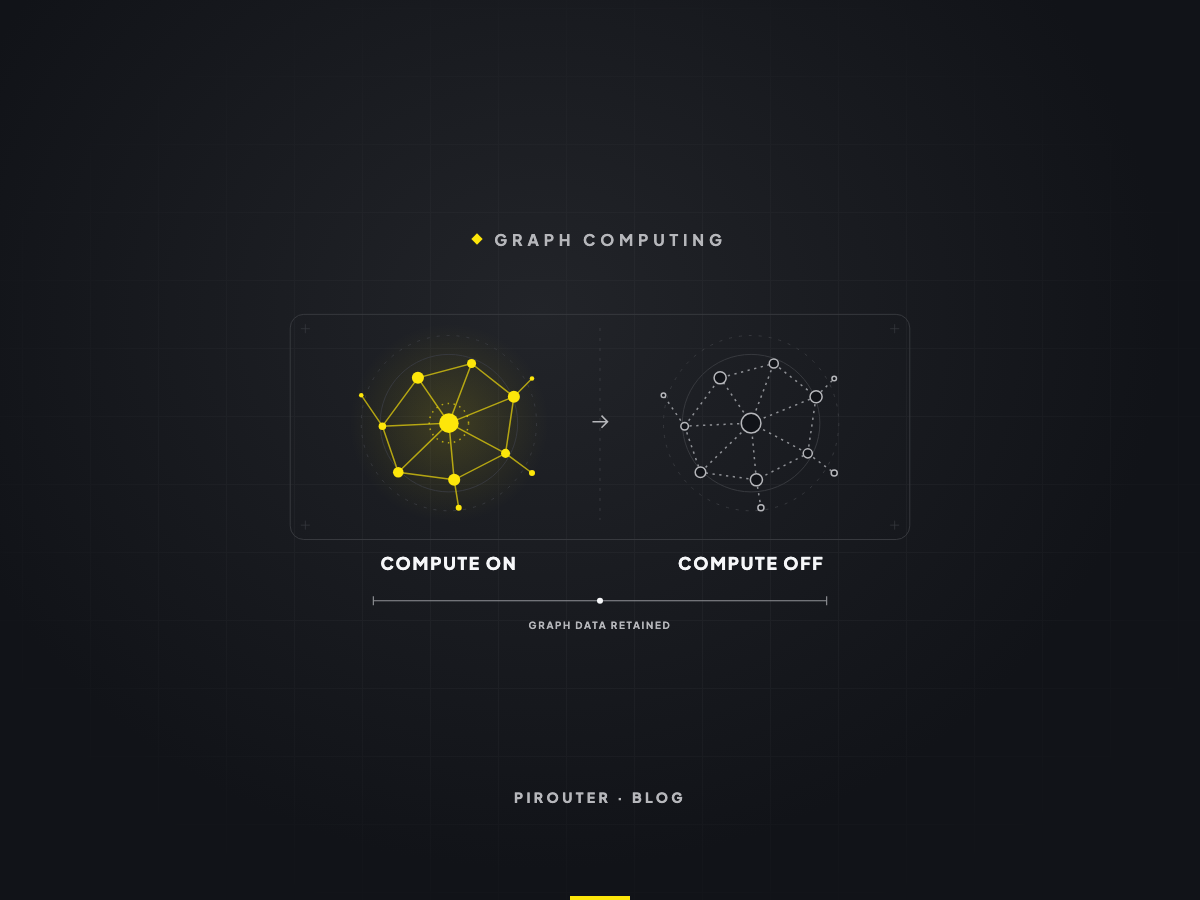
The same network of nodes appears twice, lit on the left and quiet on the right, above a continuous line for retained data.

Neptune Graph Sessions: When Idle Compute Stops Costing You

Leo Kaka
An illustrated invoice moves from a single holder toward an organization’s stack of trays.

GitHub Copilot code review: who pays starting December 30?

PiRouter Team

Two small robots flank a magnifying glass over a browser window.

Cloudflare Search for Agents: What It Returns and Costs

PiRouter Team
Two paper ribbons, one marked with build checks and the other with a processor, feed into one ledger.

GitHub Copilot cloud sandboxes now share your Actions allowance

PiRouter Team
Google’s Flash-Lite launch artwork: the Gemini 3.1 Flash-Lite mark over a black field with blue and multicolor dots

Gemini 3.1 Flash-Lite Pricing: Budgeting a Million Requests

PiRouter Team
Google’s cover artwork: the Gemini 4 Neon mark glowing orange against a dark wall

Gemini 4 Neon for PDFs and Spreadsheets: How to Test the Answers

PiRouter Team
An unnumbered analog dial with two adjustable indicator rings, a conceptual image about reference pricing and temporary adjustments

HY4 flash pricing: the low API rates are list prices, with 50% off until November 30

PiRouter Team
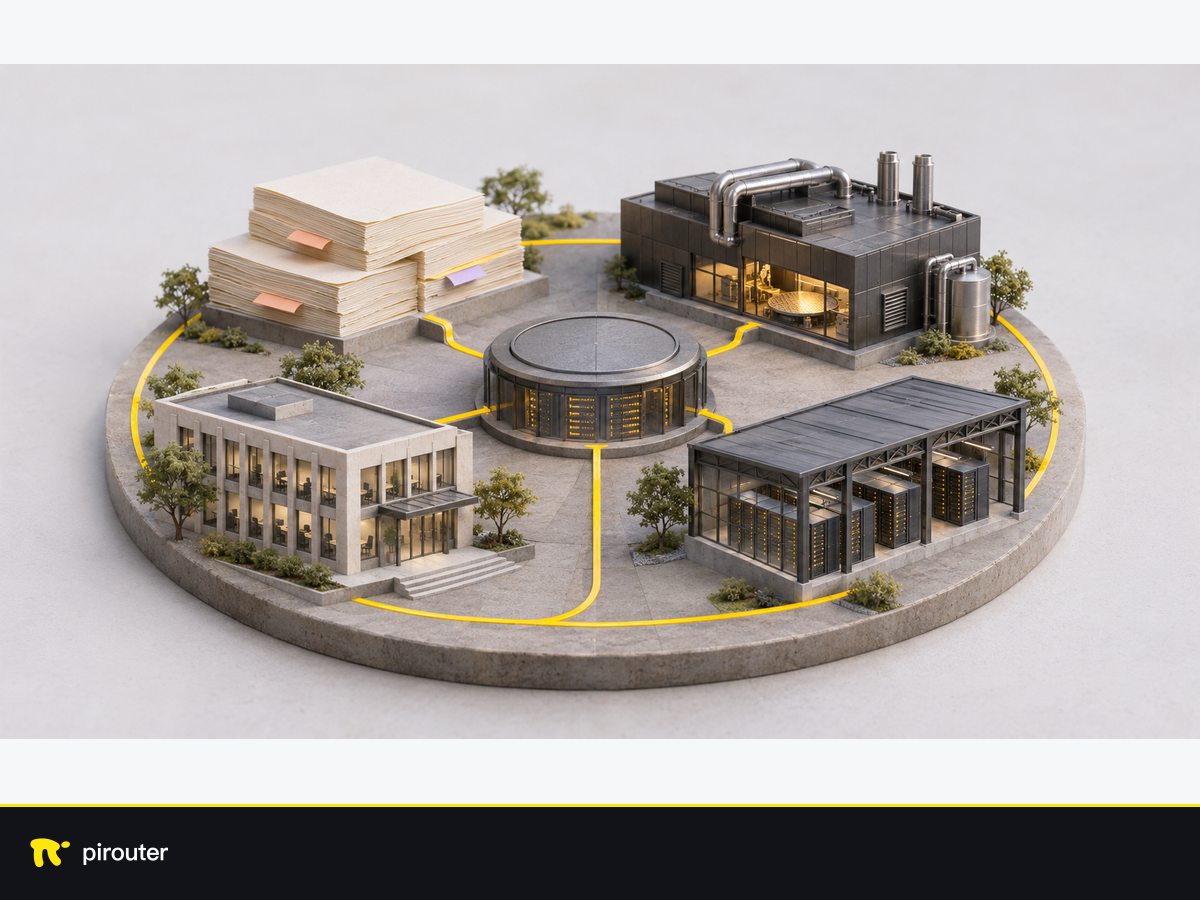
AI-generated conceptual maquette bringing paper capital, chip infrastructure, an enterprise entrance and server facilities around one shared hub; not a real site.

Anthropic's IPO roadshow meets four different AI business models

PiRouter Team
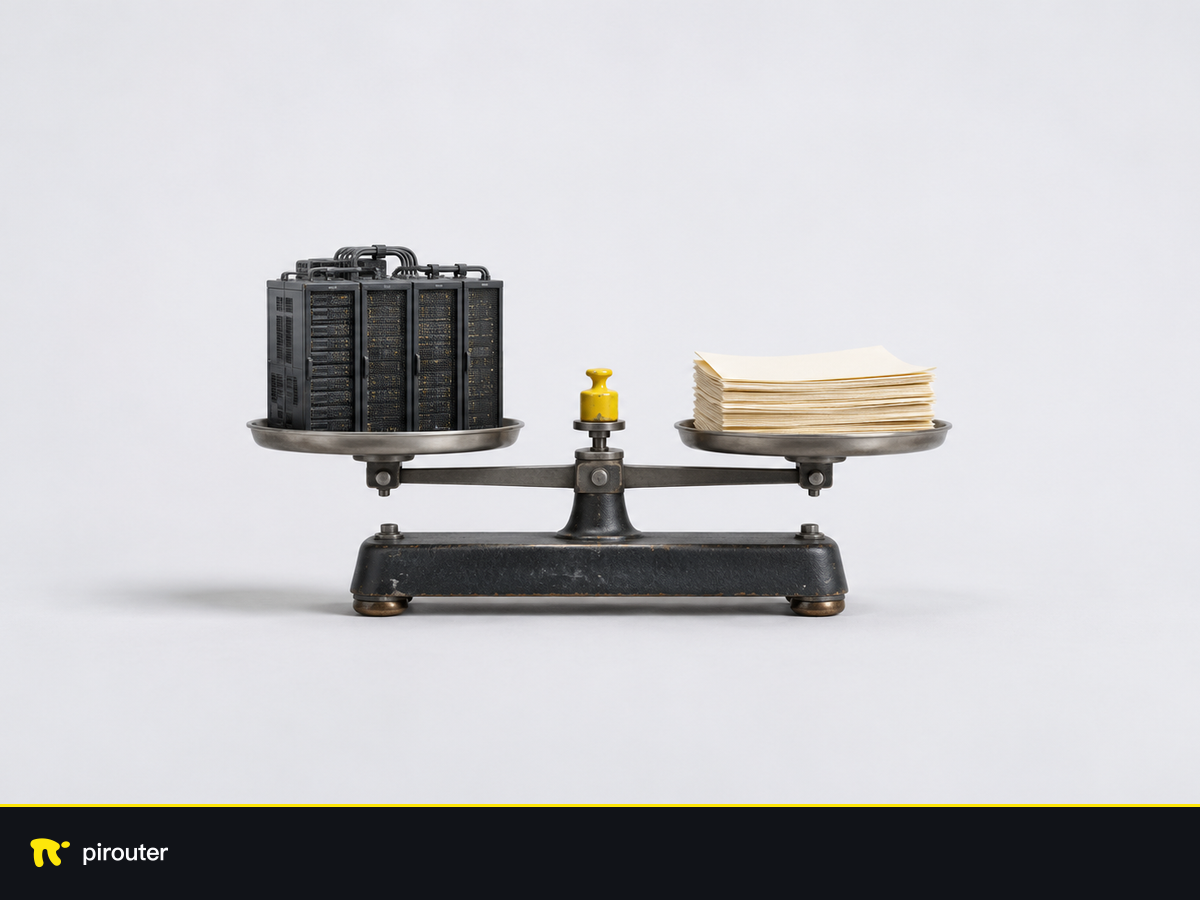
AI-generated conceptual illustration of a balance scale weighing miniature computing infrastructure against blank financial papers; not an actual IPO scene.

Anthropic's IPO puts Claude's $81B run rate to the test

Linden Kern

Official Gemini 4 Carbon key art with a blue crystalline form

Gemini 4 Carbon Is on pirouter: Price, Endpoints, and Where It Fits

PiRouter Team
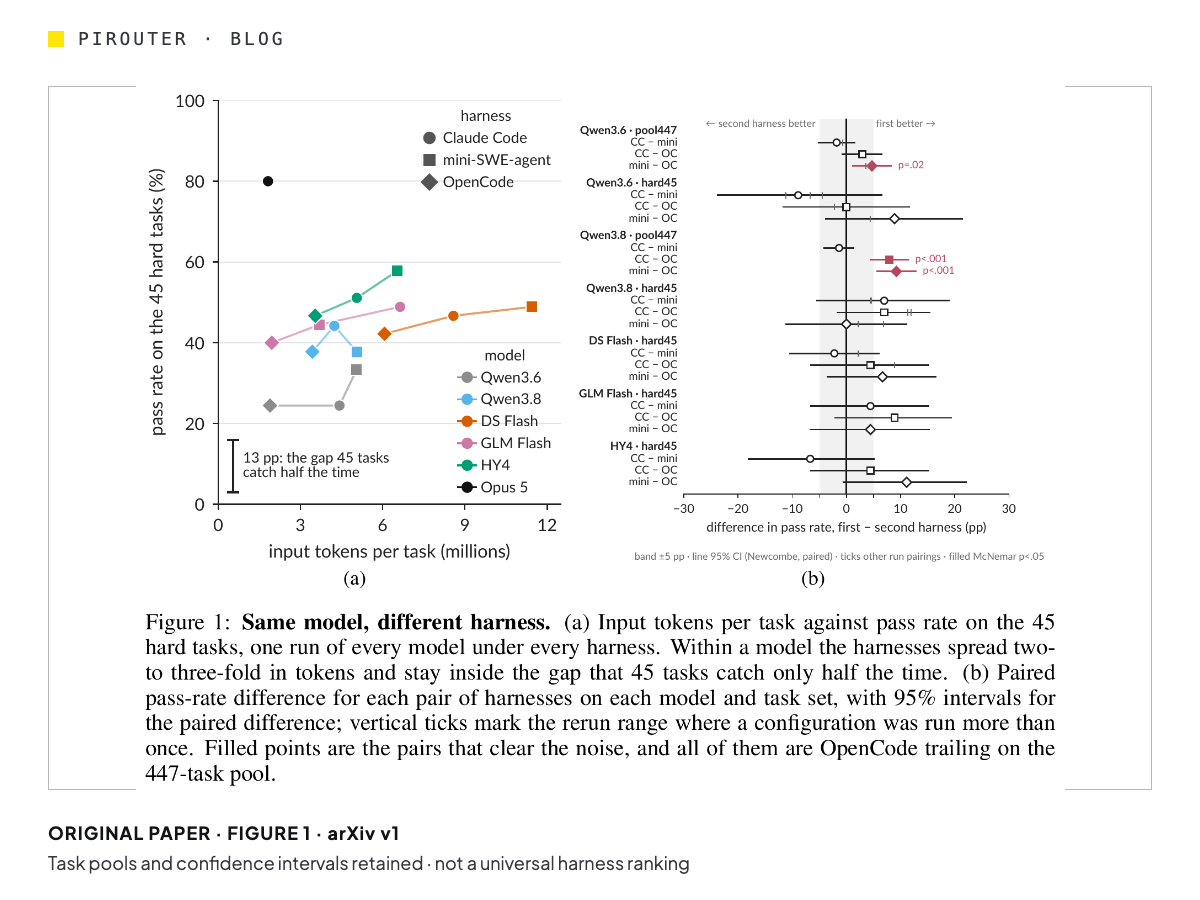
Figure 1 from the original paper's v1 PDF, showing task-pool panels and pass-rate intervals; not a universal harness ranking

Claude Code vs mini-SWE-agent: similar scores in one study, different bills

Linden Kern
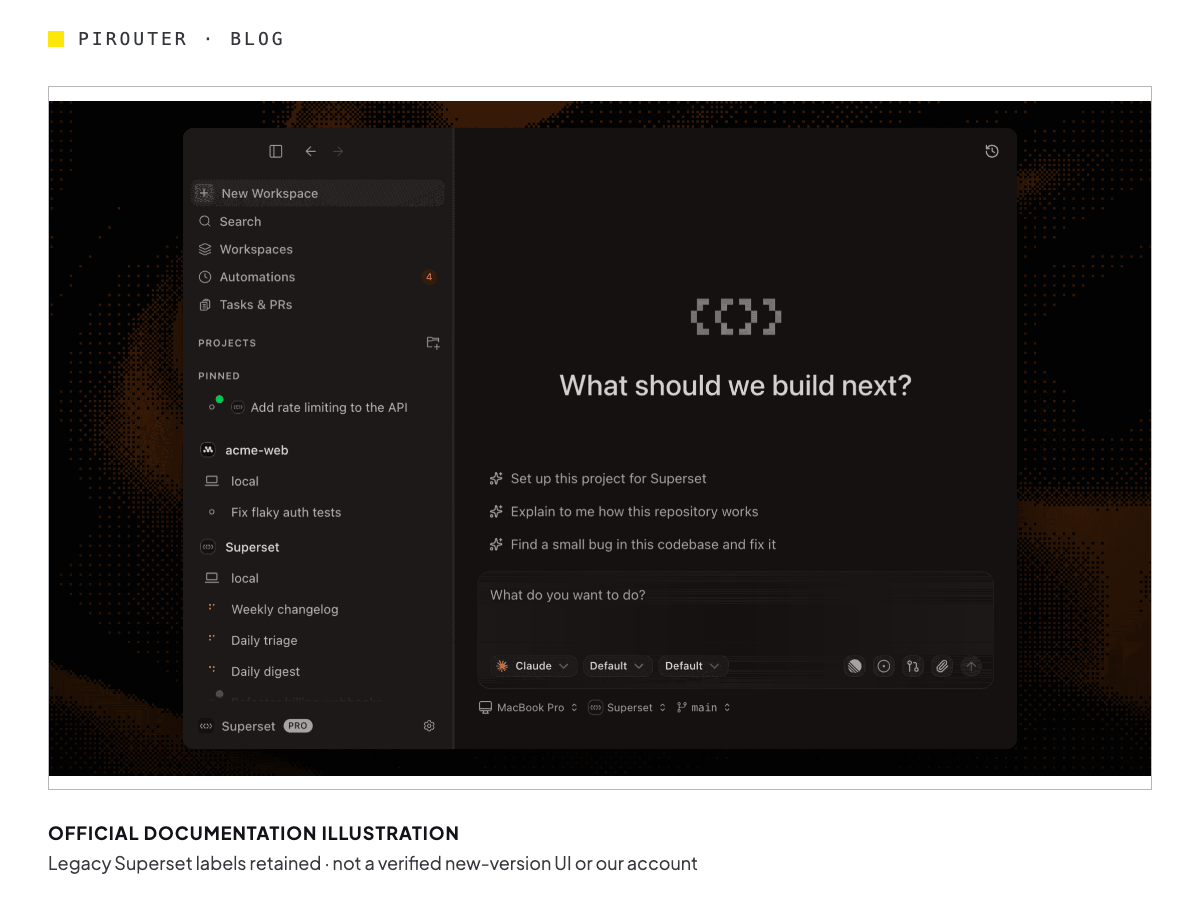
Official Paradev documentation's prompt-first illustration retaining legacy Superset labels; not our installed account or verification of a new release

Superset is now Paradev. Your agent bill is still separate.

PiRouter Team
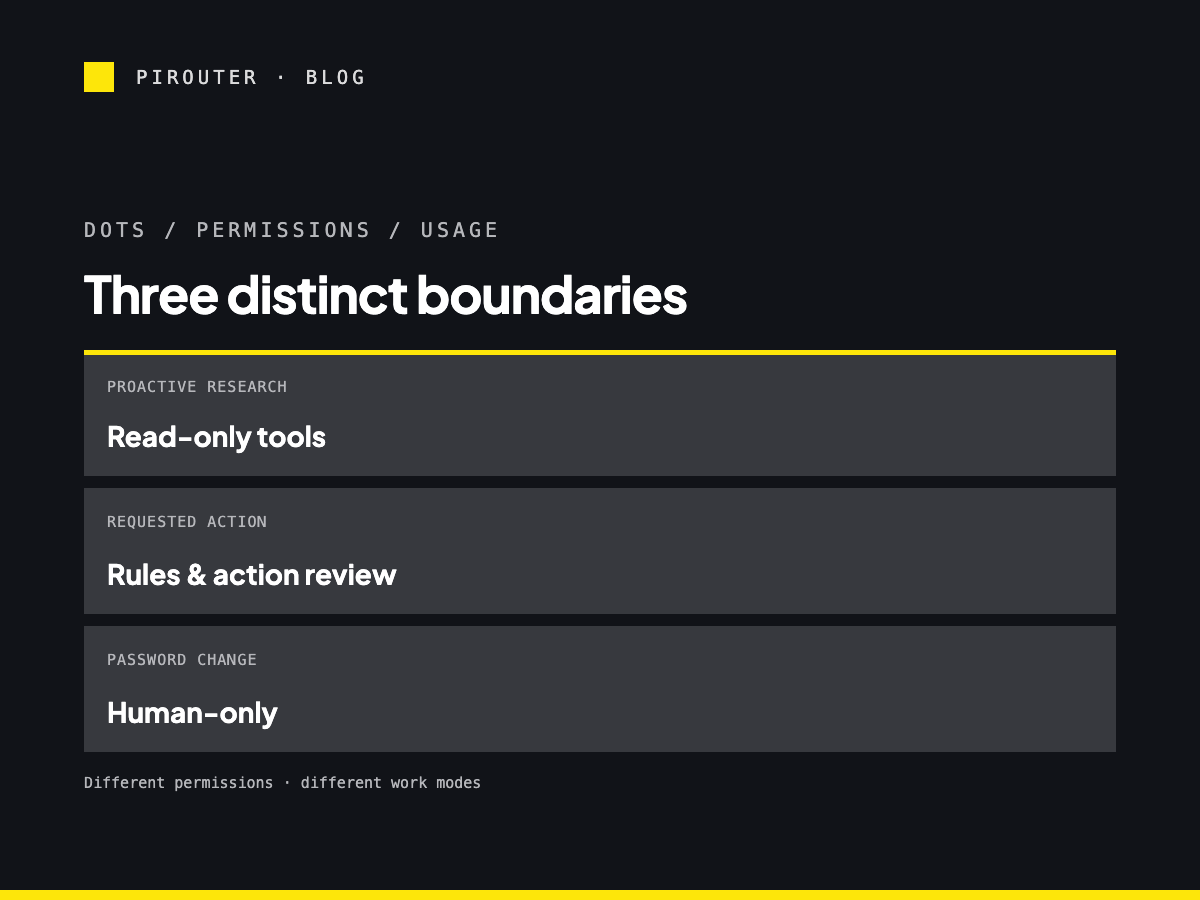
Three permission boundaries for OpenAI Dots: read-only background research, reviewed requested actions, and tasks reserved for a person.

OpenAI Dots can keep working. What can it do—and what counts against your plan?

PiRouter Team
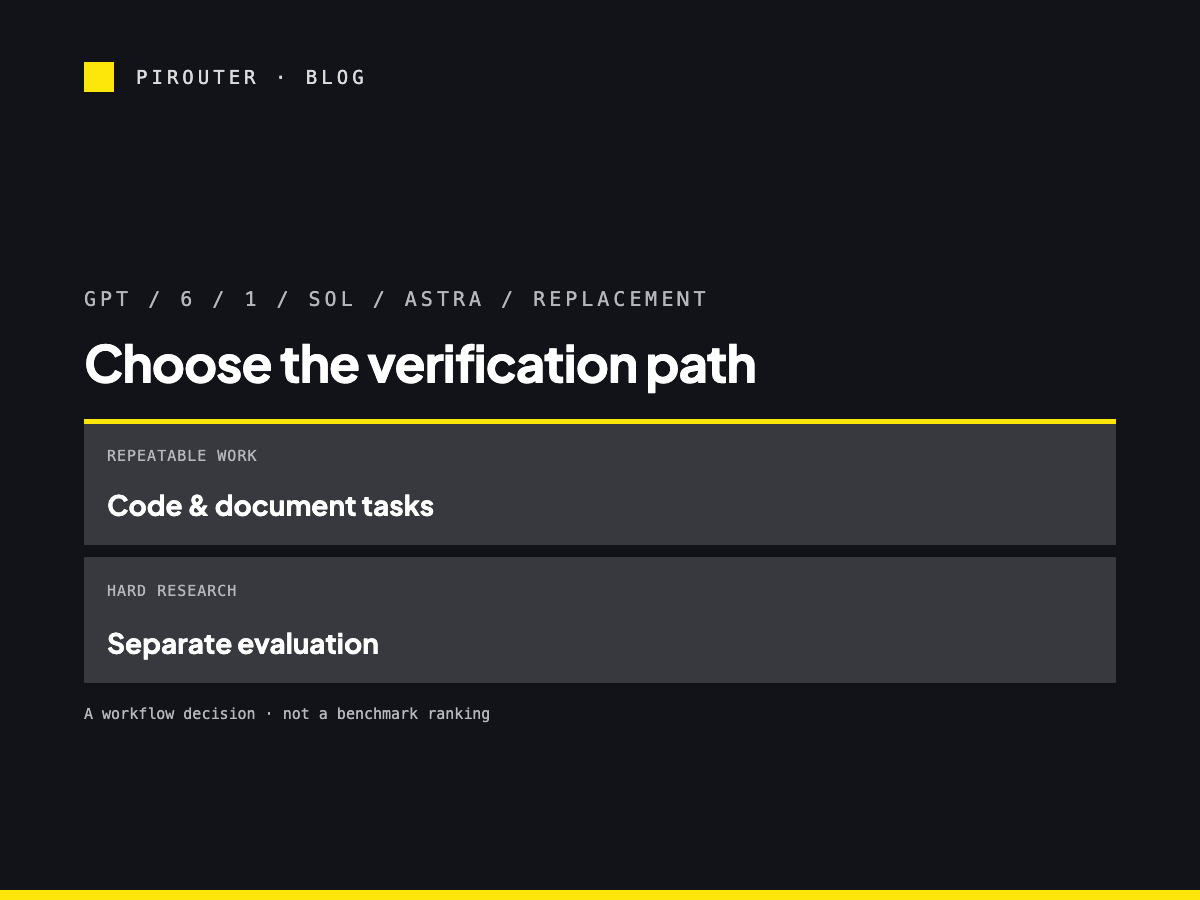
Two labeled panels separate repeatable coding and document work from difficult research tasks that need a separate evaluation; this is not a benchmark chart.

GPT-6.1 Sol vs Astra: move the testable work, keep the hard calls

Linden Kern
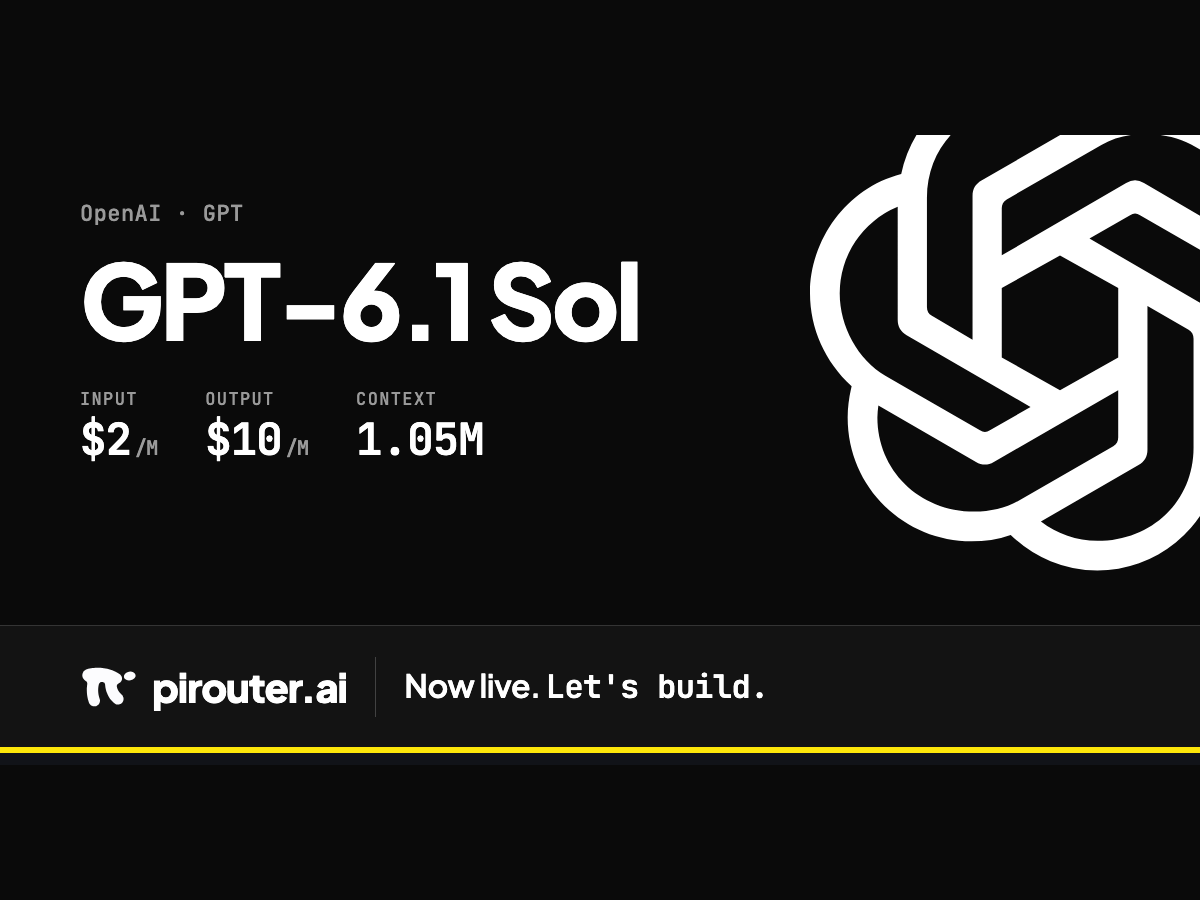
Unmodified GPT-6.1 Sol pirouter model card centered on a black background, showing standard input and output rates, 1.05M context, and the complete footer.

GPT-6.1 Sol on pirouter: $2/M input and a listed long-context tier

PiRouter Team
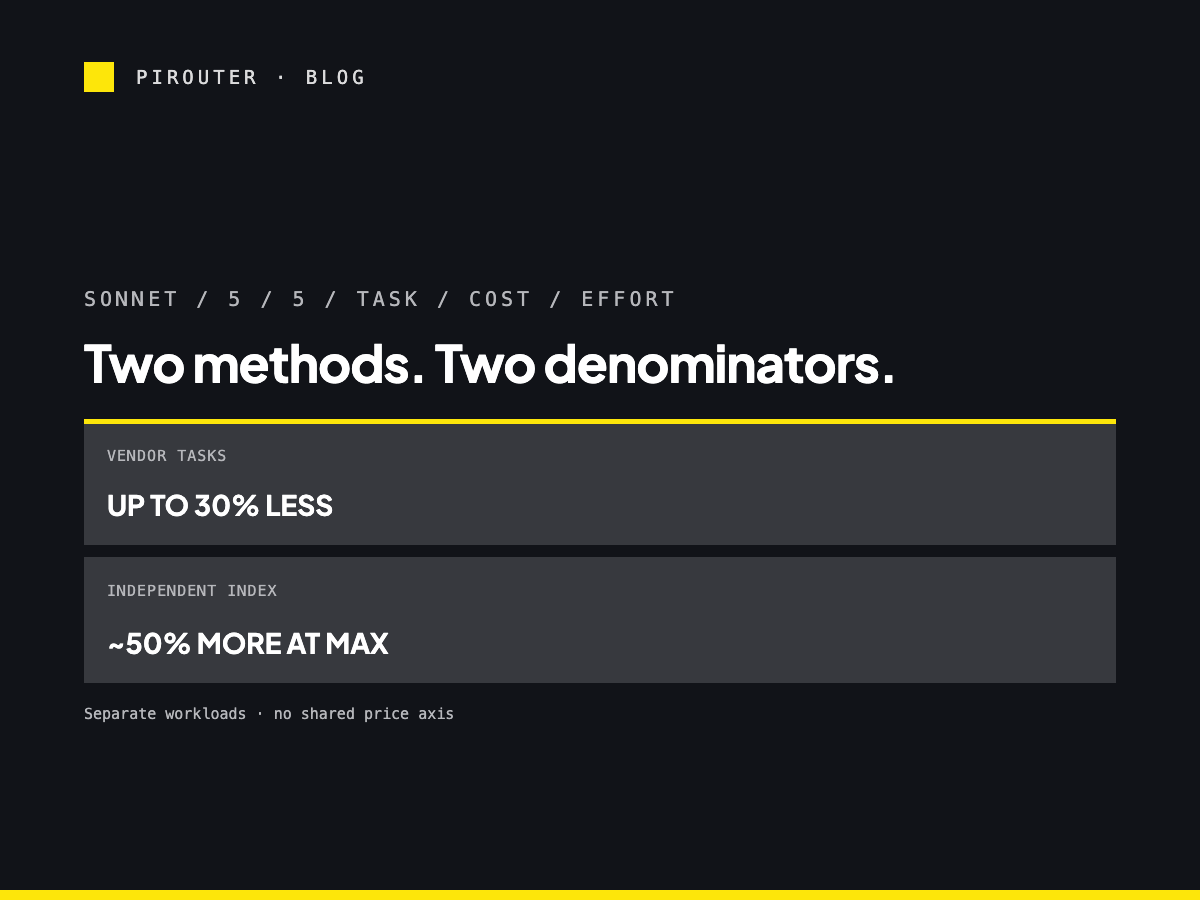
Separate vendor task savings and independent max-effort Index cost measurements appear in two independent panels, not on one axis.

Claude Sonnet 5.5 task cost: why 30% less and 50% more describe different tests

Linden Kern
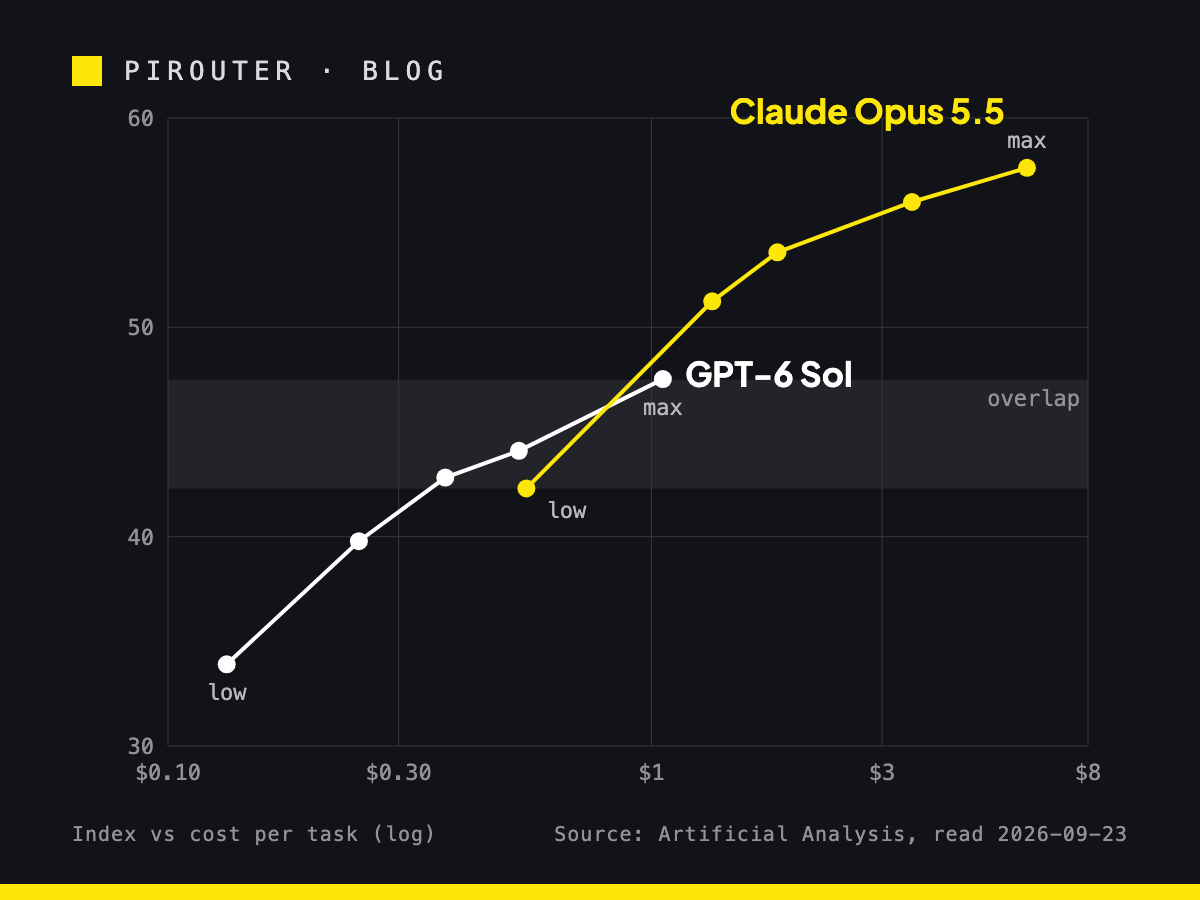
Scatter chart on a dark background: two lines of five points each, one for GPT-6 Sol and one for Claude Opus 5.5, plotting Artificial Analysis Intelligence Index score against cost per task on a log scale from low to max effort. Sol runs from 34 points at $0.13 to 47.5 at $1.06; Opus 5.5 runs from 42 points at $0.55 to 57.6 at $5.98. The two lines overlap only between about 42 and 47.5 points.

GPT-6 Sol vs Claude Opus 5.5 cost per task: Sol costs 28% to 79% as much for the same target score

Leo Kaka
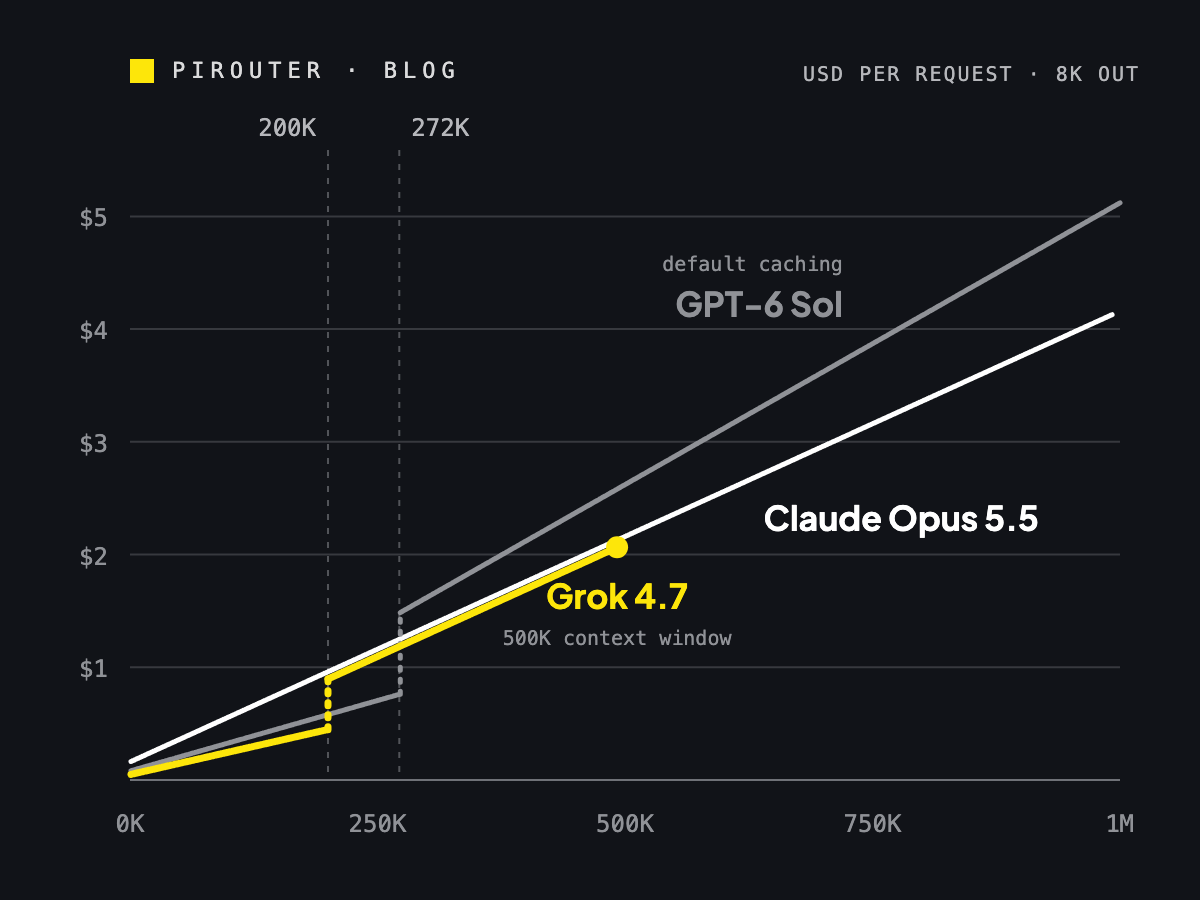
Line chart of the cost of one request against prompt size from 0 to 1M tokens, 8K output, with GPT-6 Sol at its default caching setting. Grok 4.7 (yellow) jumps at 200K and ends at its 500K context window; GPT-6 Sol (grey) jumps at 272K and runs above the others from there; Claude Opus 5.5 (white) rises in a straight line with no step.

What a 250K prompt costs on Grok 4.7, GPT-6 Sol and Opus 5.5: the 200K and 272K price cliffs

Leo Kaka
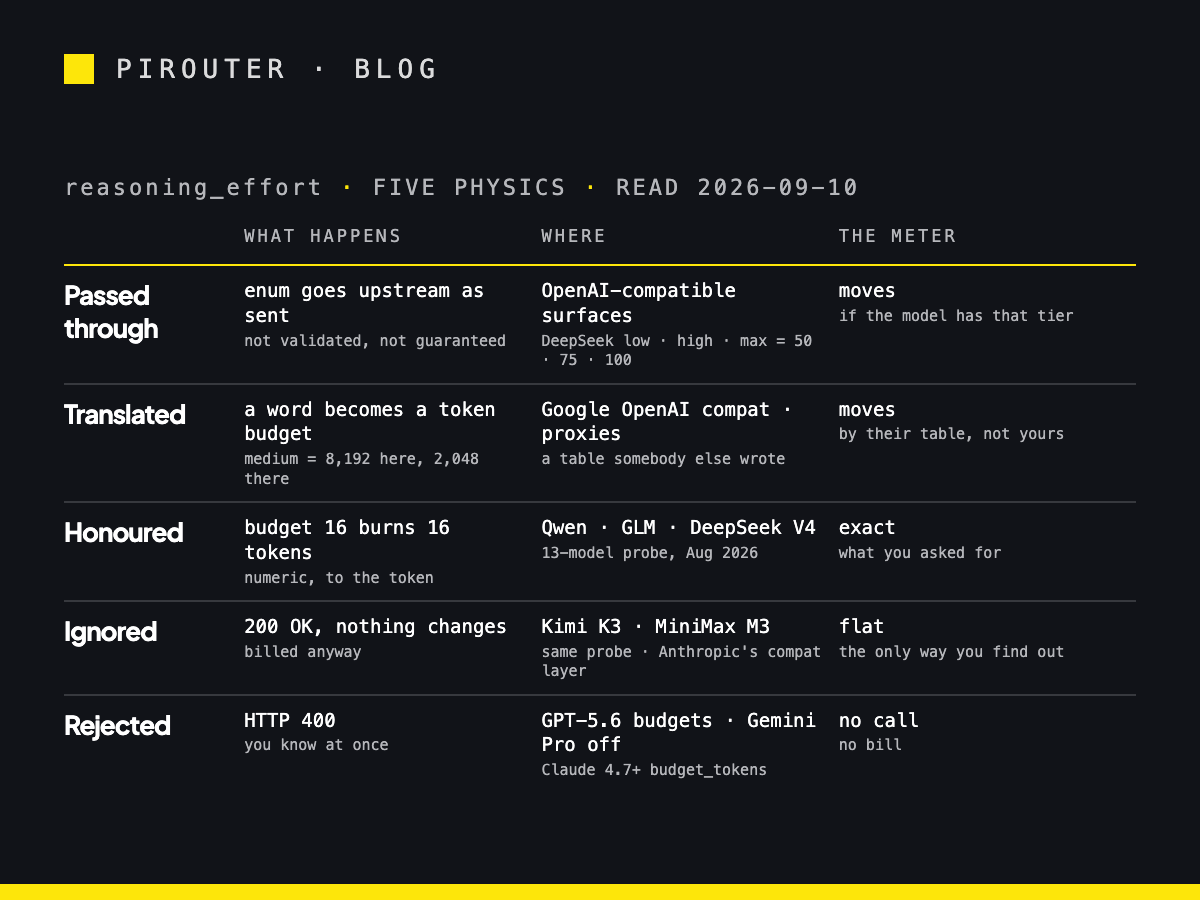
Matrix of the five things that can happen to a reasoning_effort value after a 200 response: passed through, translated into a token budget, honoured to the token, accepted and ignored, rejected with 400, with where each is documented and what the reasoning-token meter does

What reasoning_effort actually does on DeepSeek, OpenAI, Anthropic and Gemini: one name, five physics, and a five-line test

Leo Kaka
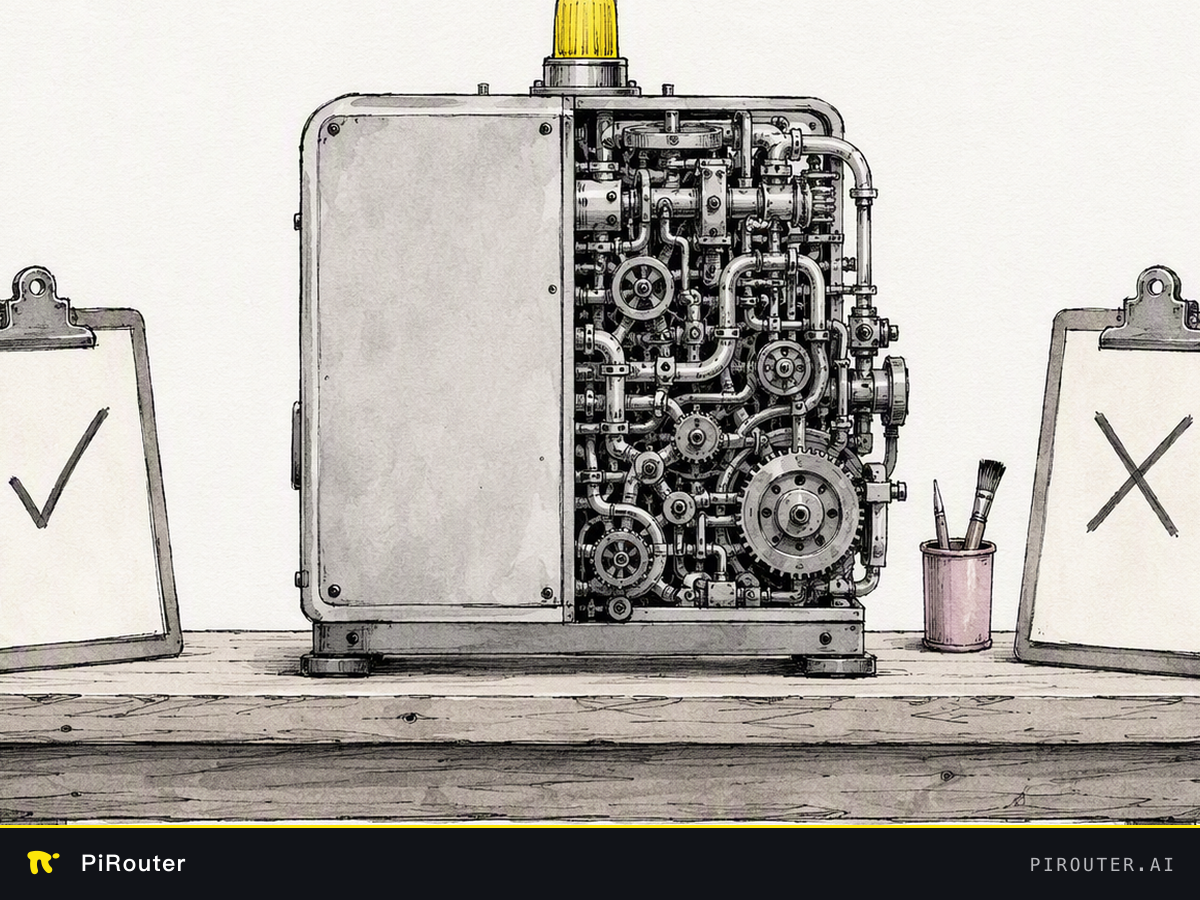
One machine whose left half is a plain casing and right half a dense tangle of gears; a clipboard on each side, one marked with a check and one with a cross.

Is GPT-6 Astra worth $10/$50? Two evals disagree, and both are right

Linden Kern
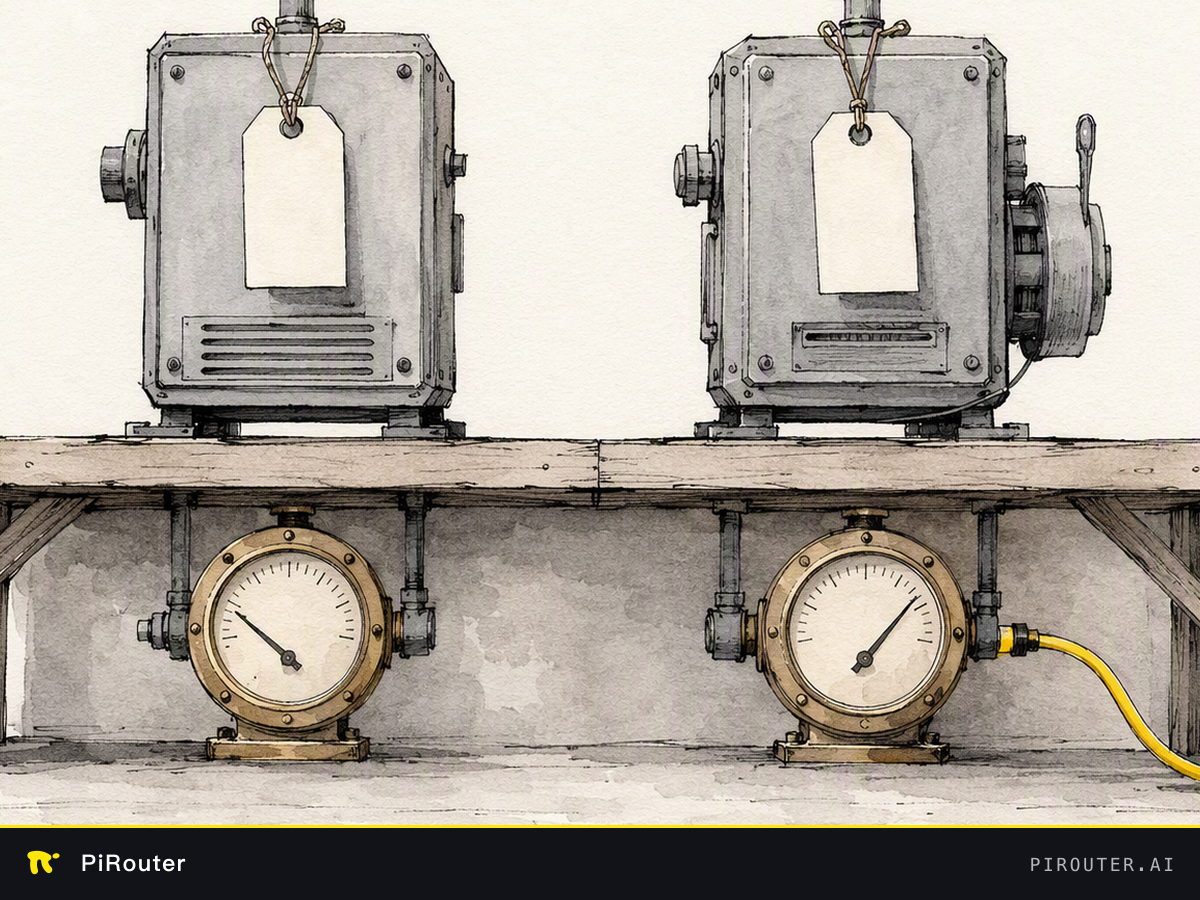
Two identical grey machines on a workbench, each hung with a blank price tag; the brass utility meters beneath them read very differently, and a single yellow line feeds only the higher one.

GPT-6 Astra vs Claude Fable 5.1: same $10/$50, and a 39% cheaper agent bill

Leo Kaka
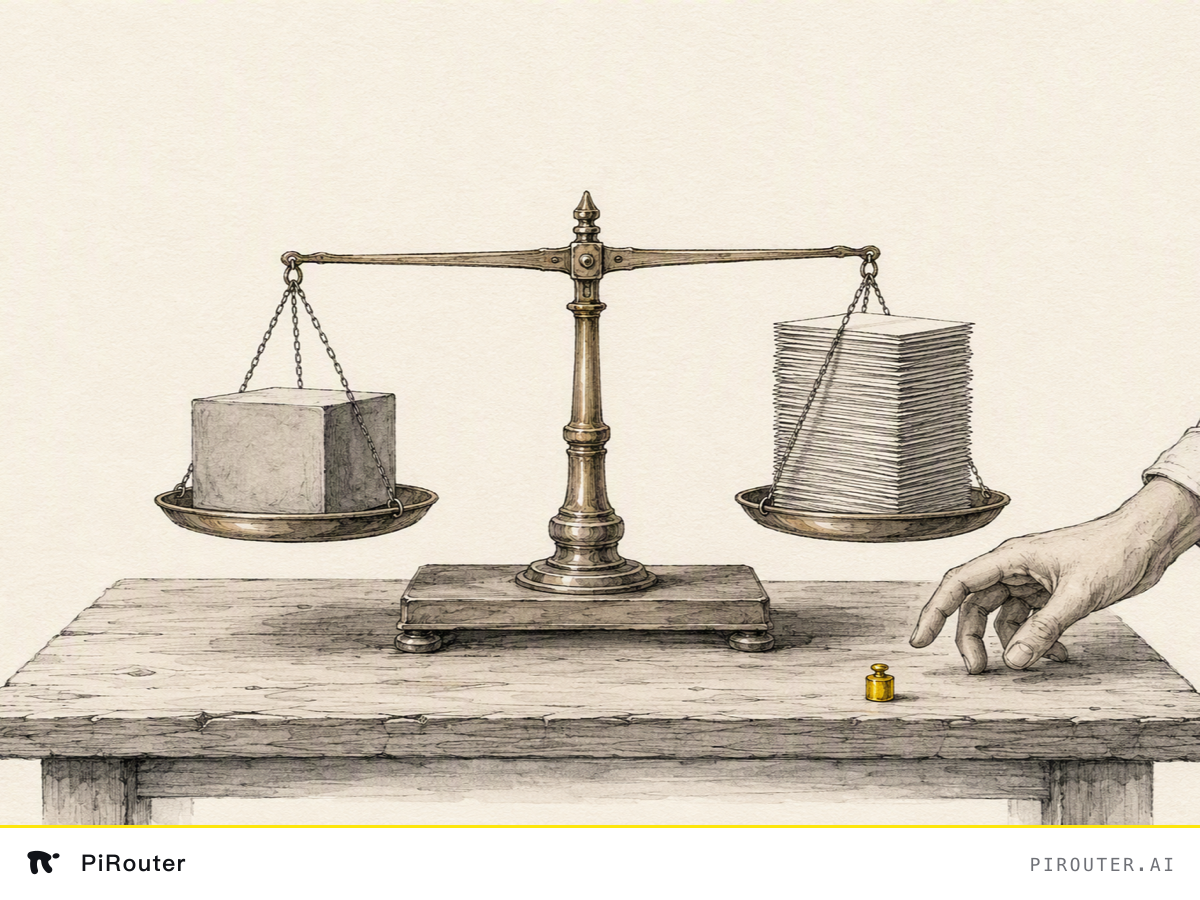
Hand-drawn ink illustration: a brass balance scale on a workbench. One pan holds a single plain block, the other a tall stack of many identical thin sheets; the beam is very nearly level. A small yellow brass weight lies on the bench beside the scale, off both pans, with a hand reaching toward it.

Is Claude Fable 5.1 cheaper than Opus 5? Only when cache reads are a third of your bill

Leo Kaka

Hand-drawn illustration: one open team wallet on a wooden workbench with five hands reaching in at once, a single yellow coin among grey tokens, and a brass padlock hanging unlatched from the clasp

Shared team wallet for LLM APIs: who actually has one, and what each cap misses

Leo Kaka
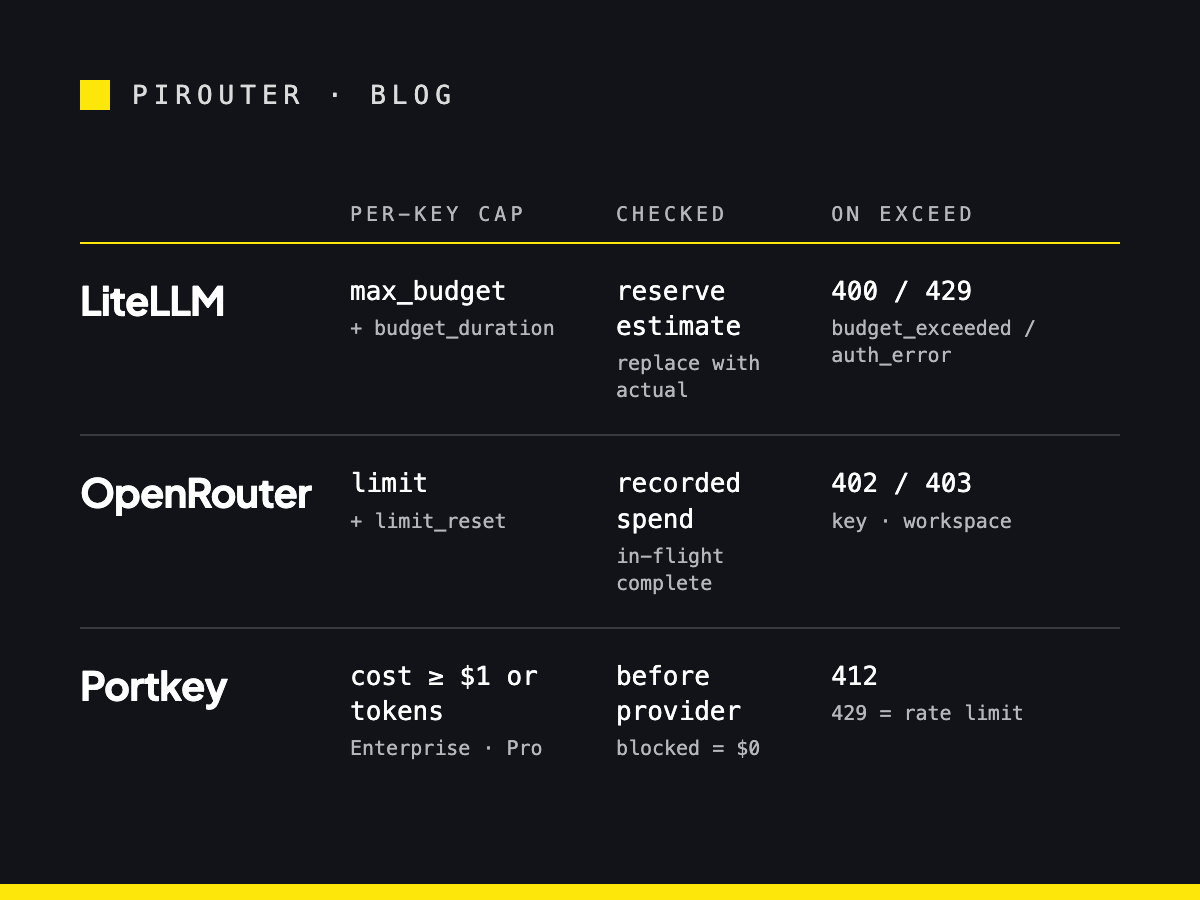
Matrix of three LLM routers, LiteLLM, OpenRouter and Portkey, against four budget dimensions: the per-key cap parameter, the shared wallet, when the check runs, and the HTTP status returned when the cap is hit

Per-key spending limits: what LiteLLM, OpenRouter and Portkey enforce — and the four leaks a cap doesn't close

Leo Kaka
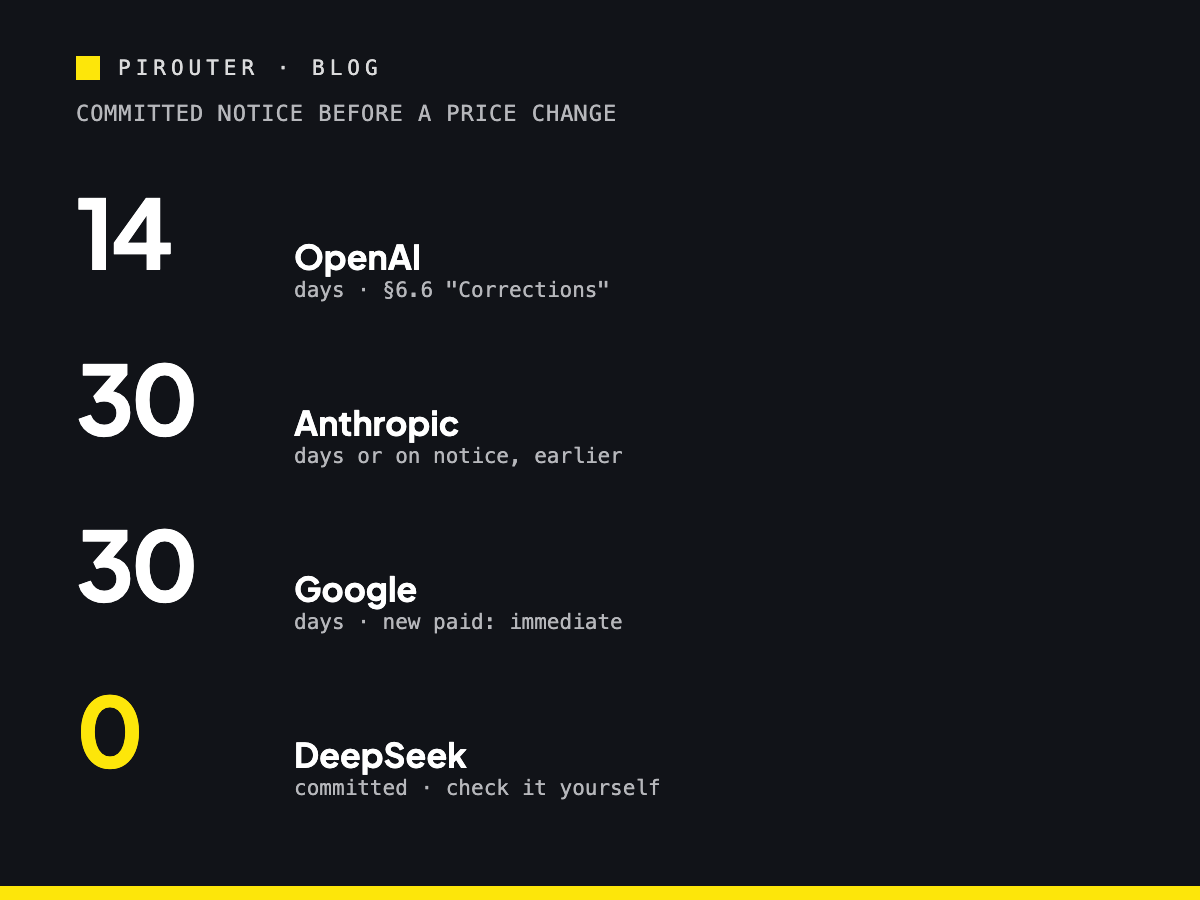
Four price-change notice periods compared: OpenAI fourteen days, Anthropic thirty days or on notice, Google thirty days with new paid services immediate, DeepSeek no committed period

Price-change notice: 14 days, 30 days, or nothing at all

PiRouter Team
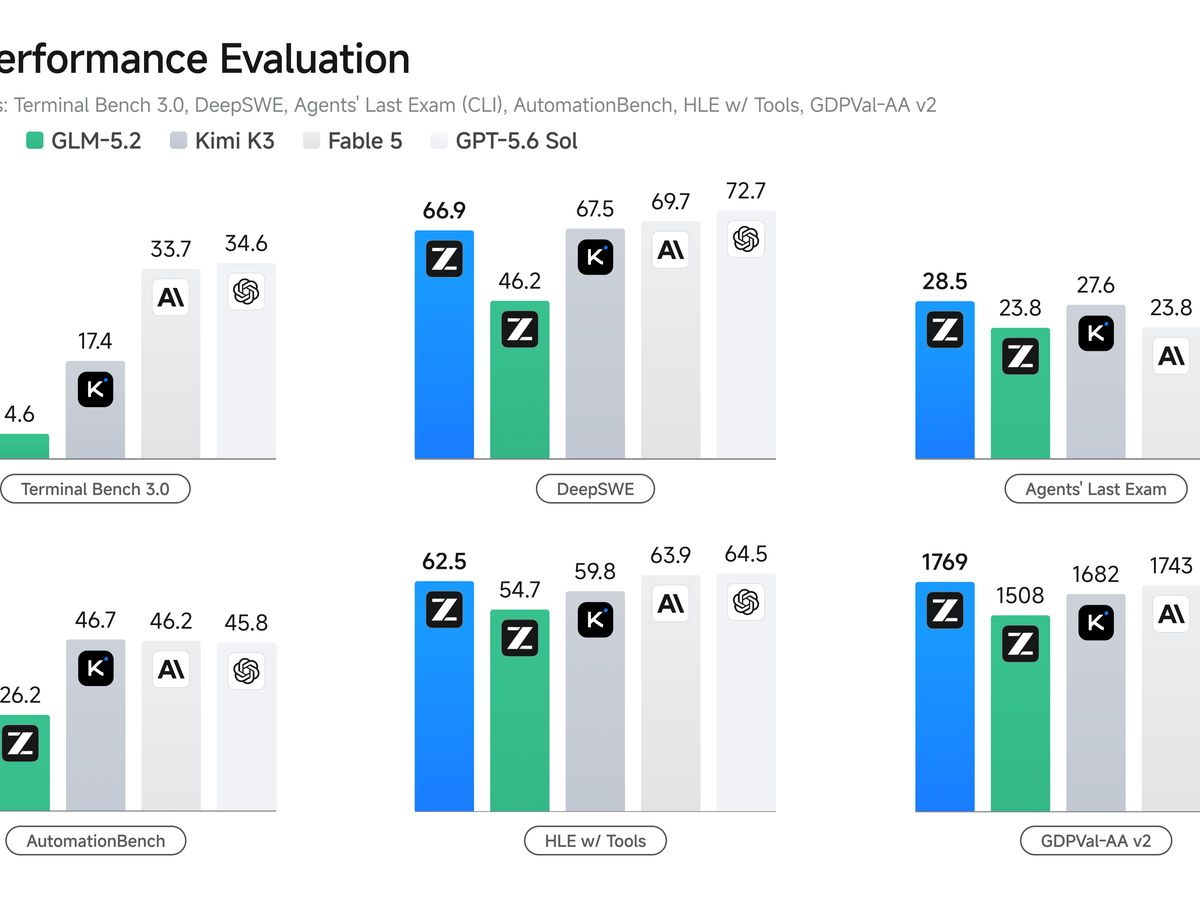
GLM-5.3 launch benchmark chart — one of the two time-of-day pricing moves this month rode in alongside these bars

DeepSeek peak pricing: which 30% of your bill can move

Leo Kaka