Blog

All articles

48 articles

13–24 of 48 articles · Page 2 of 4

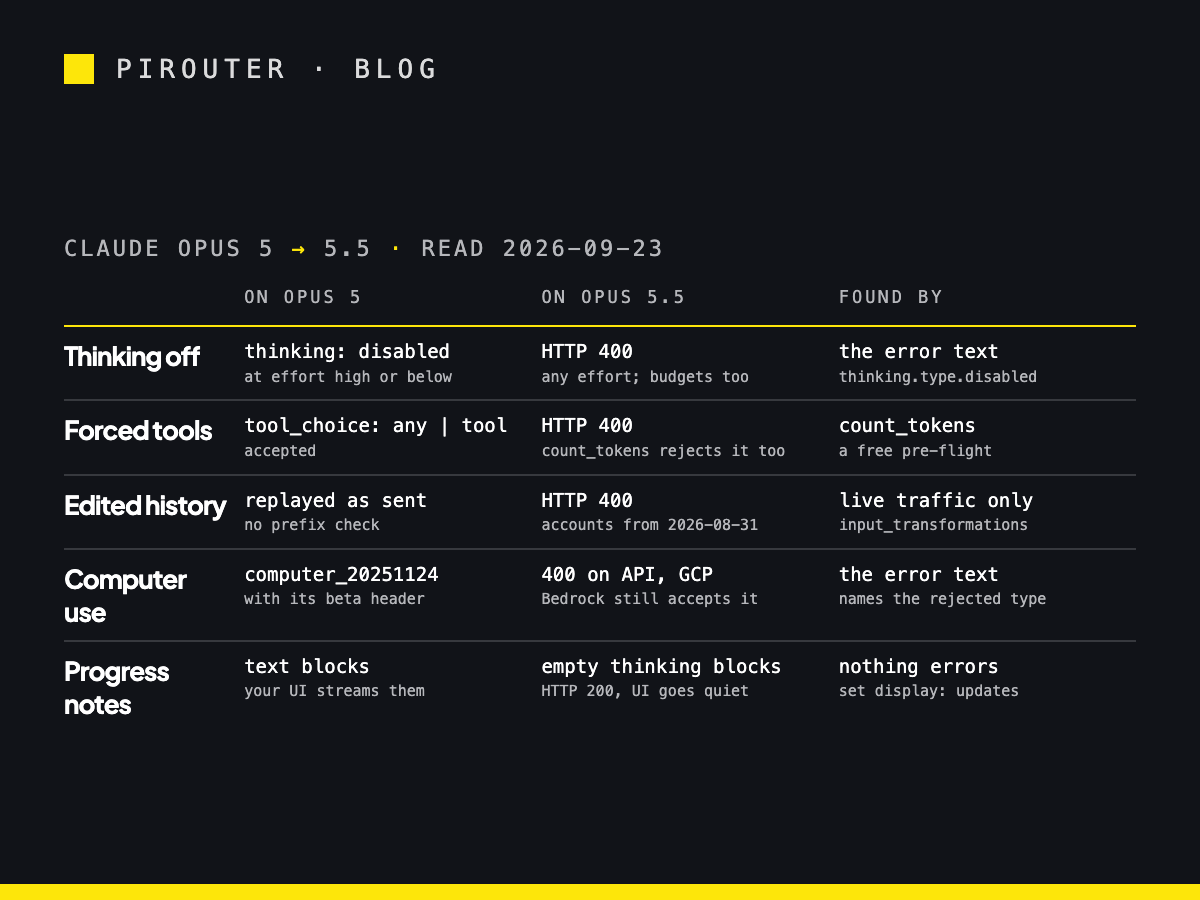
  1. Table of five changes from Claude Opus 5 to Claude Opus 5.5: thinking off, forced tools, edited history, computer use and progress notes, with what Opus 5 accepted, what Opus 5.5 returns (four HTTP 400s and one HTTP 200 with a quiet UI), and how you find out for each

    What breaks when you switch to Claude Opus 5.5: four 400s, three silent changes, and what your fallback loses

    Leo Kaka
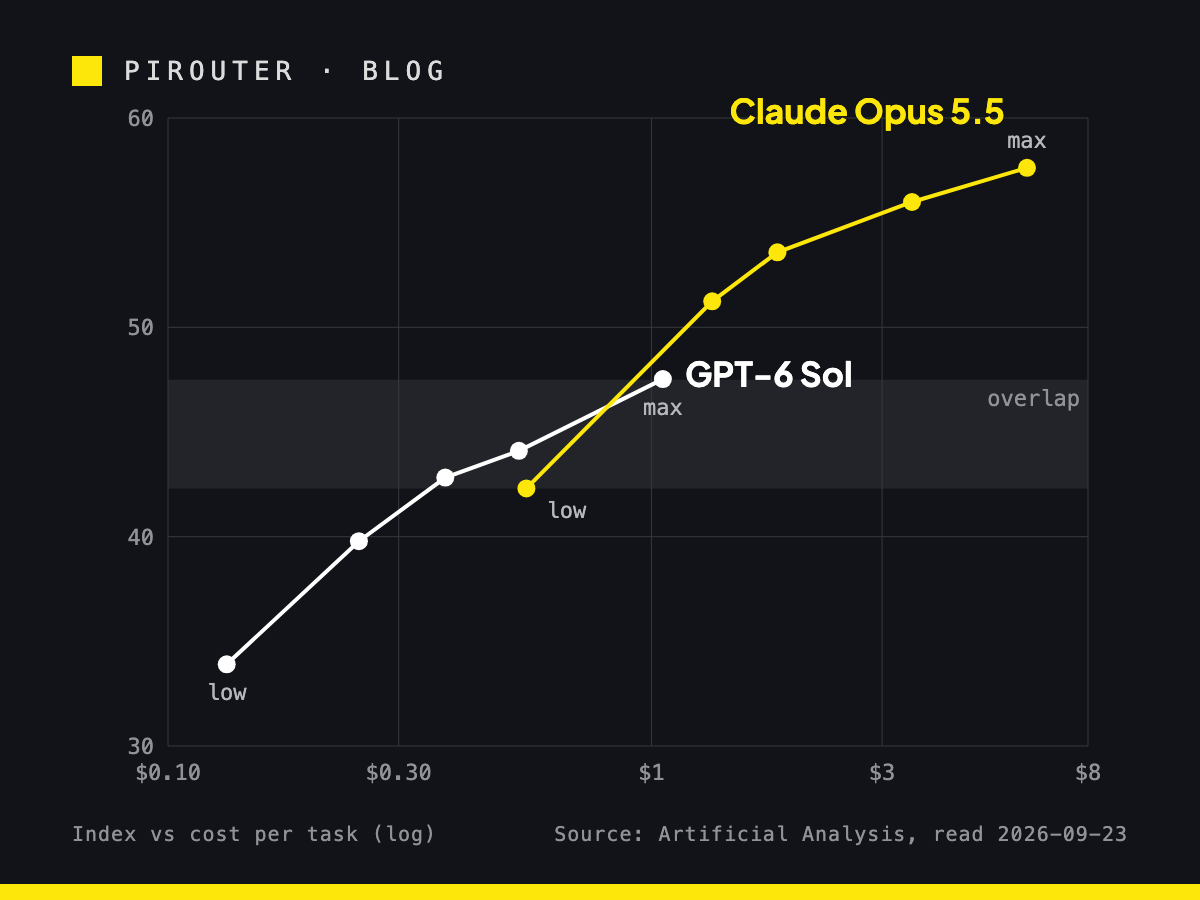
  2. Scatter chart on a dark background: two lines of five points each, one for GPT-6 Sol and one for Claude Opus 5.5, plotting Artificial Analysis Intelligence Index score against cost per task on a log scale from low to max effort. Sol runs from 34 points at $0.13 to 47.5 at $1.06; Opus 5.5 runs from 42 points at $0.55 to 57.6 at $5.98. The two lines overlap only between about 42 and 47.5 points.

    GPT-6 Sol vs Claude Opus 5.5 cost per task: Sol costs 28% to 79% as much for the same target score

    Leo Kaka
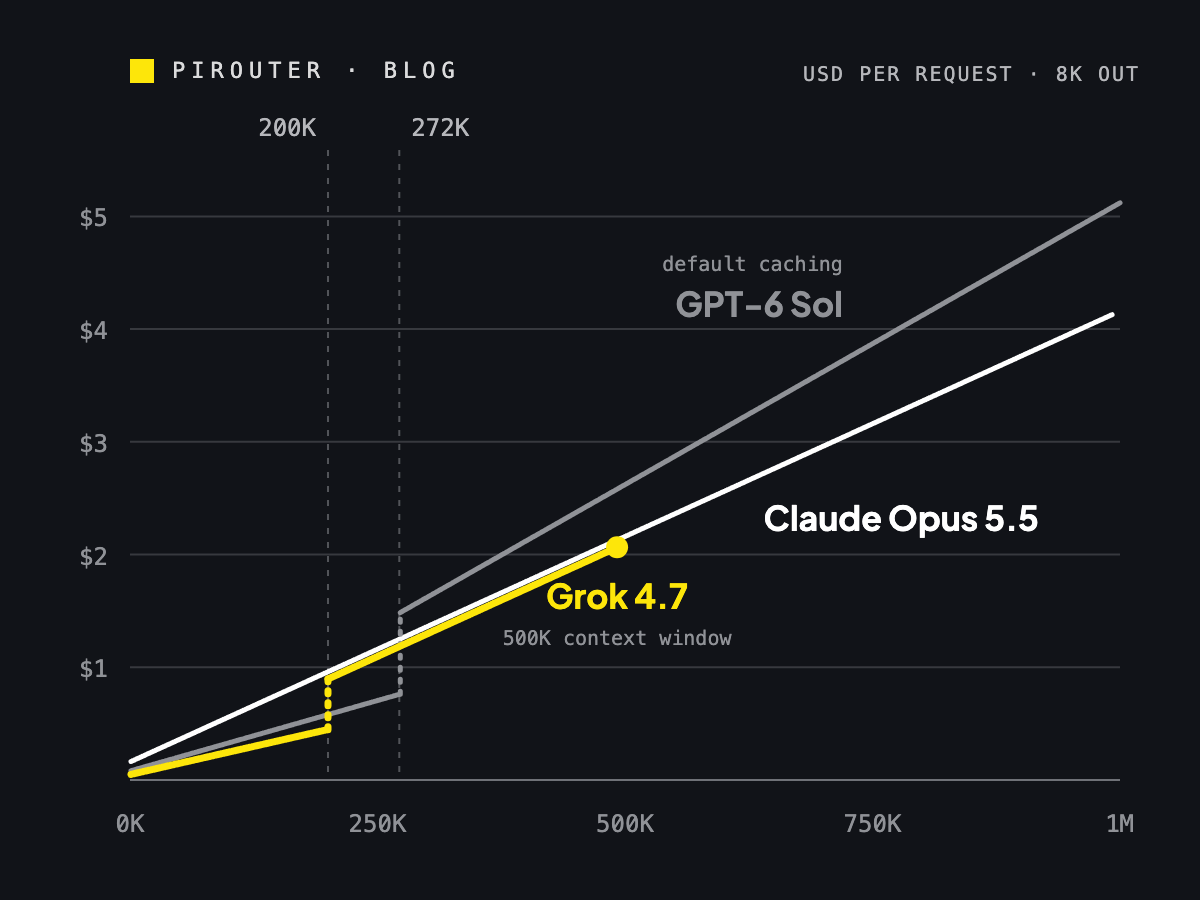
  3. Line chart of the cost of one request against prompt size from 0 to 1M tokens, 8K output, with GPT-6 Sol at its default caching setting. Grok 4.7 (yellow) jumps at 200K and ends at its 500K context window; GPT-6 Sol (grey) jumps at 272K and runs above the others from there; Claude Opus 5.5 (white) rises in a straight line with no step.

    What a 250K prompt costs on Grok 4.7, GPT-6 Sol and Opus 5.5: the 200K and 272K price cliffs

    Leo Kaka
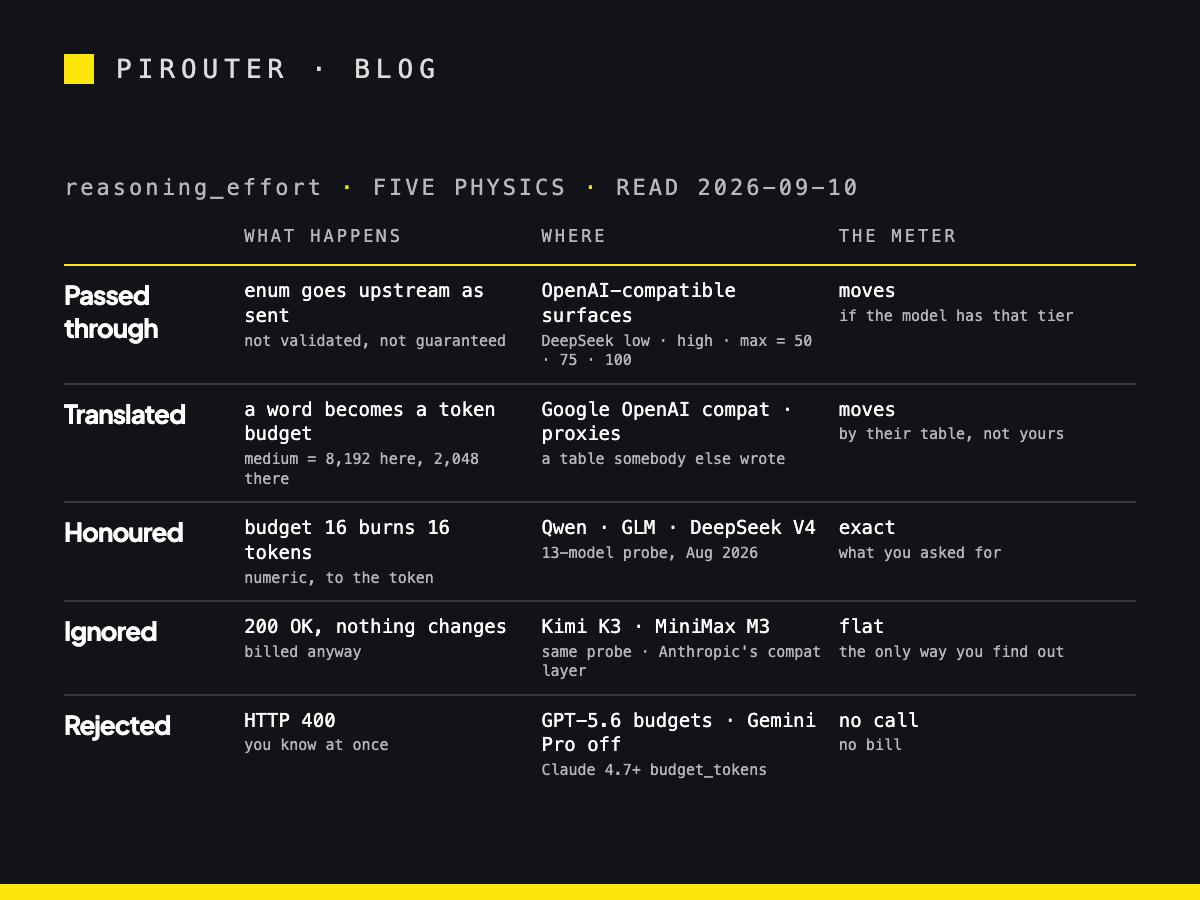
  4. Matrix of the five things that can happen to a reasoning_effort value after a 200 response: passed through, translated into a token budget, honoured to the token, accepted and ignored, rejected with 400, with where each is documented and what the reasoning-token meter does

    What reasoning_effort actually does on DeepSeek, OpenAI, Anthropic and Gemini: one name, five physics, and a five-line test

    Leo Kaka
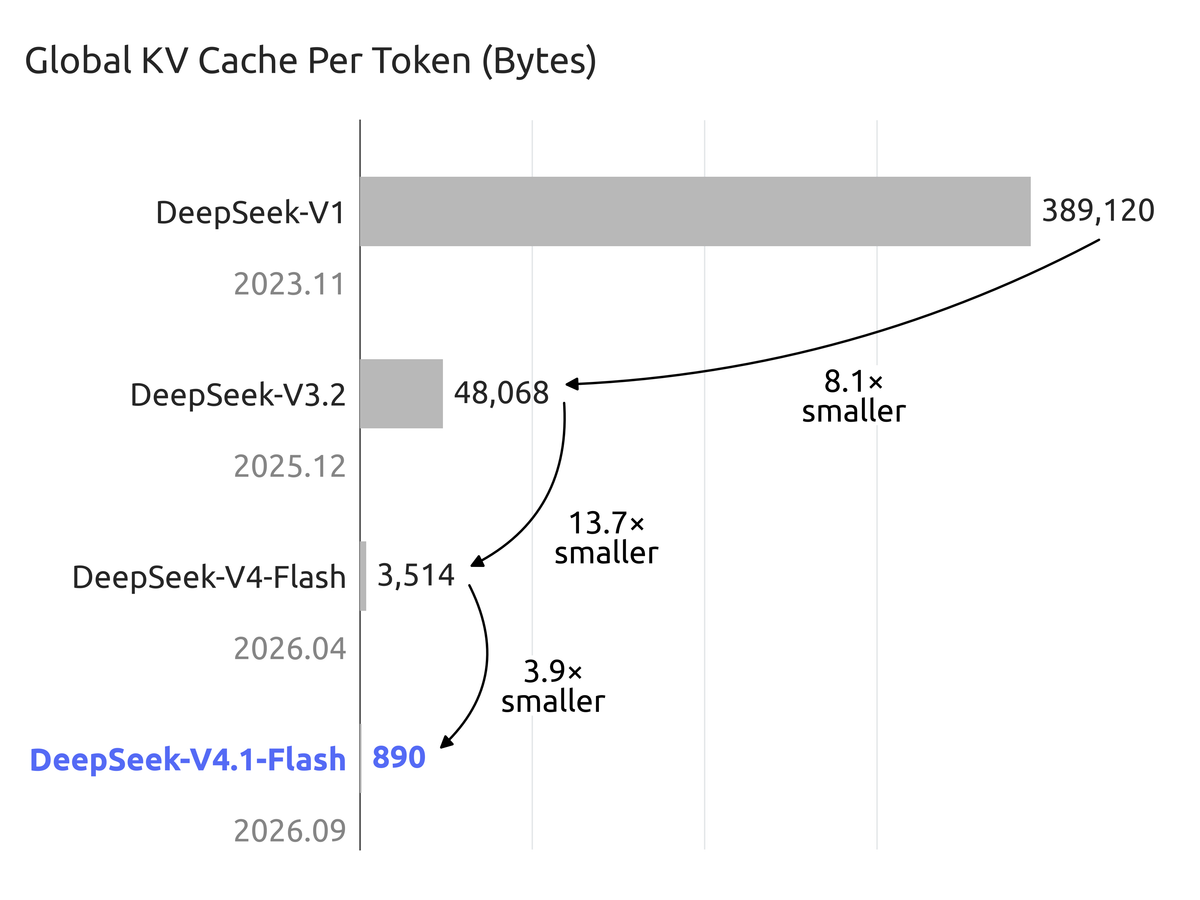
  5. DeepSeek's official chart of global KV cache bytes per token across generations: V1 389,120, V3.2 48,068, V4-Flash 3,514, V4.1-Flash 890, the reason the vendor gives for the Flash price coming down

    DeepSeek V4.1 Flash price cut: 9% to 57% depending on your token mix, and the deepseek-v4-pro switch DeepSeek later reversed

    Leo Kaka
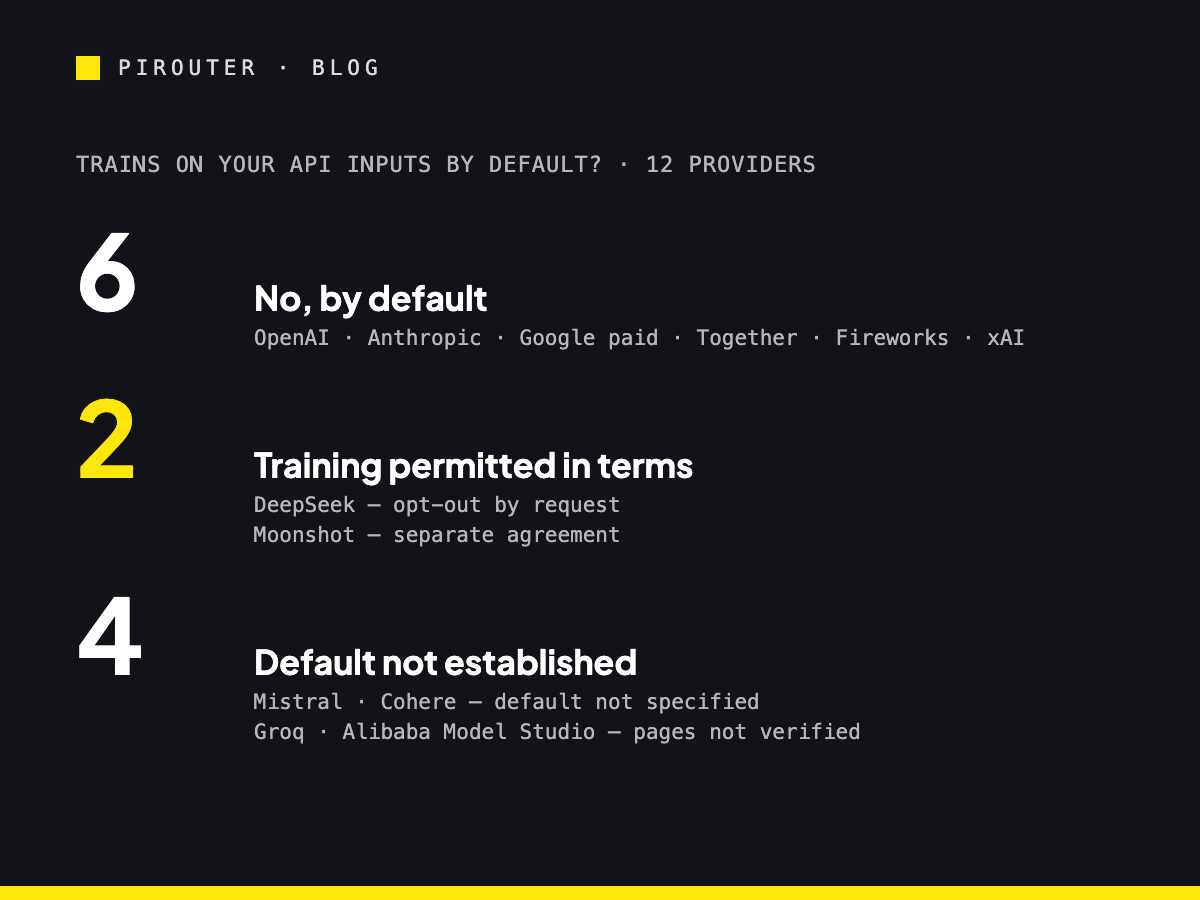
  6. Dark data card comparing twelve LLM providers' API-data training terms: six state no training by default (OpenAI, Anthropic, Google paid tier, Together, Fireworks, xAI); DeepSeek and Moonshot permit training under their published terms; Mistral and Cohere describe opt-out controls without establishing every API product's default; Groq and Alibaba Model Studio could not be verified from the pages read. The three groups total 6, 2 and 4; the footer distinguishes permission to train from proof of actual training.

    Does OpenAI train on your API data? 12 providers, 3 answers, one 30-day default

    PiRouter Team
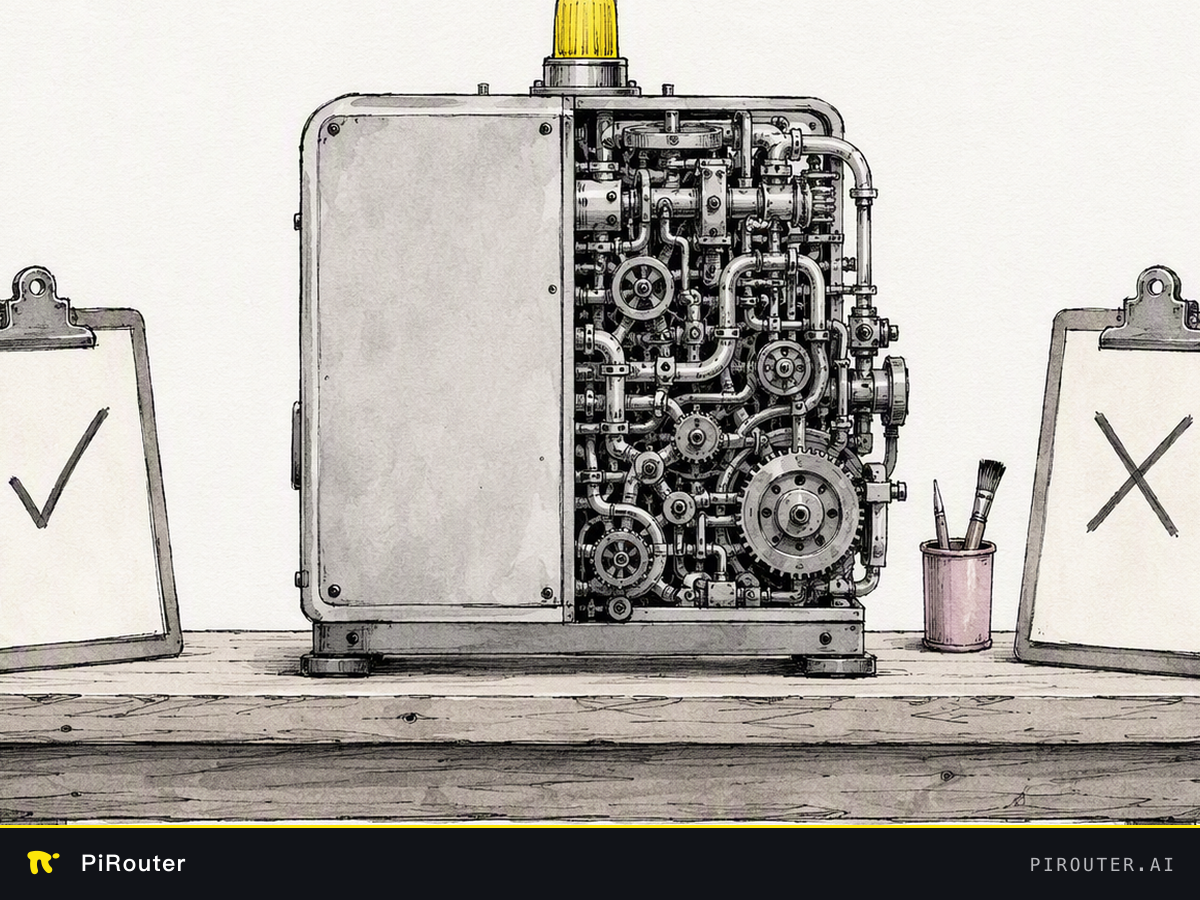
  7. One machine whose left half is a plain casing and right half a dense tangle of gears; a clipboard on each side, one marked with a check and one with a cross.

    Is GPT-6 Astra worth $10/$50? Two evals disagree, and both are right

    Linden Kern
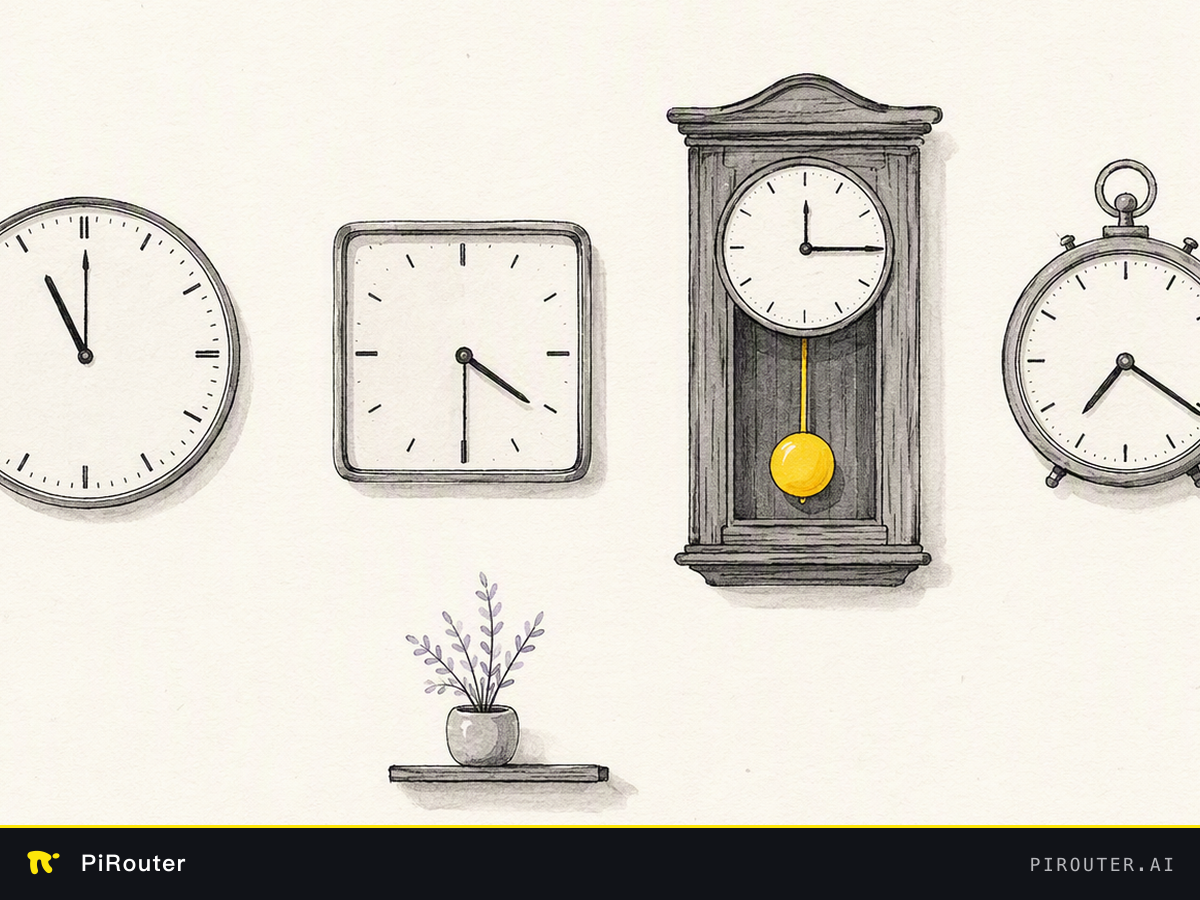
  8. Four clocks of different designs mounted on one wall, each showing a different time; one has a yellow pendulum.

    How to measure the latency an LLM gateway adds: six questions to ask before you believe a number

    Leo Kaka
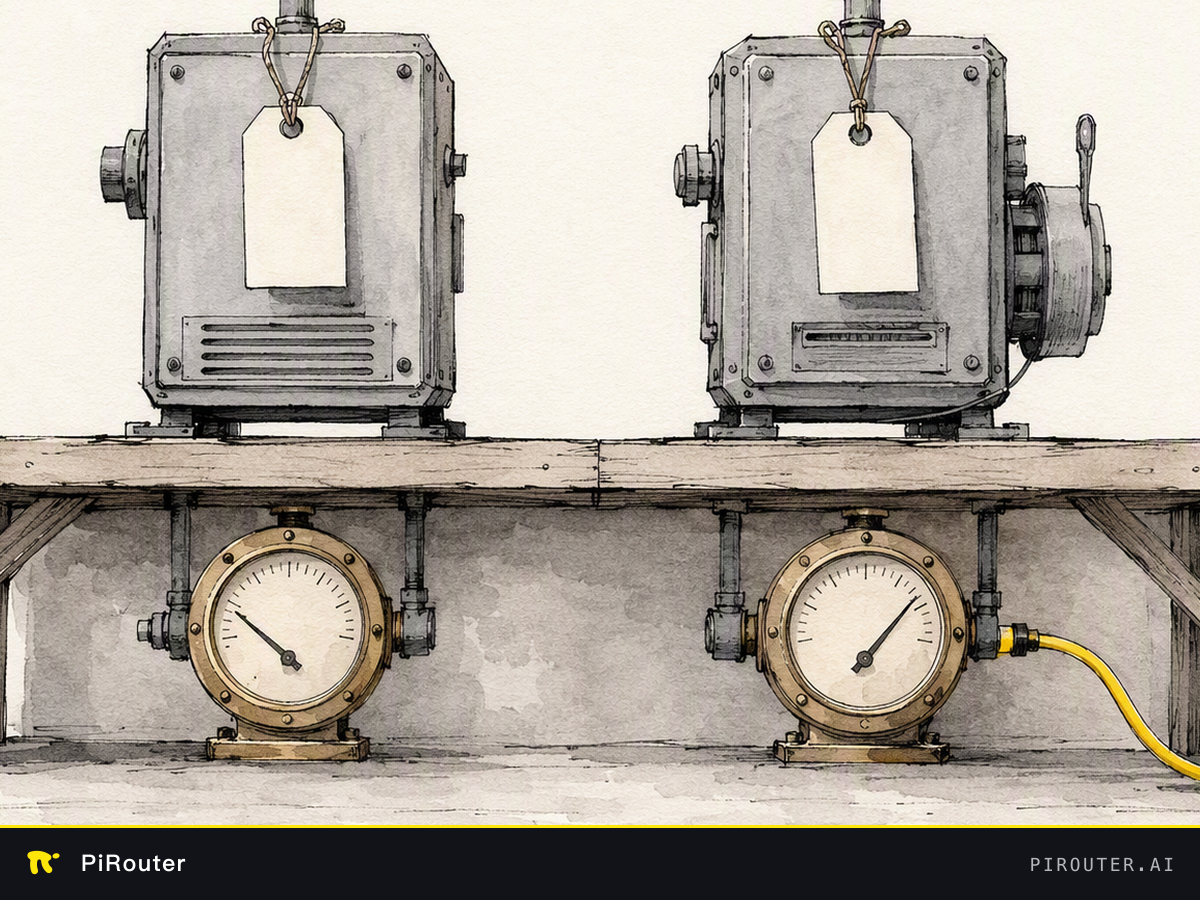
  9. Two identical grey machines on a workbench, each hung with a blank price tag; the brass utility meters beneath them read very differently, and a single yellow line feeds only the higher one.

    GPT-6 Astra vs Claude Fable 5.1: same $10/$50, and a 39% cheaper agent bill

    Leo Kaka
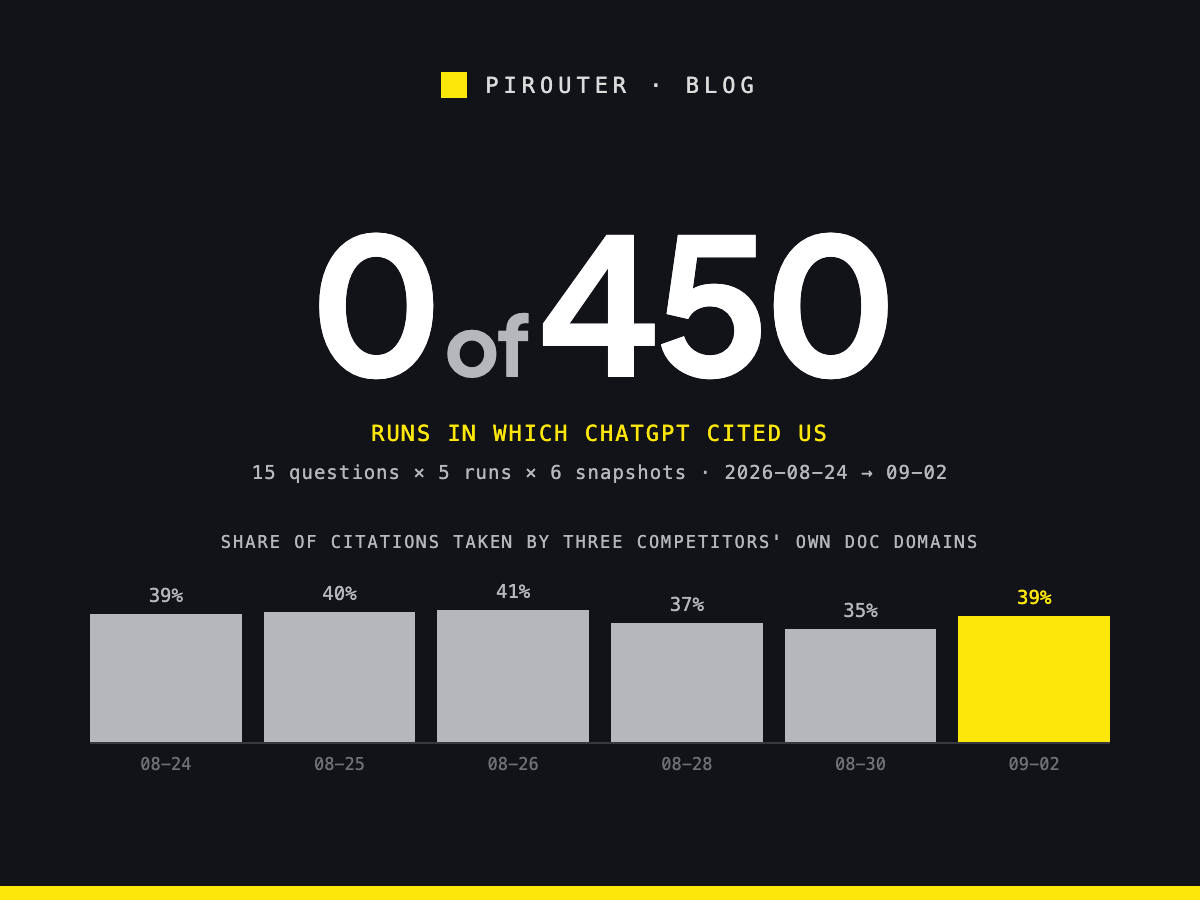
  10. Data card on a dark field: the figure 0 of 450, labelled as the number of ChatGPT runs across six snapshots from 24 August to 2 September 2026 that cited pirouter.ai, beside six small bars showing the share of each snapshot's citations taken by three competitors' own documentation domains, between 34.9 and 40.6 percent

    How do Perplexity and ChatGPT decide which sources to cite? AI citations measured over 450 runs and two audits: documentation-shaped pages win

    Linden Kern
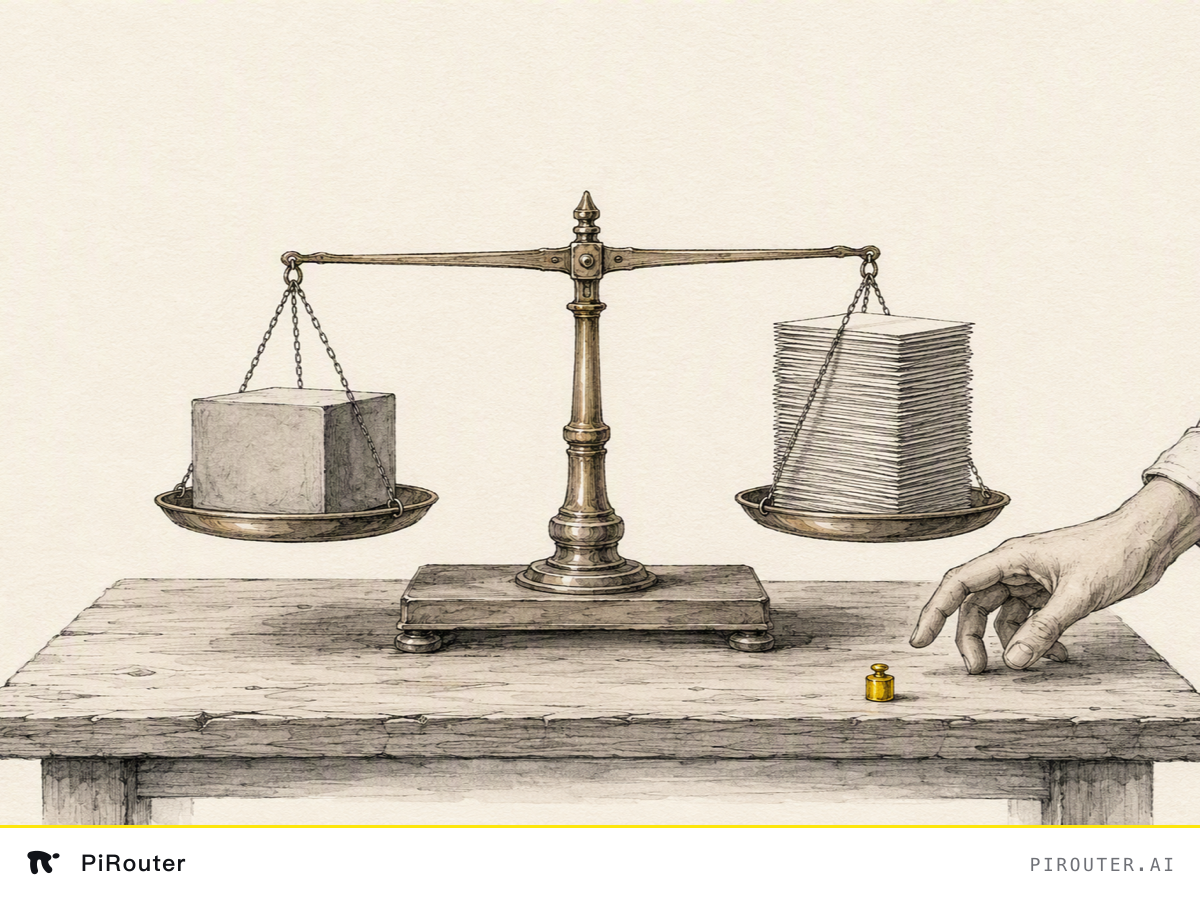
  11. Hand-drawn ink illustration: a brass balance scale on a workbench. One pan holds a single plain block, the other a tall stack of many identical thin sheets; the beam is very nearly level. A small yellow brass weight lies on the bench beside the scale, off both pans, with a hand reaching toward it.

    Is Claude Fable 5.1 cheaper than Opus 5? Only when cache reads are a third of your bill

    Leo Kaka
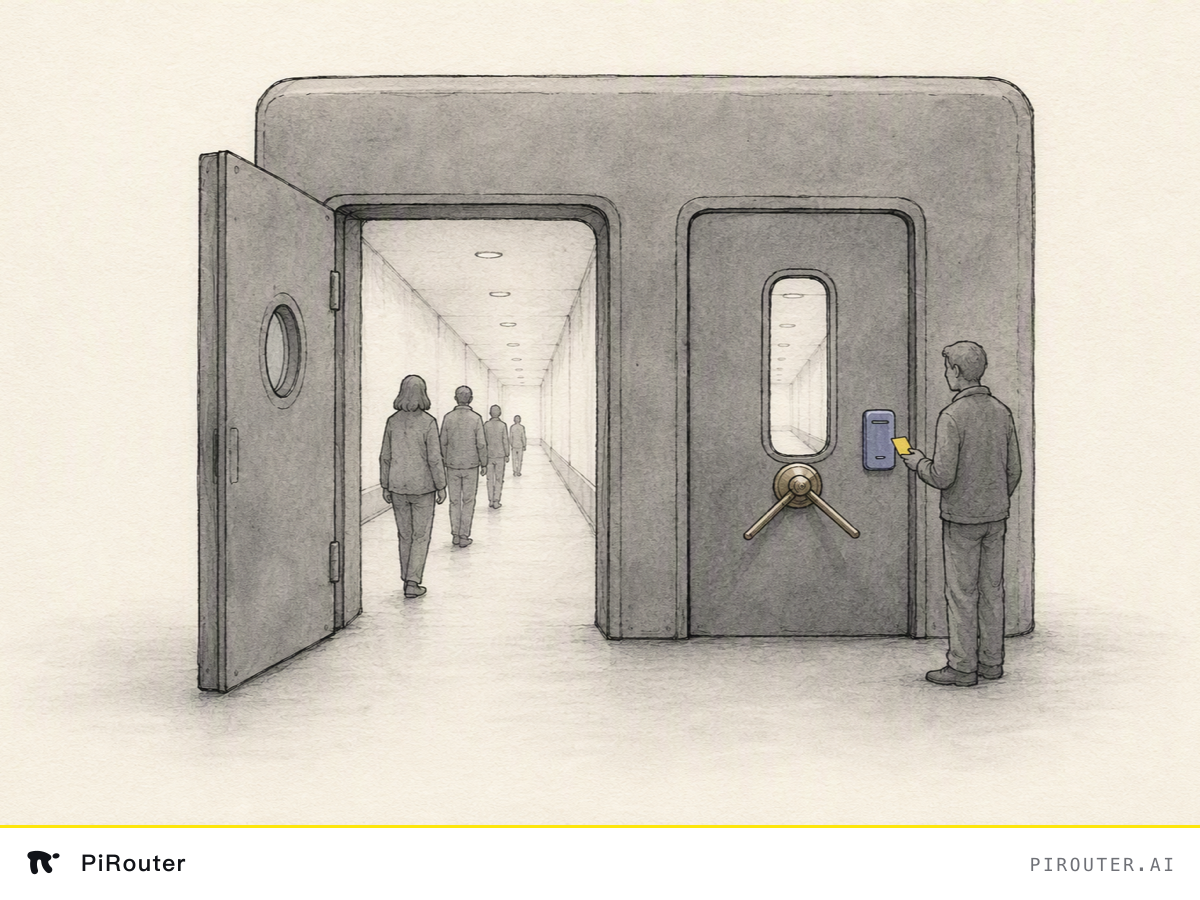
  12. Hand-drawn ink illustration: one grey machine with two doors cut into the same body. The left door stands open and a few figures walk through it into a lit corridor; the right door is closed, fitted with a brass turnstile and a card reader, and through its window the same corridor is visible. One figure waits at the right door holding a yellow card.

    Astra's "Critical" cyber threshold, Mythos 5.1 and Gemini 3.8 Flash Cyber: one model, two safety tiers, and API access is now a spec-sheet line

    Linden Kern