
Blog

Topic

#providers

15 articles
Unmodified Claude Sonnet 5.5 pirouter model card centered on a warm cream background, showing standard input and output rates, 1M context, and the complete footer.

Claude Sonnet 5.5 on pirouter: exact model ID and $2/M standard input

PiRouter Team
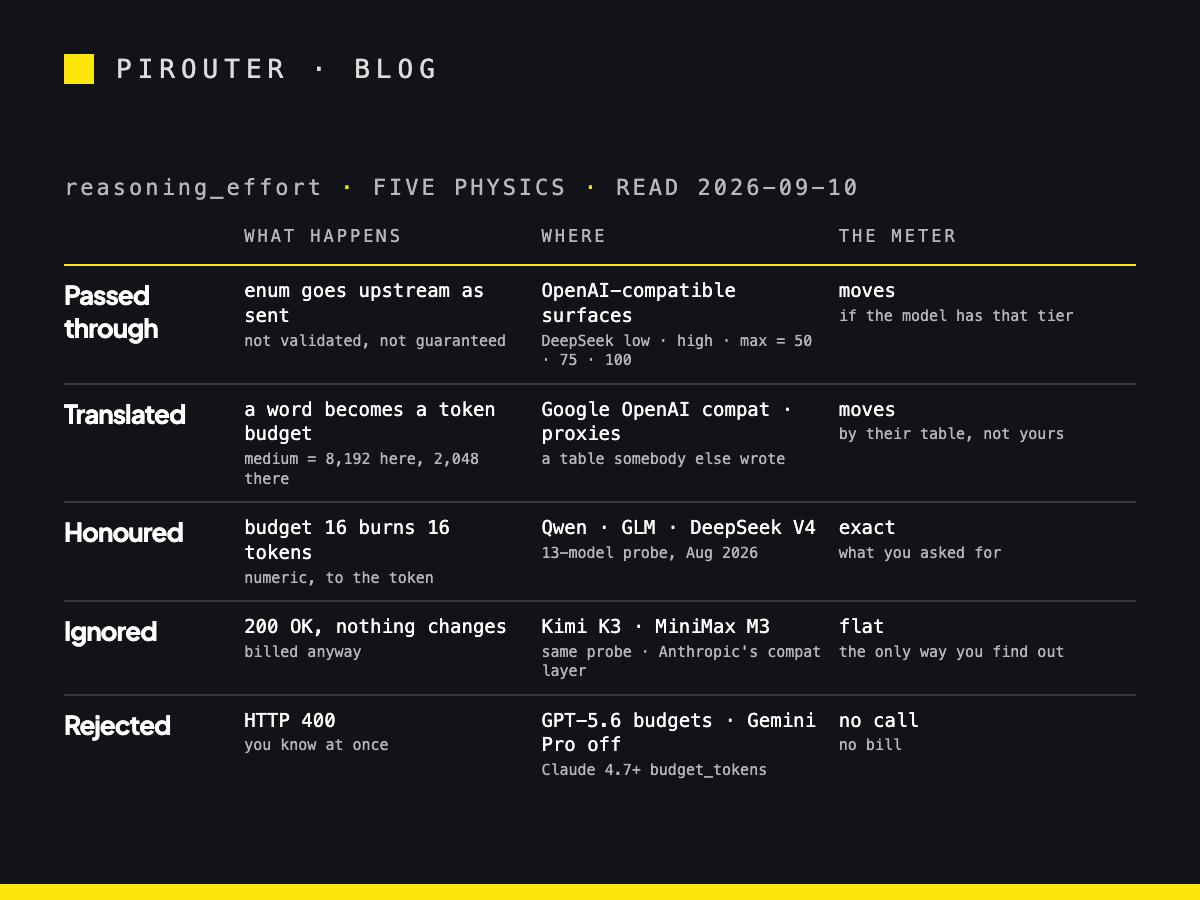
Matrix of the five things that can happen to a reasoning_effort value after a 200 response: passed through, translated into a token budget, honoured to the token, accepted and ignored, rejected with 400, with where each is documented and what the reasoning-token meter does

What reasoning_effort actually does on DeepSeek, OpenAI, Anthropic and Gemini: one name, five physics, and a five-line test

Leo Kaka
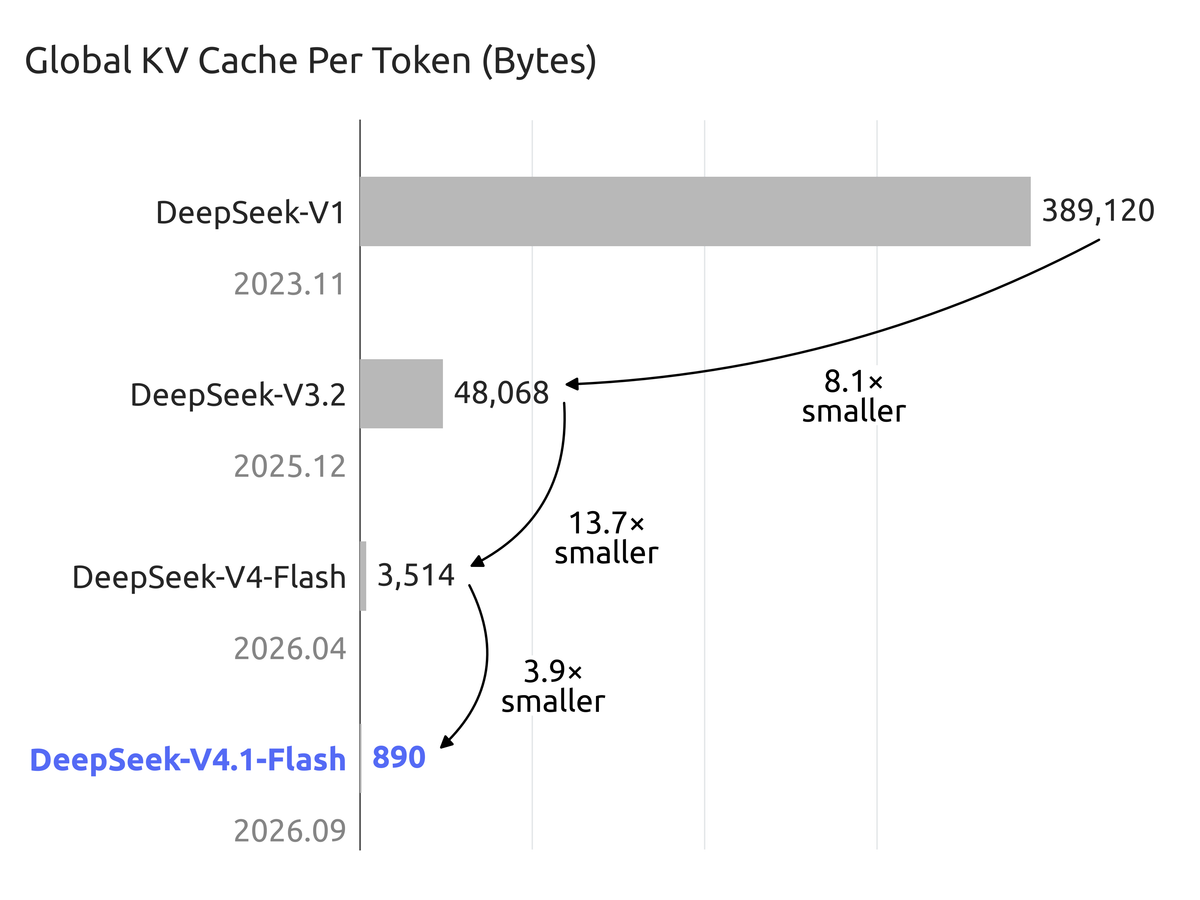
DeepSeek's official chart of global KV cache bytes per token across generations: V1 389,120, V3.2 48,068, V4-Flash 3,514, V4.1-Flash 890, the reason the vendor gives for the Flash price coming down

DeepSeek V4.1 Flash price cut: 9% to 57% depending on your token mix, and the deepseek-v4-pro switch DeepSeek later reversed

Leo Kaka
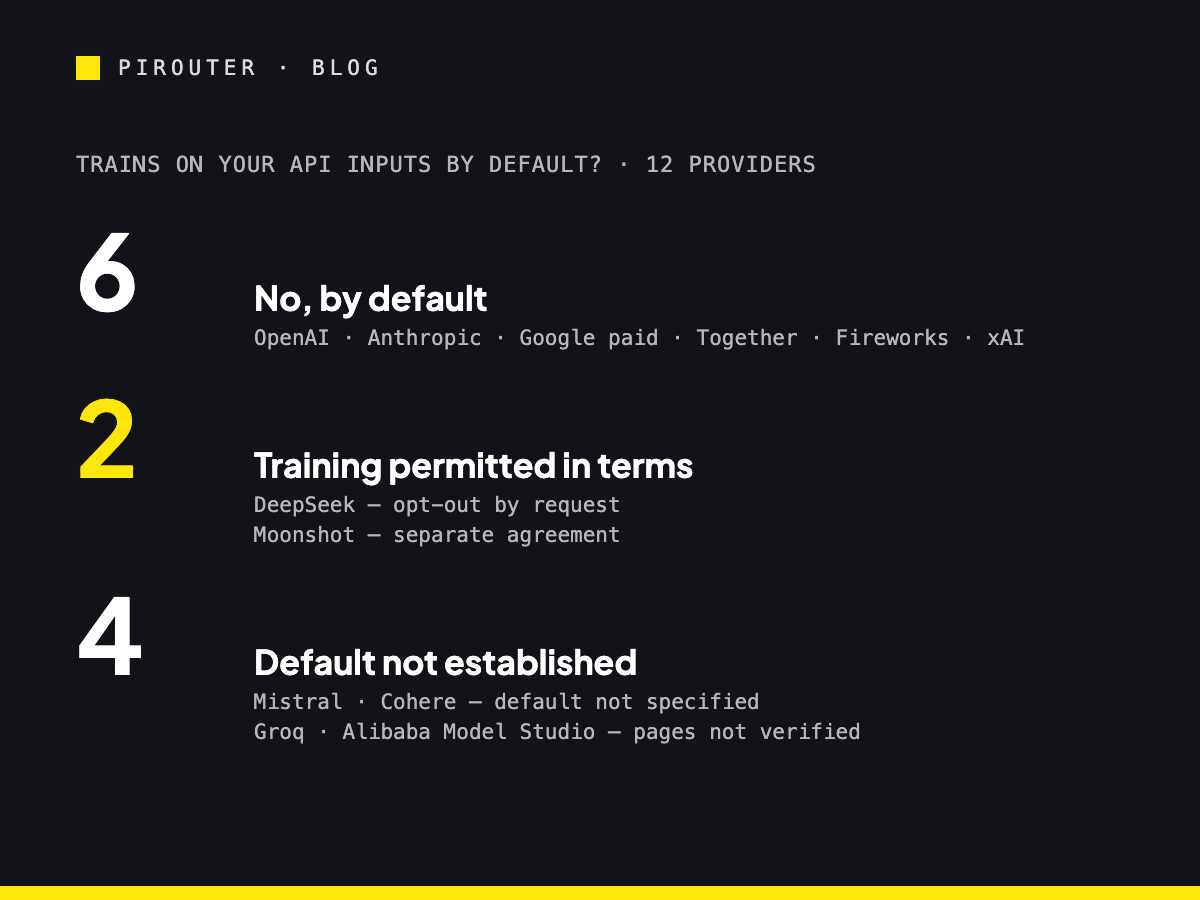
Dark data card comparing twelve LLM providers' API-data training terms: six state no training by default (OpenAI, Anthropic, Google paid tier, Together, Fireworks, xAI); DeepSeek and Moonshot permit training under their published terms; Mistral and Cohere describe opt-out controls without establishing every API product's default; Groq and Alibaba Model Studio could not be verified from the pages read. The three groups total 6, 2 and 4; the footer distinguishes permission to train from proof of actual training.

Does OpenAI train on your API data? 12 providers, 3 answers, one 30-day default

PiRouter Team
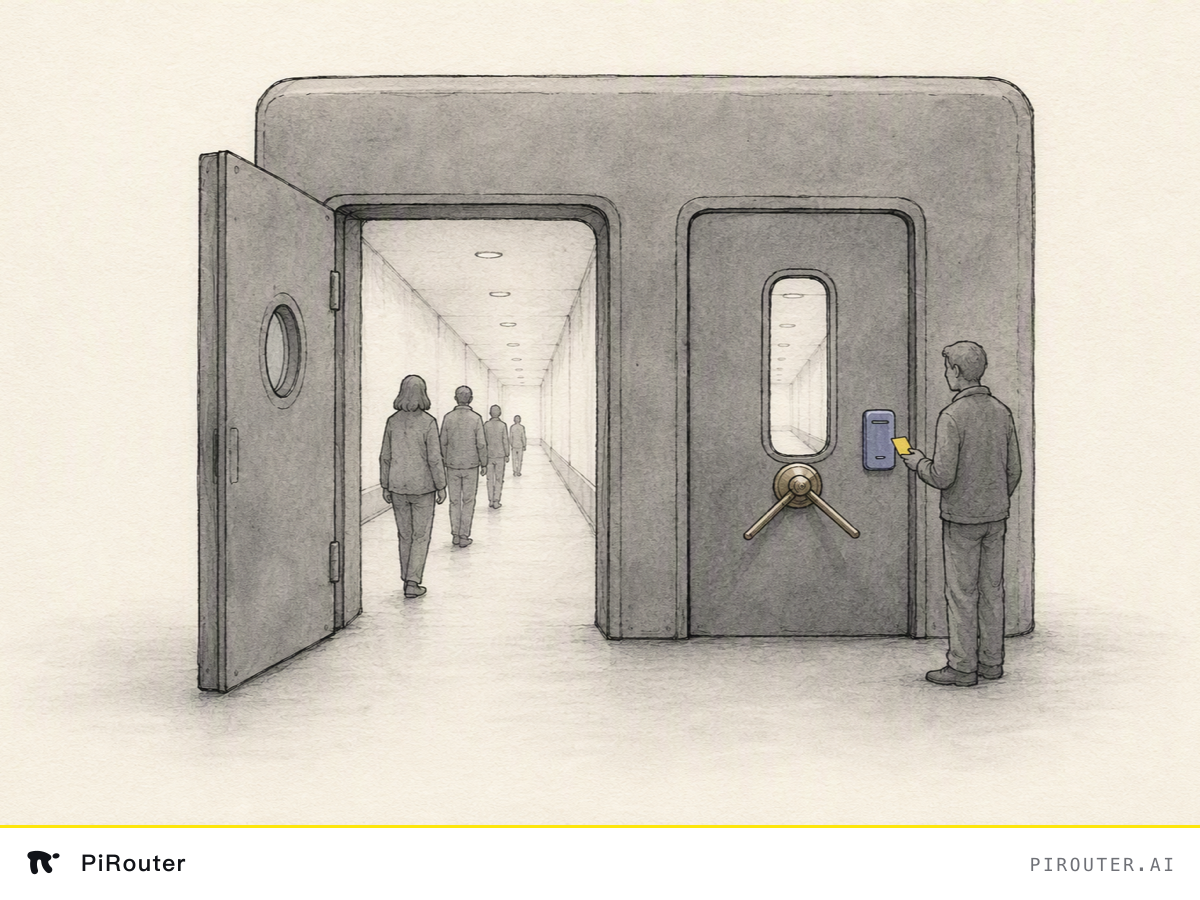
Hand-drawn ink illustration: one grey machine with two doors cut into the same body. The left door stands open and a few figures walk through it into a lit corridor; the right door is closed, fitted with a brass turnstile and a card reader, and through its window the same corridor is visible. One figure waits at the right door holding a yellow card.

Astra's "Critical" cyber threshold, Mythos 5.1 and Gemini 3.8 Flash Cyber: one model, two safety tiers, and API access is now a spec-sheet line

Linden Kern
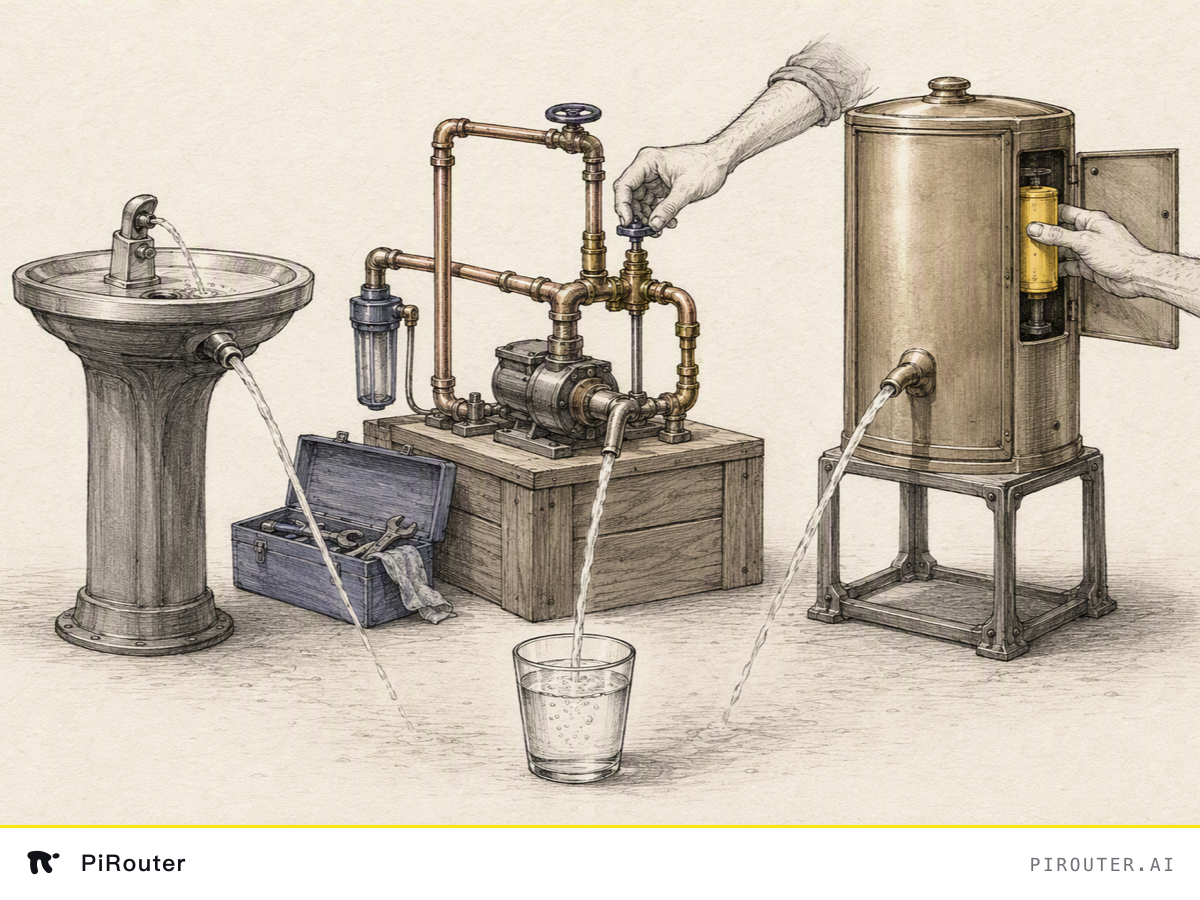
Hand-drawn ink illustration: three different objects in a row, each delivering water into the same glass. A plumbed-in public drinking fountain on the left; a hand-built rig of copper pipe, valves and a pump on a wooden crate in the middle, its workings exposed with a toolbox beside it; a sealed brass cabinet on the right whose side hatch is open while a hand fits a yellow cartridge into it.

OpenRouter vs LiteLLM vs Portkey: three different products, and the seven questions that pick one

Leo Kaka

Hand-drawn ink illustration: a wooden counter with a person on each side and five objects along it, each caught at a different point of being handed over — a ring of yellow keys still held on the near side, a folded contract half-slid across with a corner in each hand, a sealed conduit resting exactly on the centre line, a brass alarm bell already on the far side, and a toolbox under the far person's hand.

Is a self-hosted LLM proxy better than a managed LLM gateway? Five things that change hands, and what each costs you

Leo Kaka
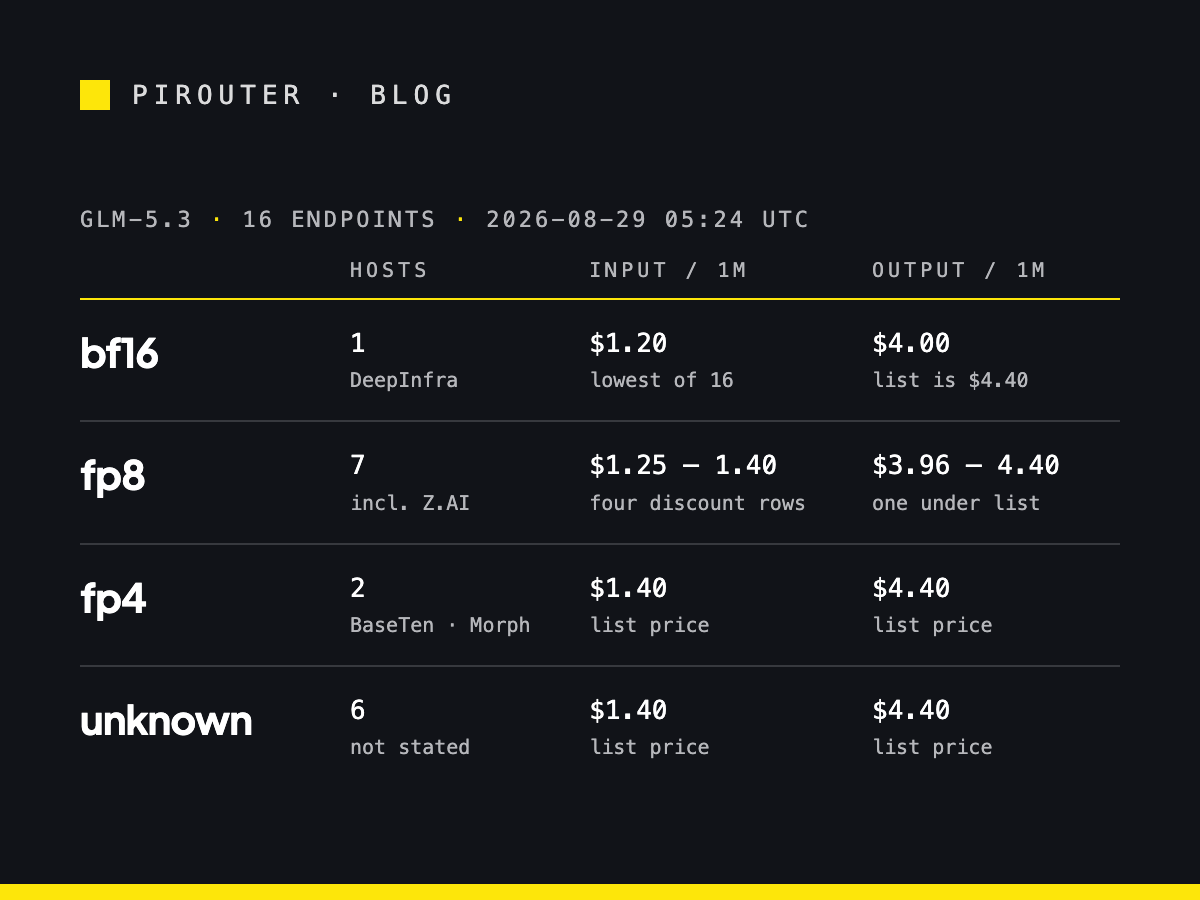
Matrix of GLM-5.3's sixteen OpenRouter endpoints on 2026-08-29 05:24 UTC, grouped by self-declared quantization: bf16 one host at $1.20/$4.00, fp8 seven hosts at $1.25–1.40 in, fp4 two hosts at $1.40/$4.40, unknown six hosts at $1.40/$4.40

GLM-5.3 open weights, day one: 16 providers, five prices, four quantizations — and BF16 is the cheapest

Linden Kern
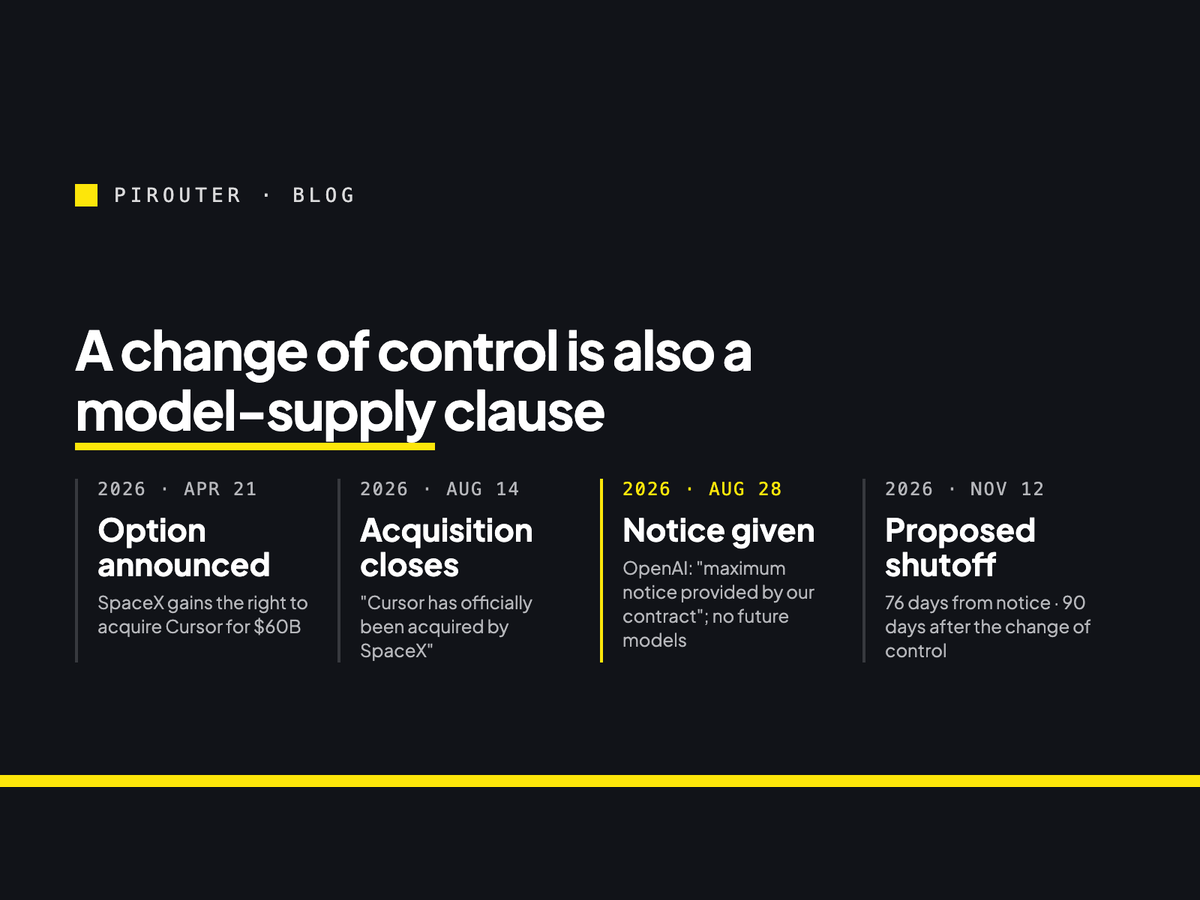
Timeline of the SpaceX–Cursor deal and OpenAI's response: 21 April option announced, 14 August acquisition completed, 28 August notice given, 12 November proposed shutoff

Cursor loses OpenAI models on November 12: the change-of-control clause behind the date, and the five questions to ask whoever holds your key

Leo Kaka
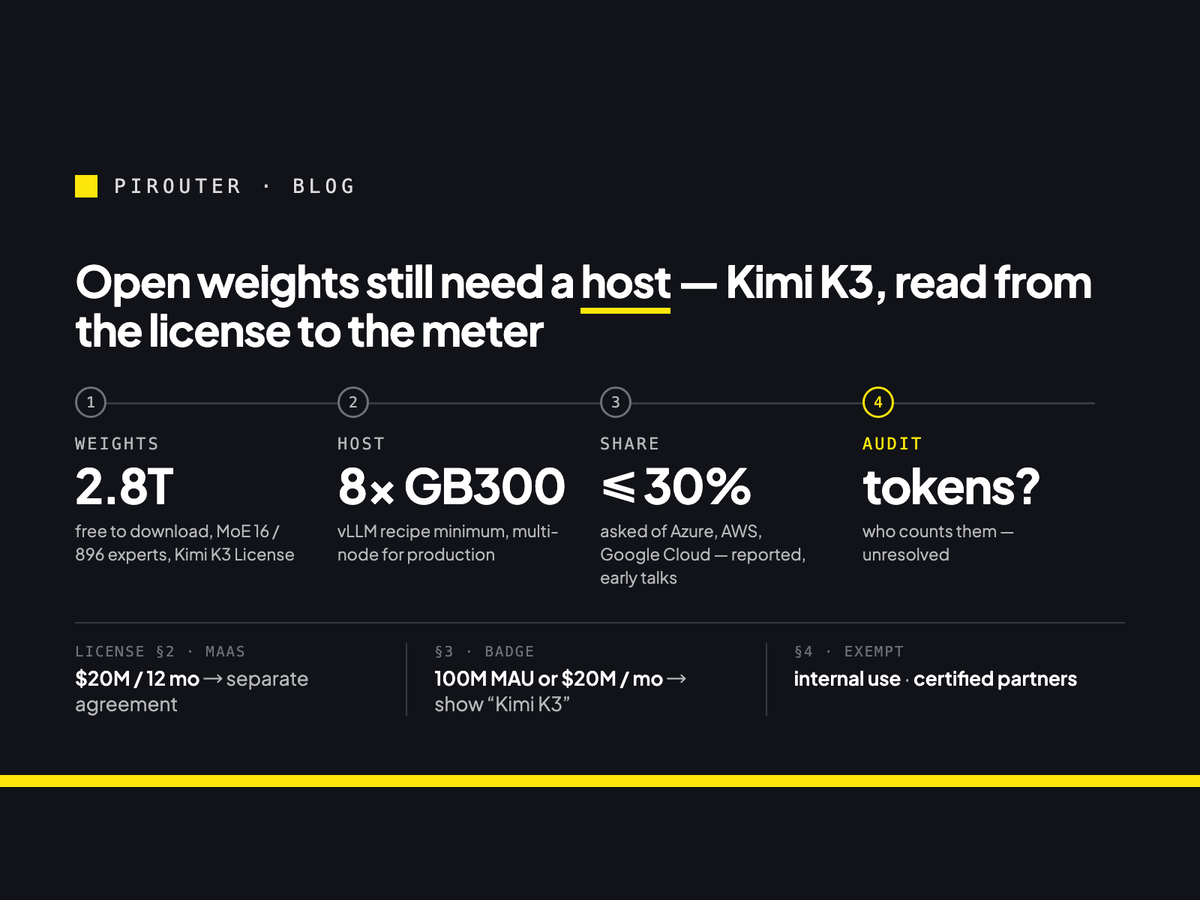
Four-stage diagram for Kimi K3: 2.8T weights free to download → host needs 8× GB300 or more → reported revenue share of up to 30% → token auditing unresolved. Below it, the three license thresholds: $20M over 12 months, 100M MAU or $20M a month, internal use and certified partners exempt

Kimi K3 license, commercial use: the $20M MaaS clause, the 100M-MAU badge, and the 30% Moonshot wants from Azure, AWS and Google

Linden Kern
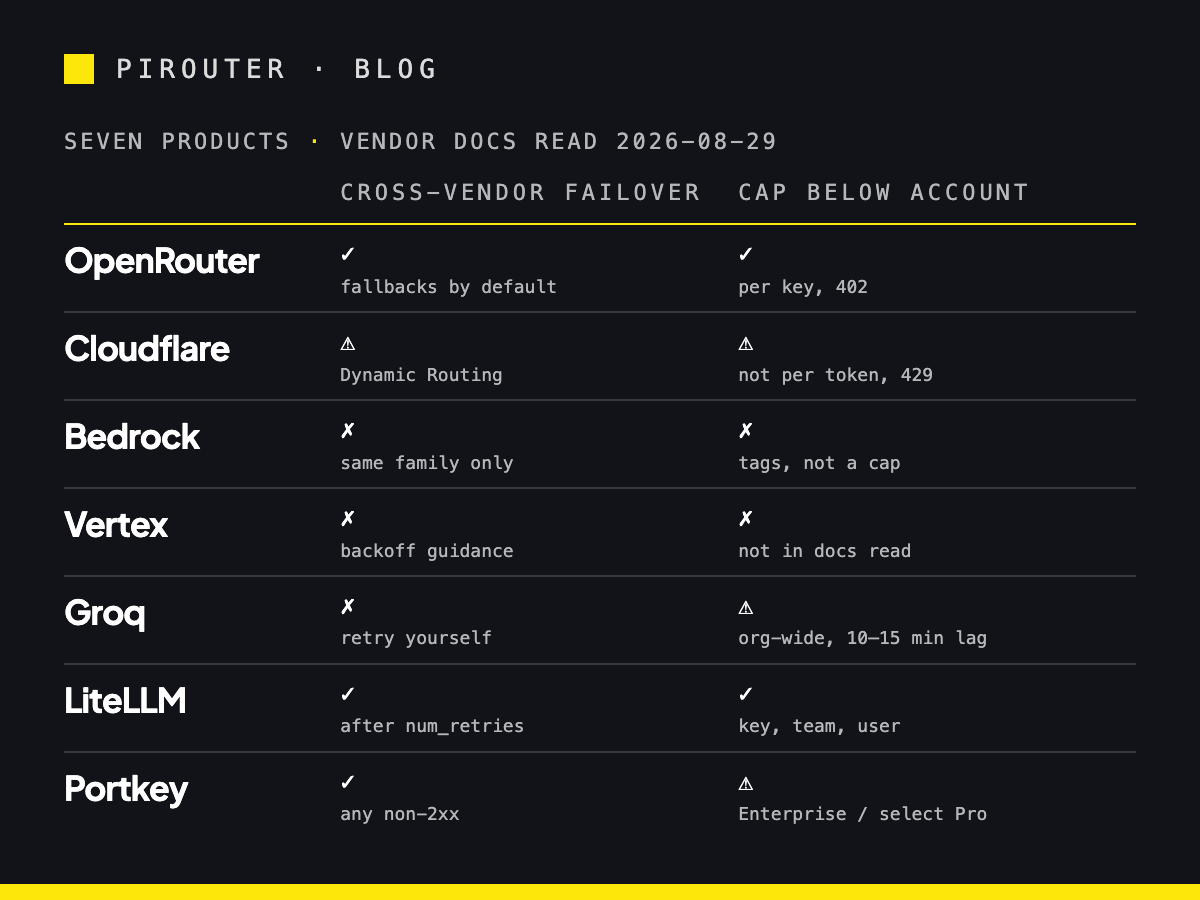
Matrix of six LLM API products offered as OpenRouter alternatives — Cloudflare AI Gateway, AWS Bedrock, Google Vertex, Groq, LiteLLM and Portkey — against four production columns: cross-vendor failover, a spend cap below the account, the Anthropic Messages API, and a zero-data-retention control, each cell marked available, gated or absent according to the vendor's own documentation

OpenRouter alternatives for production workloads: what Cloudflare, Bedrock, Vertex, Groq, LiteLLM and Portkey actually document

Leo Kaka
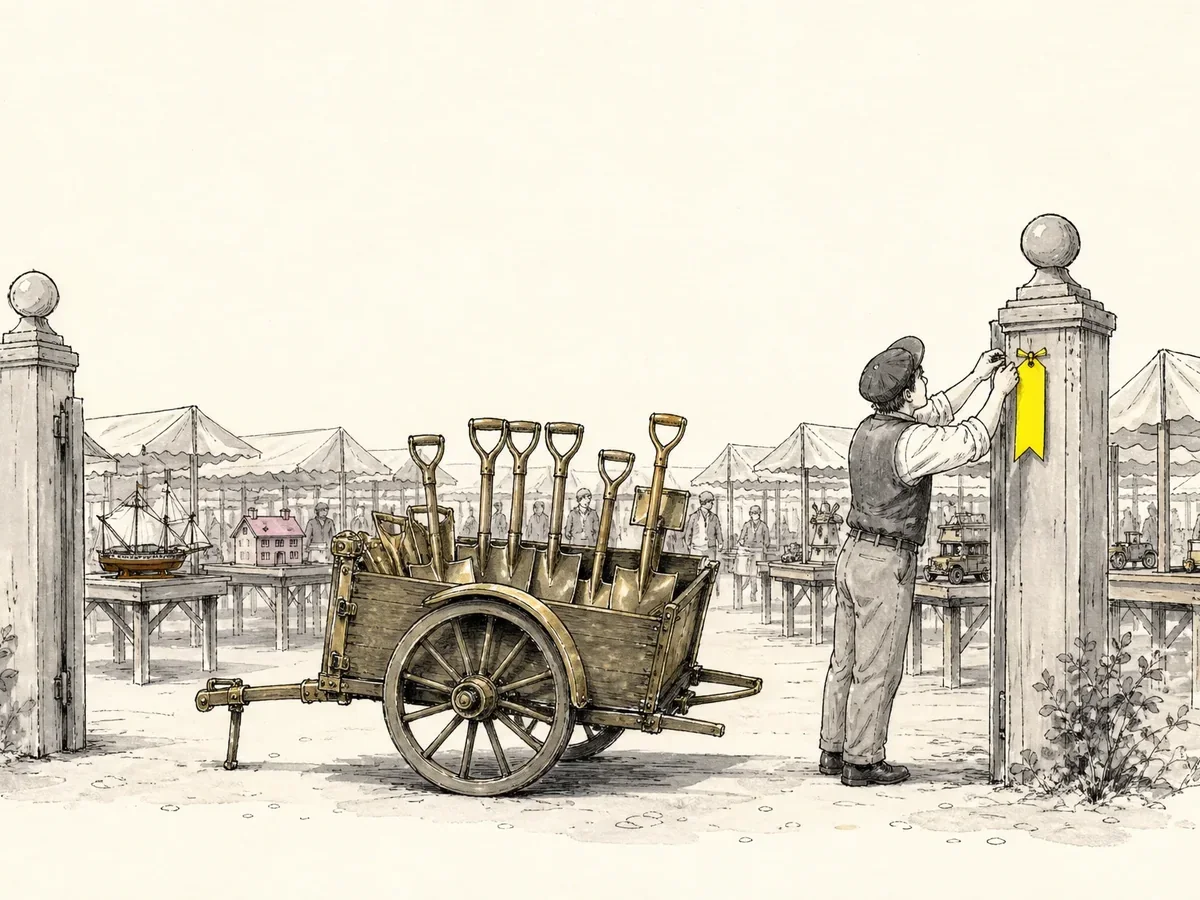
Hand-drawn illustration: an open-air bazaar of model makers' stalls; at the gate a brass shovel-maker's cart has parked while a porter ties a single yellow reservation ribbon to the gatepost

Nvidia in talks to buy Hugging Face: the investor refused in January is the buyer in August

Linden Kern
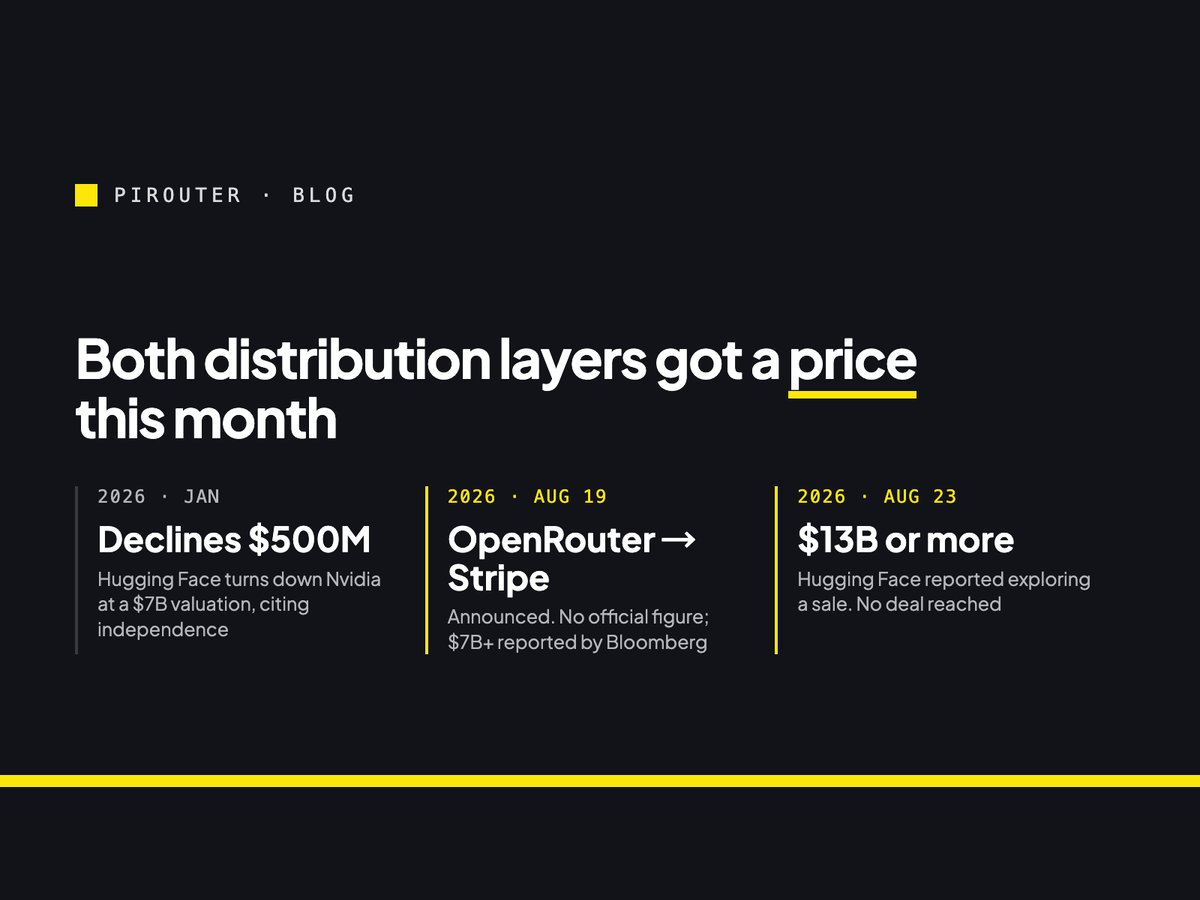
Timeline of two distribution-layer deals in 2026: Hugging Face declines Nvidia's $500M at a $7B valuation in January, OpenRouter announces it is joining Stripe on 19 August, Hugging Face is reported exploring a sale at $13B or more on 23 August

Hugging Face said no to one dominant investor. Eight months later it is exploring a sale

Linden Kern
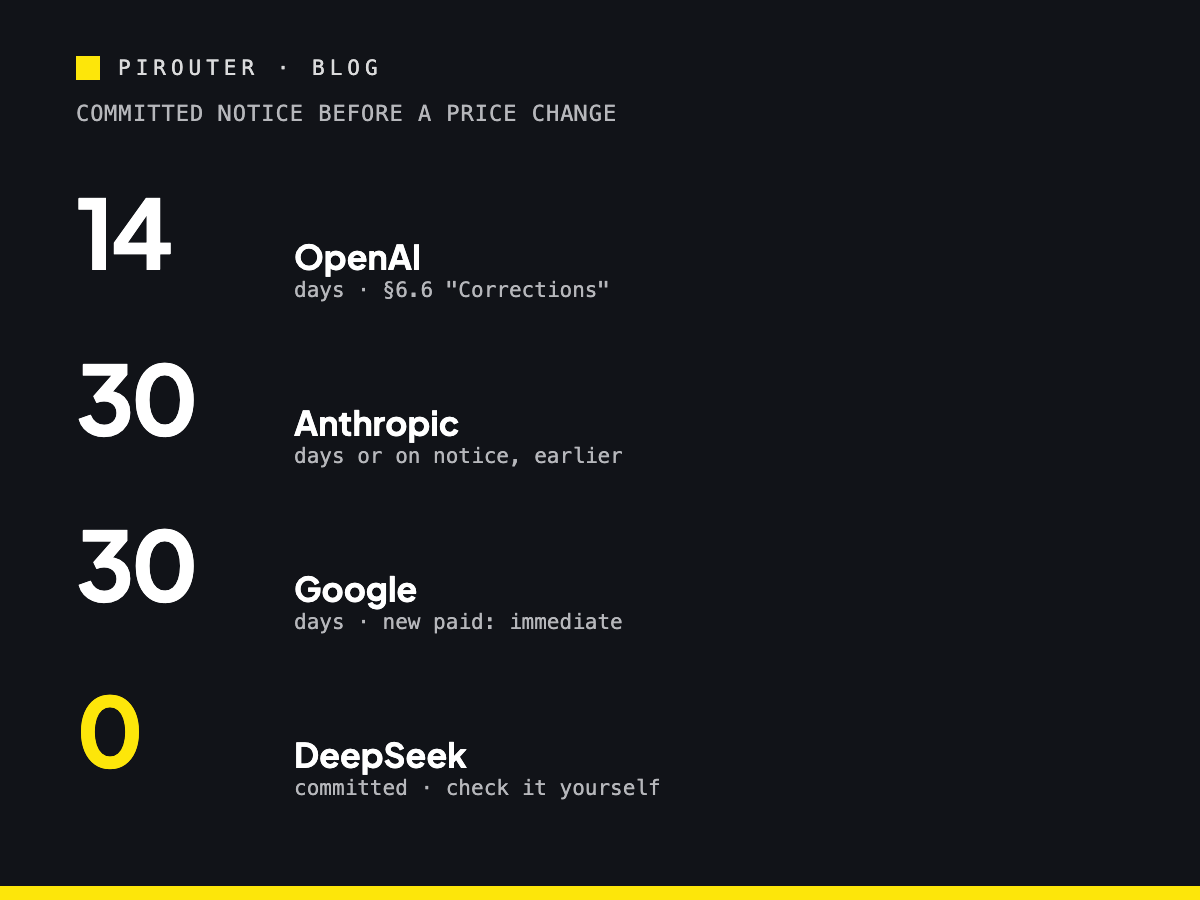
Four price-change notice periods compared: OpenAI fourteen days, Anthropic thirty days or on notice, Google thirty days with new paid services immediate, DeepSeek no committed period

Price-change notice: 14 days, 30 days, or nothing at all

PiRouter Team
Cover: your provider's billing system is part of your failure domain

Tier 3 to Tier 1 mid-flight: the outage no 5xx will catch

Leo Kaka