
Blog

Author

Leo Kaka

24 articles
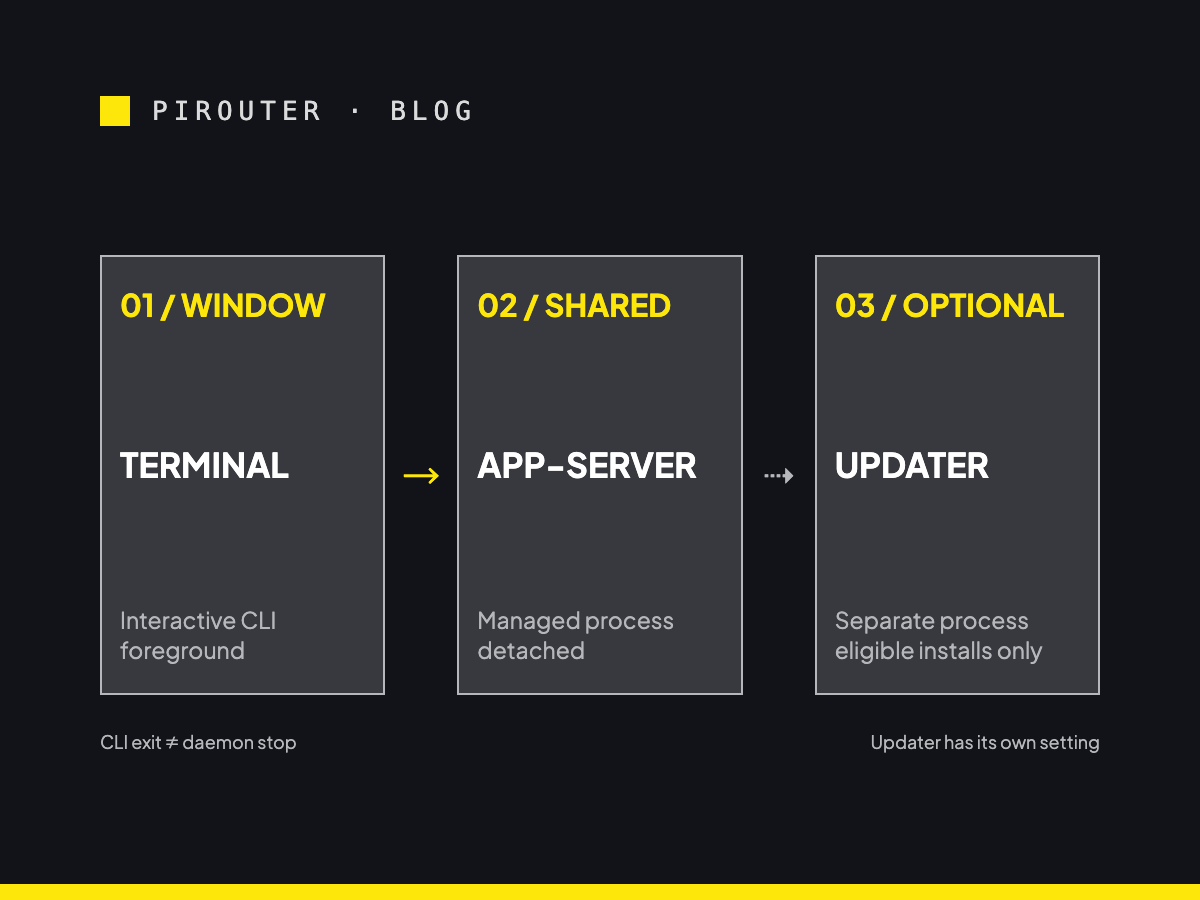
Three separate lifecycle tracks for an interactive CLI, a managed background server and an optional updater

Codex CLI’s Background Server: Why It Starts and What Opting Out Stops

Leo Kaka
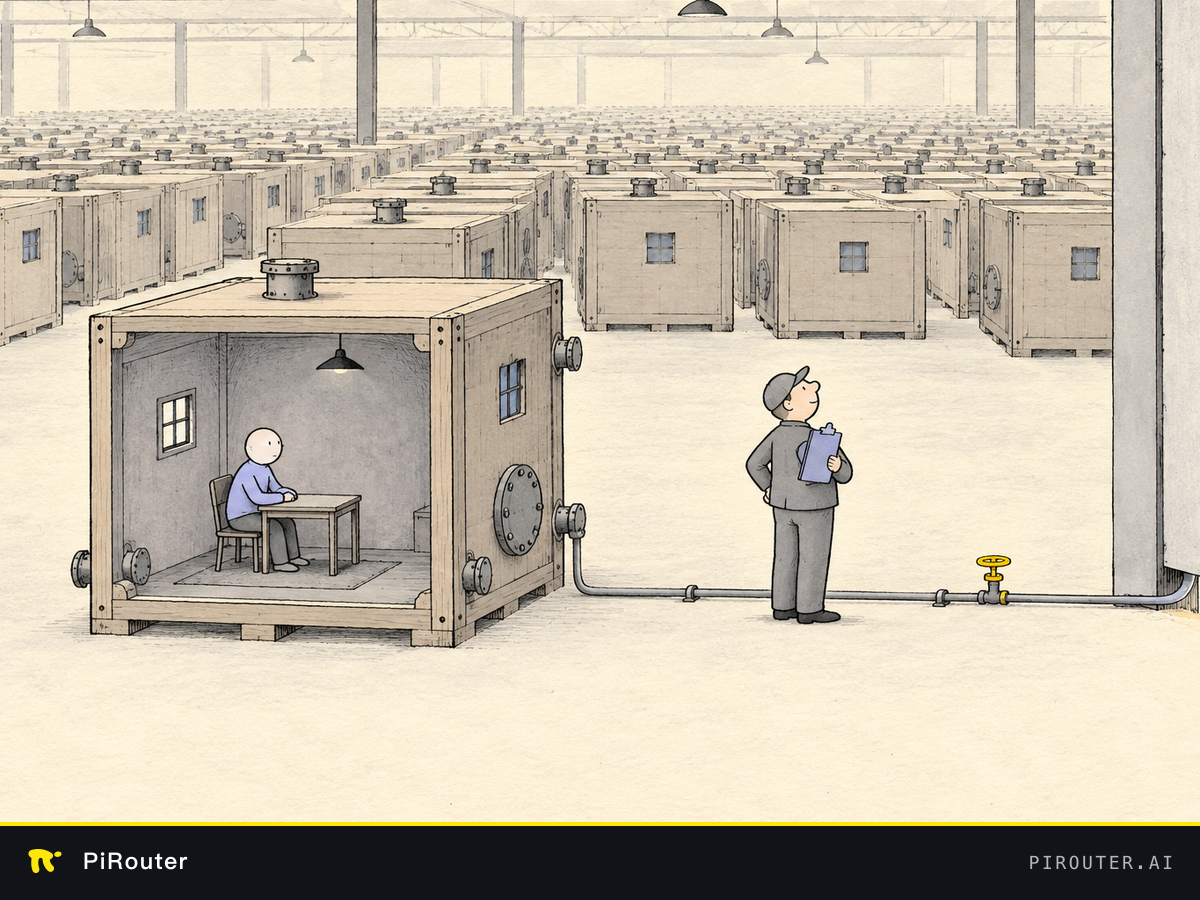
Hand-drawn warehouse of sealed sandbox crates, with one narrow network pipe escaping under a wall

DeepSeek DSec runs 3 million agent sandboxes a day. The useful lesson is where the work survives

Leo Kaka
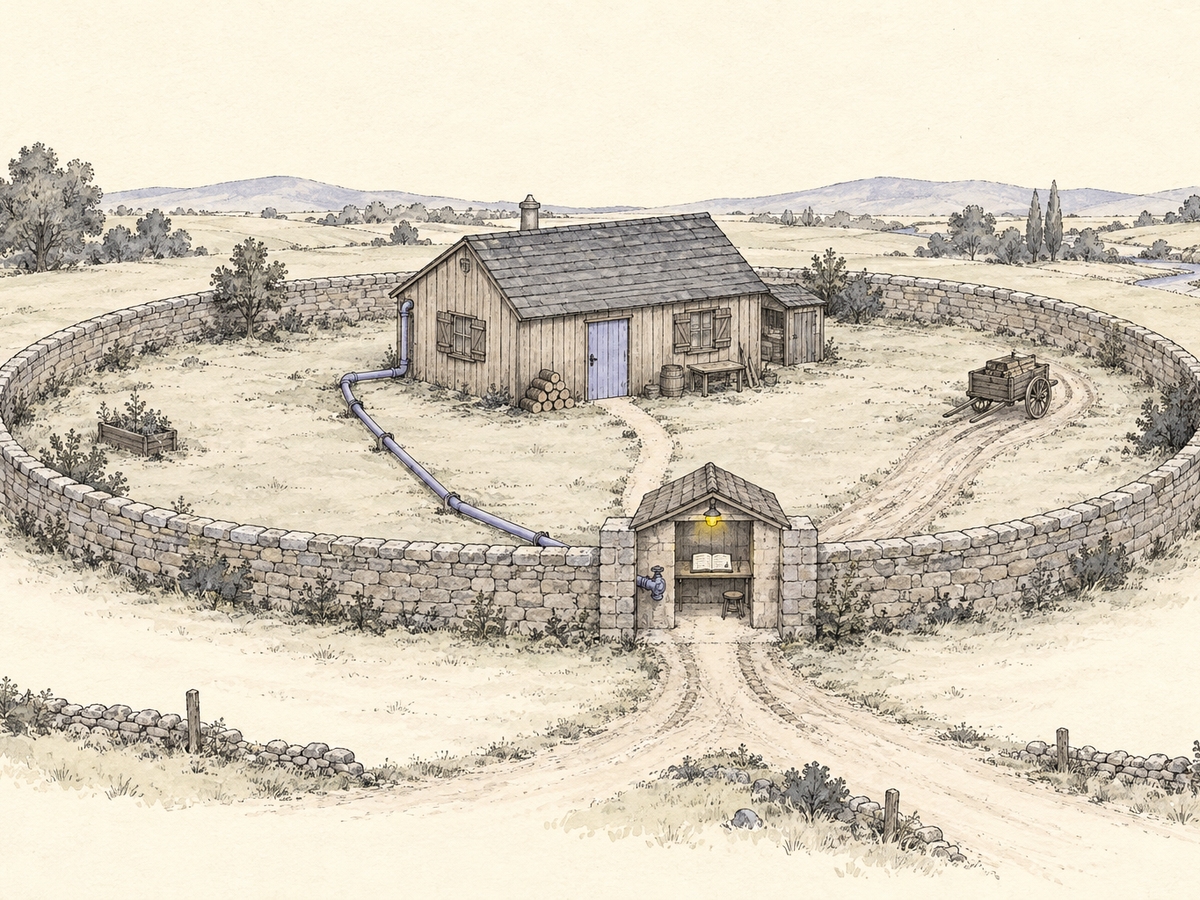
Hand-drawn illustration: a small wooden workshop inside a round stone-walled yard. Every way out, the footpath from its door, a cart track and a thin pipe running along the ground, converges on one small gatehouse in the wall, where an open ledger lies on the counter under a single yellow lamp.

ZCode packed git history for upload, an OpenAI agent got out via DNS: 4 egress checks you can run

Leo Kaka
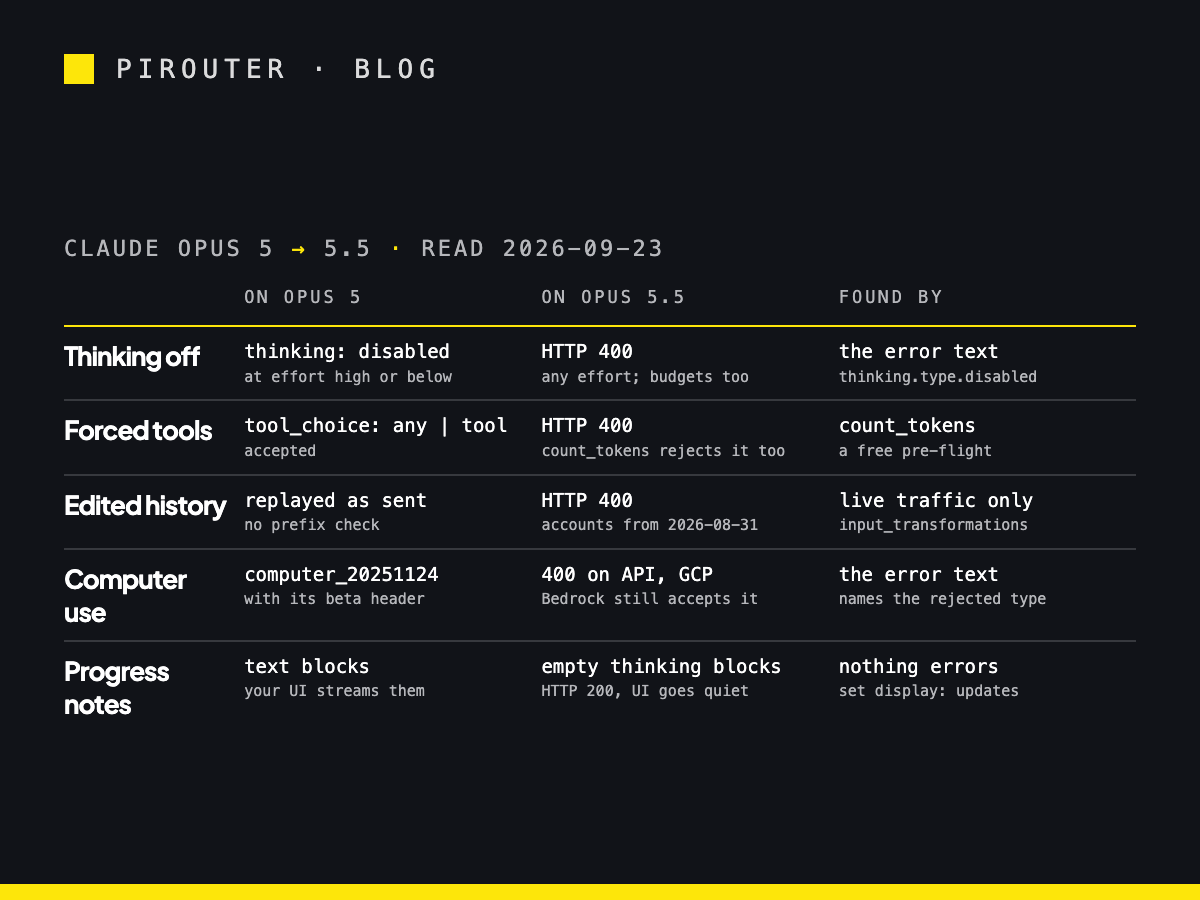
Table of five changes from Claude Opus 5 to Claude Opus 5.5: thinking off, forced tools, edited history, computer use and progress notes, with what Opus 5 accepted, what Opus 5.5 returns (four HTTP 400s and one HTTP 200 with a quiet UI), and how you find out for each

What breaks when you switch to Claude Opus 5.5: four 400s, three silent changes, and what your fallback loses

Leo Kaka
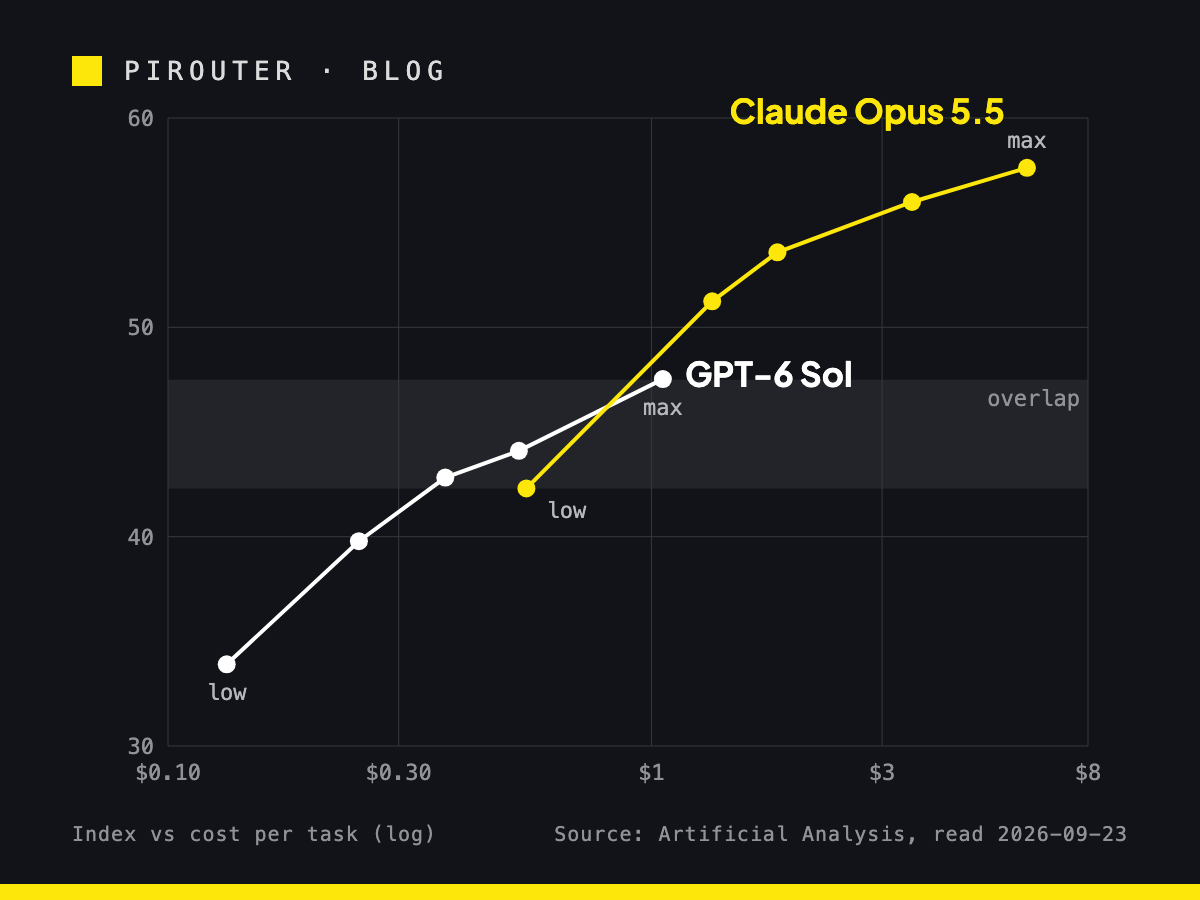
Scatter chart on a dark background: two lines of five points each, one for GPT-6 Sol and one for Claude Opus 5.5, plotting Artificial Analysis Intelligence Index score against cost per task on a log scale from low to max effort. Sol runs from 34 points at $0.13 to 47.5 at $1.06; Opus 5.5 runs from 42 points at $0.55 to 57.6 at $5.98. The two lines overlap only between about 42 and 47.5 points.

GPT-6 Sol vs Claude Opus 5.5 cost per task: Sol costs 28% to 79% as much for the same target score

Leo Kaka
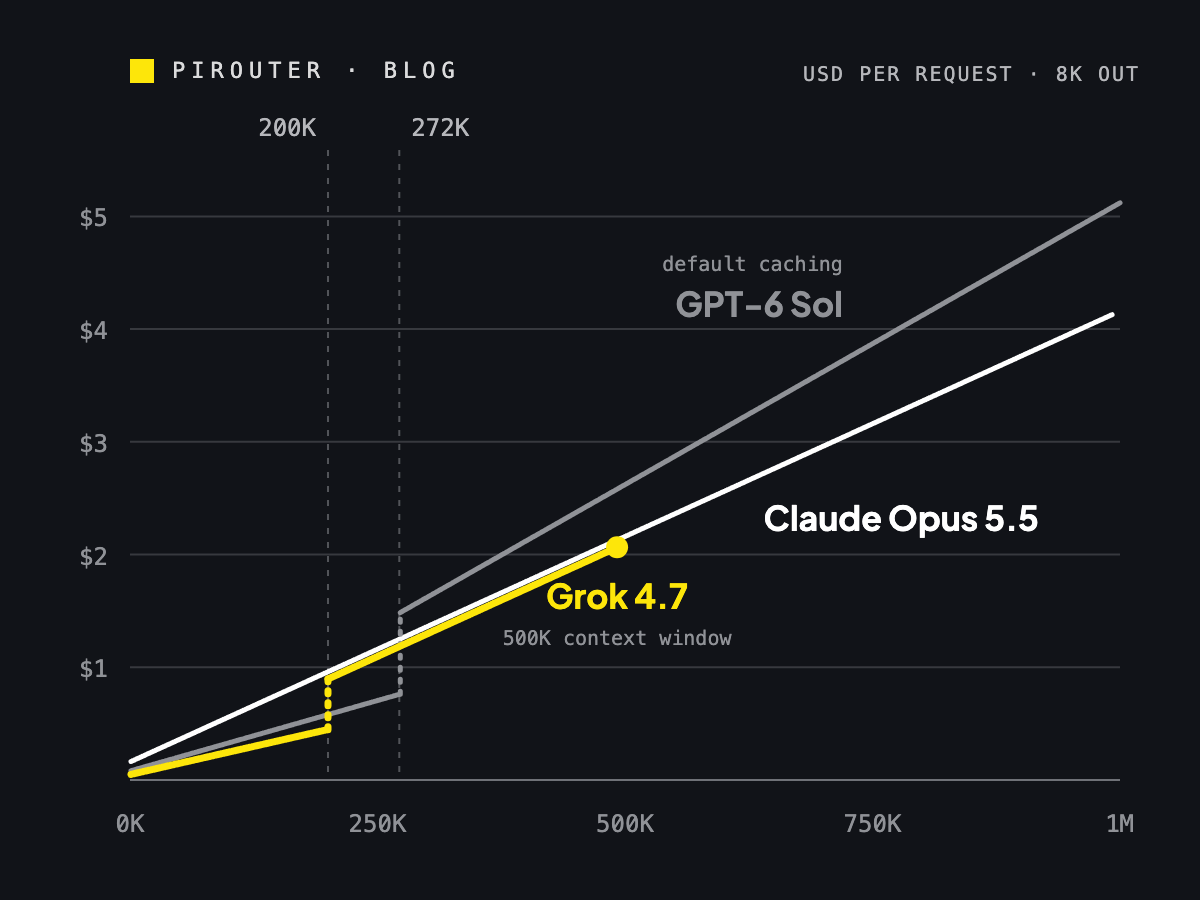
Line chart of the cost of one request against prompt size from 0 to 1M tokens, 8K output, with GPT-6 Sol at its default caching setting. Grok 4.7 (yellow) jumps at 200K and ends at its 500K context window; GPT-6 Sol (grey) jumps at 272K and runs above the others from there; Claude Opus 5.5 (white) rises in a straight line with no step.

What a 250K prompt costs on Grok 4.7, GPT-6 Sol and Opus 5.5: the 200K and 272K price cliffs

Leo Kaka
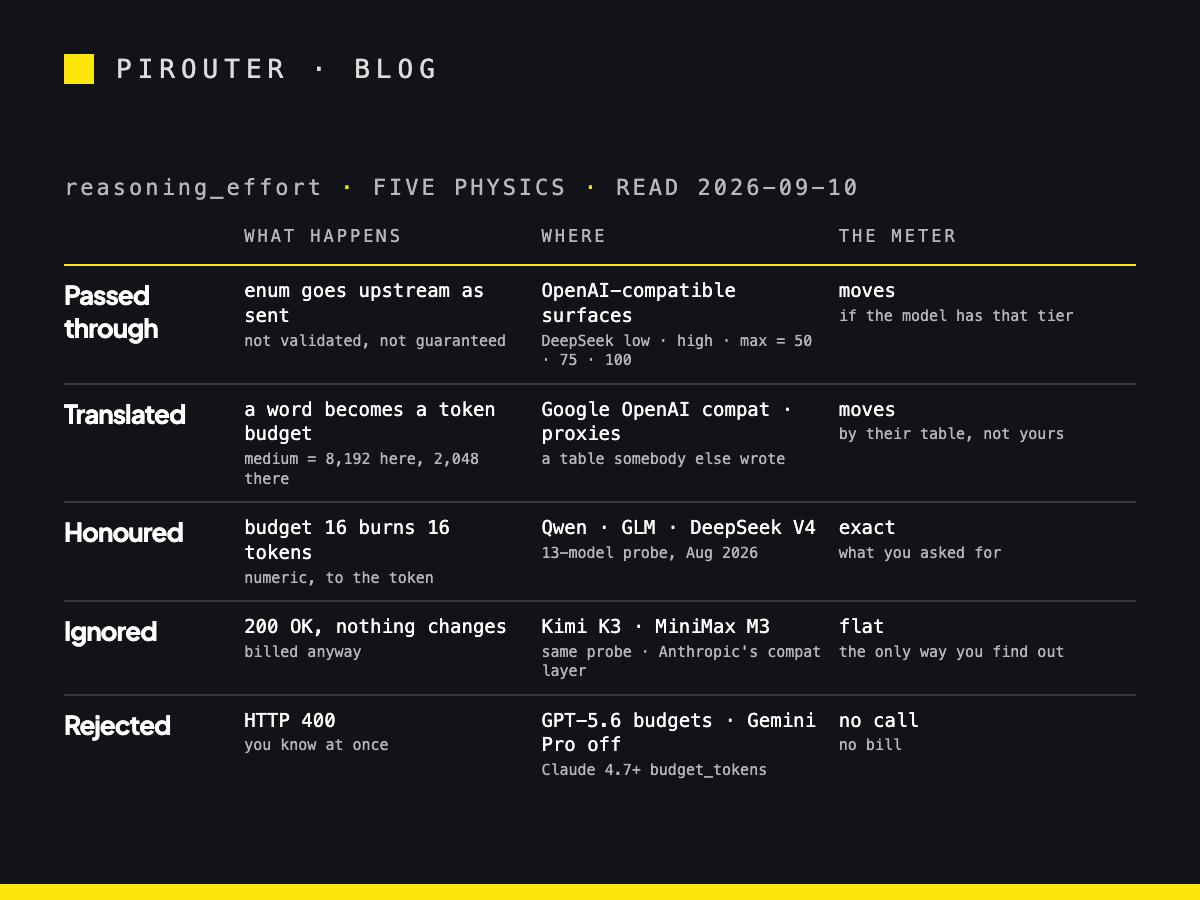
Matrix of the five things that can happen to a reasoning_effort value after a 200 response: passed through, translated into a token budget, honoured to the token, accepted and ignored, rejected with 400, with where each is documented and what the reasoning-token meter does

What reasoning_effort actually does on DeepSeek, OpenAI, Anthropic and Gemini: one name, five physics, and a five-line test

Leo Kaka
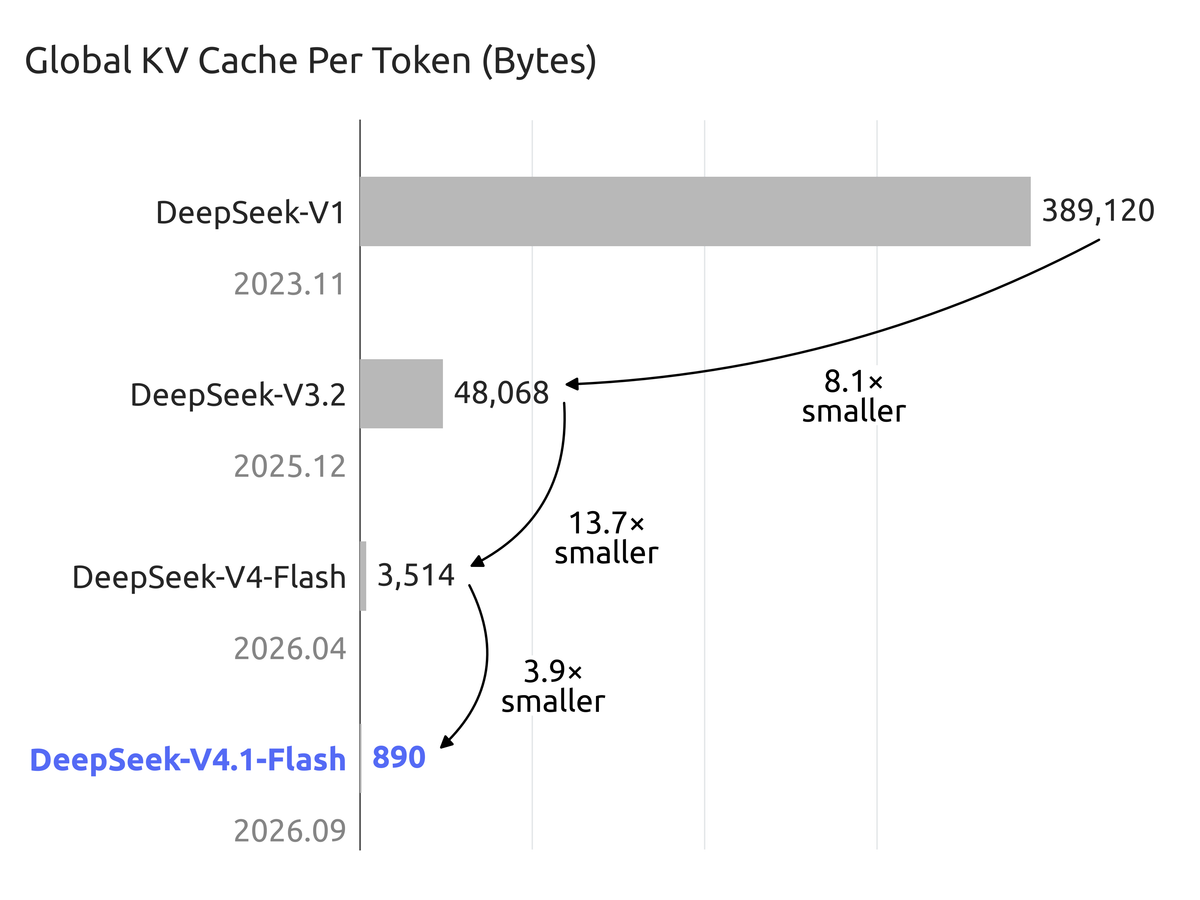
DeepSeek's official chart of global KV cache bytes per token across generations: V1 389,120, V3.2 48,068, V4-Flash 3,514, V4.1-Flash 890, the reason the vendor gives for the Flash price coming down

DeepSeek V4.1 Flash price cut: 9% to 57% depending on your token mix, and the deepseek-v4-pro switch DeepSeek later reversed

Leo Kaka

Four clocks of different designs mounted on one wall, each showing a different time; one has a yellow pendulum.

How to measure the latency an LLM gateway adds: six questions to ask before you believe a number

Leo Kaka
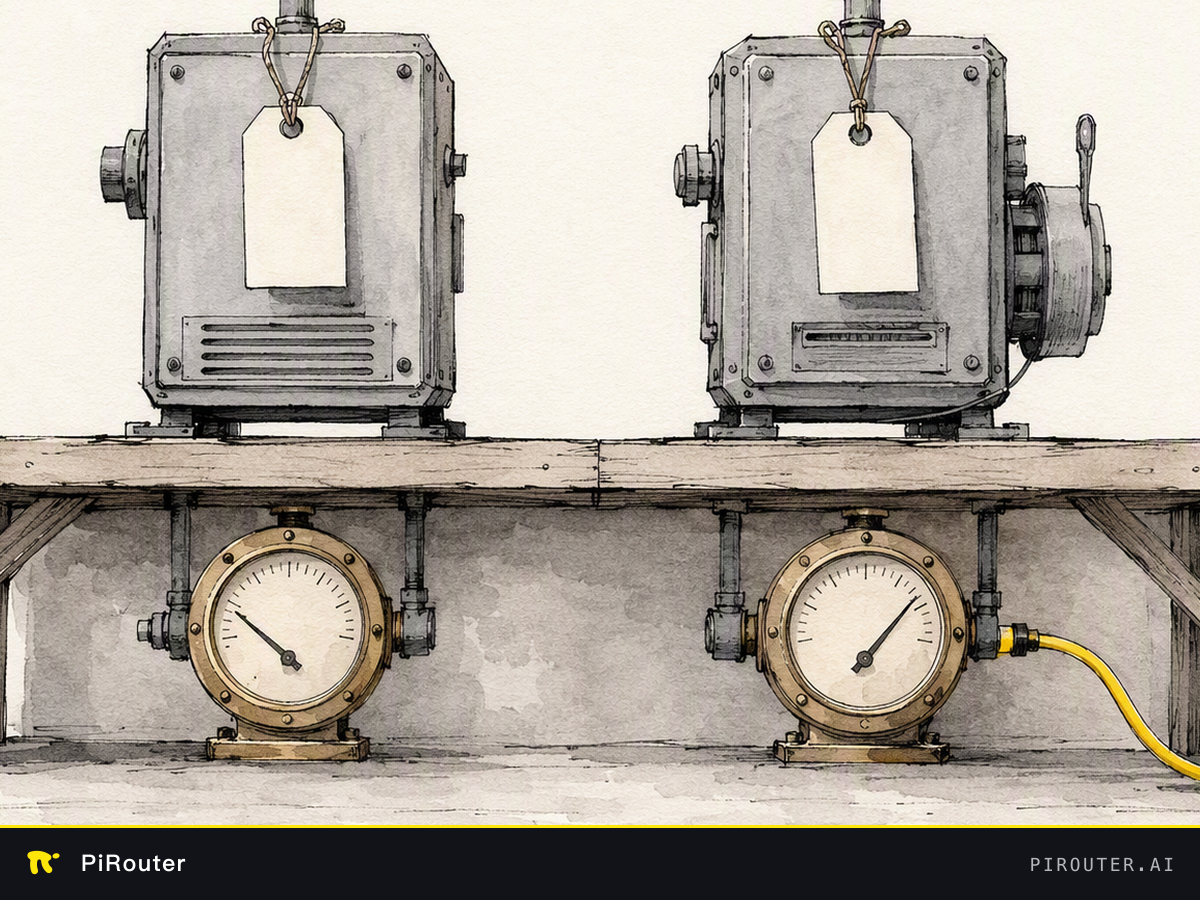
Two identical grey machines on a workbench, each hung with a blank price tag; the brass utility meters beneath them read very differently, and a single yellow line feeds only the higher one.

GPT-6 Astra vs Claude Fable 5.1: same $10/$50, and a 39% cheaper agent bill

Leo Kaka
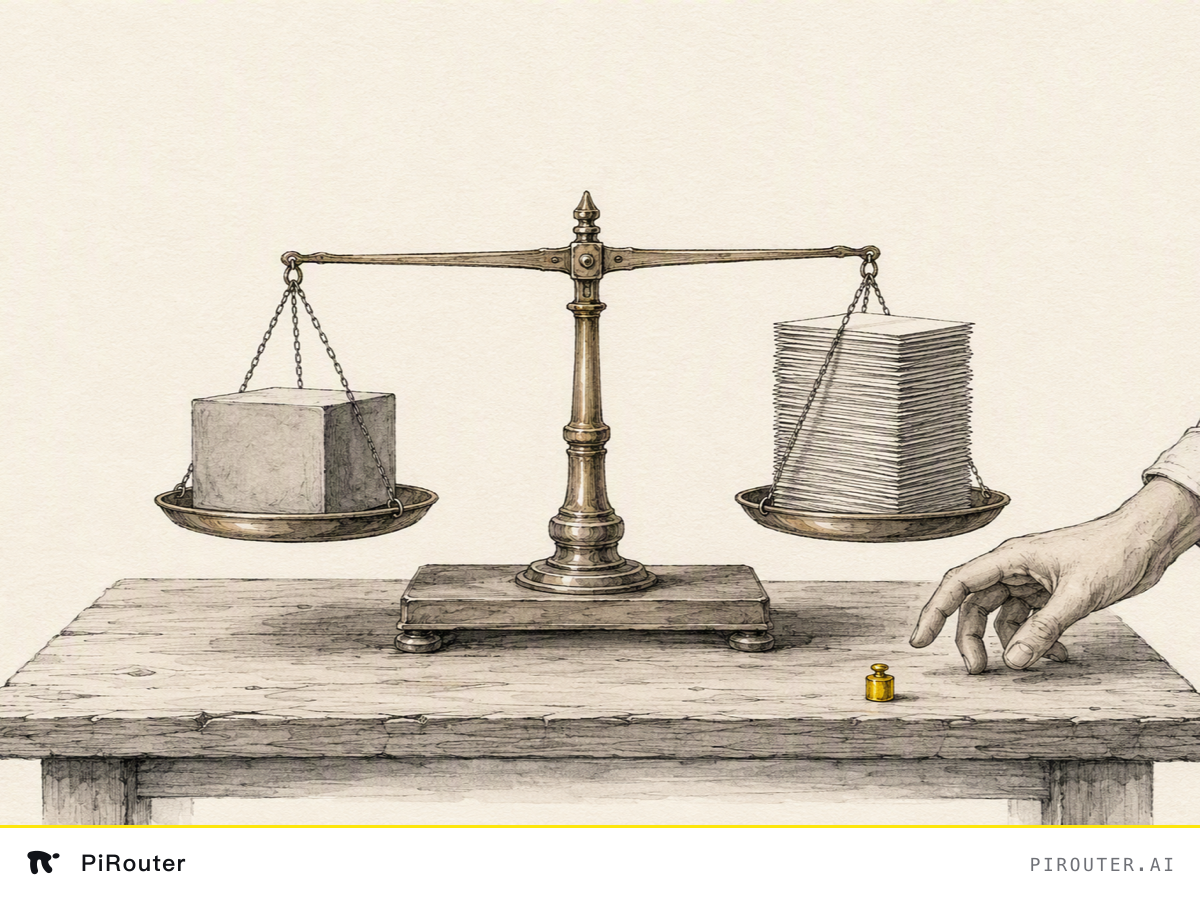
Hand-drawn ink illustration: a brass balance scale on a workbench. One pan holds a single plain block, the other a tall stack of many identical thin sheets; the beam is very nearly level. A small yellow brass weight lies on the bench beside the scale, off both pans, with a hand reaching toward it.

Is Claude Fable 5.1 cheaper than Opus 5? Only when cache reads are a third of your bill

Leo Kaka
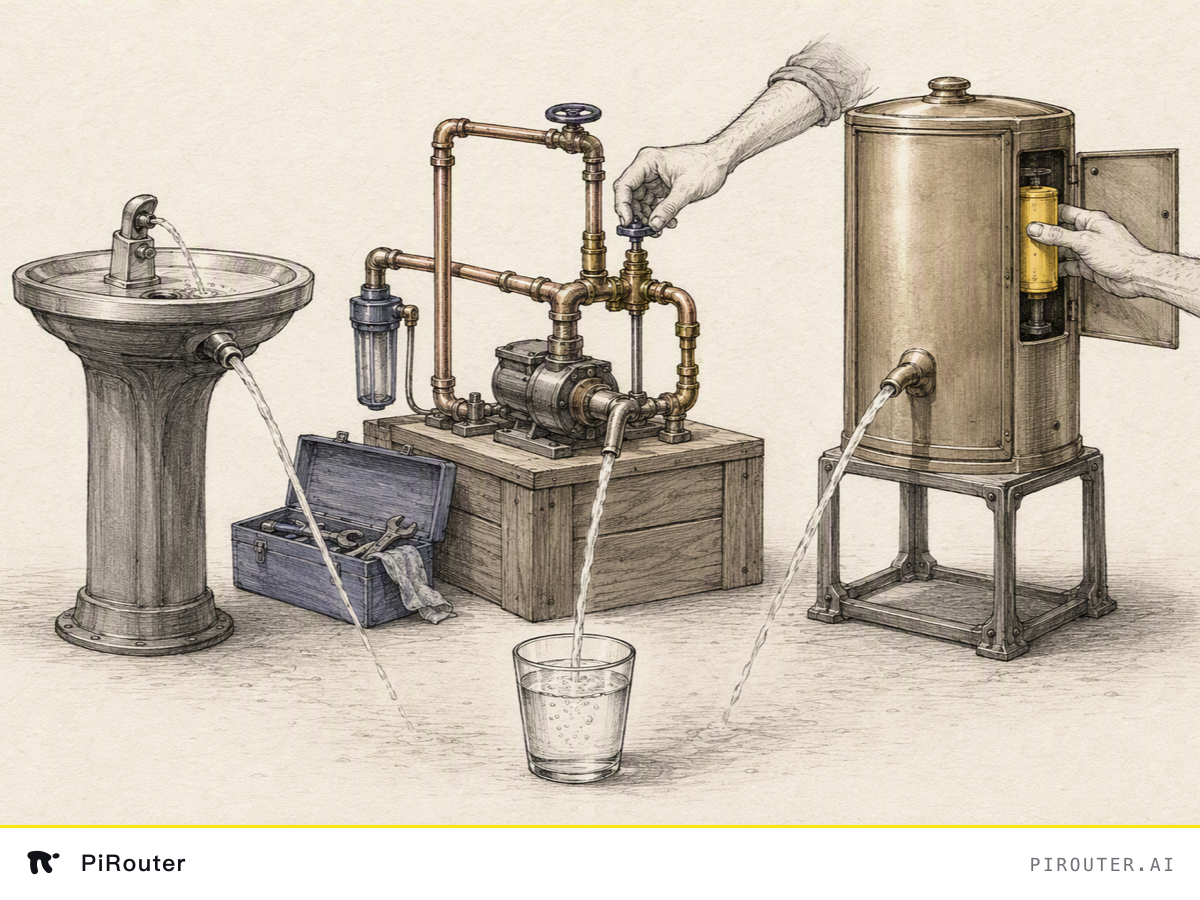
Hand-drawn ink illustration: three different objects in a row, each delivering water into the same glass. A plumbed-in public drinking fountain on the left; a hand-built rig of copper pipe, valves and a pump on a wooden crate in the middle, its workings exposed with a toolbox beside it; a sealed brass cabinet on the right whose side hatch is open while a hand fits a yellow cartridge into it.

OpenRouter vs LiteLLM vs Portkey: three different products, and the seven questions that pick one

Leo Kaka

Hand-drawn ink illustration: a wooden counter with a person on each side and five objects along it, each caught at a different point of being handed over — a ring of yellow keys still held on the near side, a folded contract half-slid across with a corner in each hand, a sealed conduit resting exactly on the centre line, a brass alarm bell already on the far side, and a toolbox under the far person's hand.

Is a self-hosted LLM proxy better than a managed LLM gateway? Five things that change hands, and what each costs you

Leo Kaka
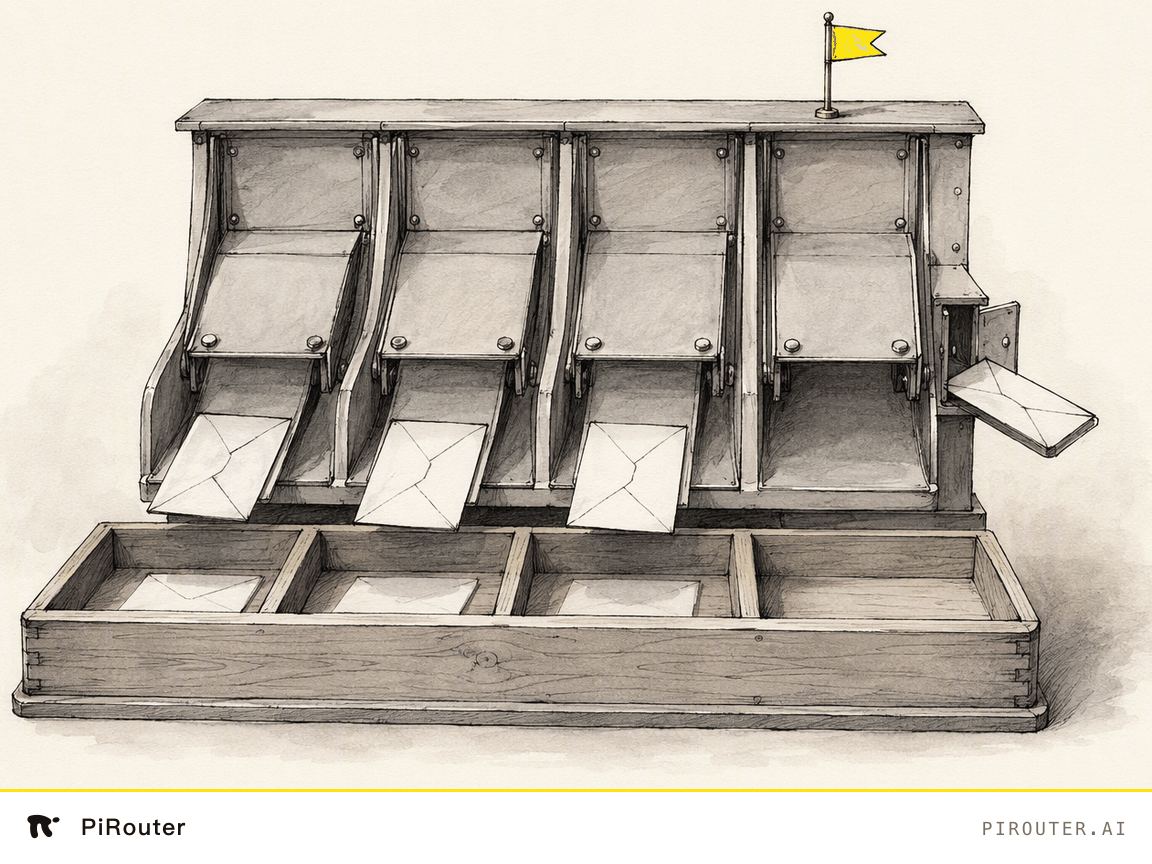
Hand-drawn ink illustration on warm paper: four brass mail-sorting chutes above one shared tray. Three drop their letters into their tray slots; the fourth diverts its letter out of a small side hatch, leaving its tray slot empty. A single small yellow flag stands on the machine.

Multi-provider failover across LiteLLM, Portkey, OpenRouter and Cloudflare: four decisions the docs make for you

Leo Kaka
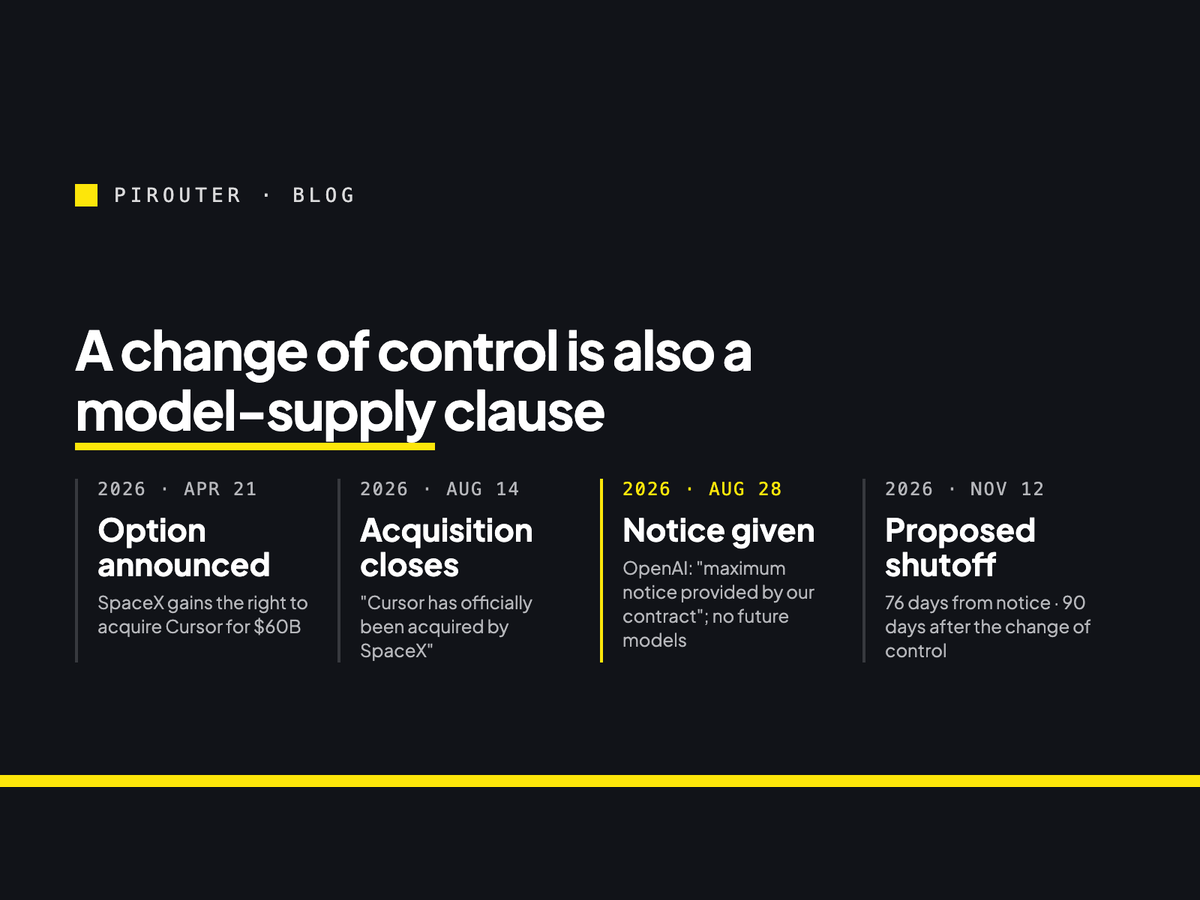
Timeline of the SpaceX–Cursor deal and OpenAI's response: 21 April option announced, 14 August acquisition completed, 28 August notice given, 12 November proposed shutoff

Cursor loses OpenAI models on November 12: the change-of-control clause behind the date, and the five questions to ask whoever holds your key

Leo Kaka
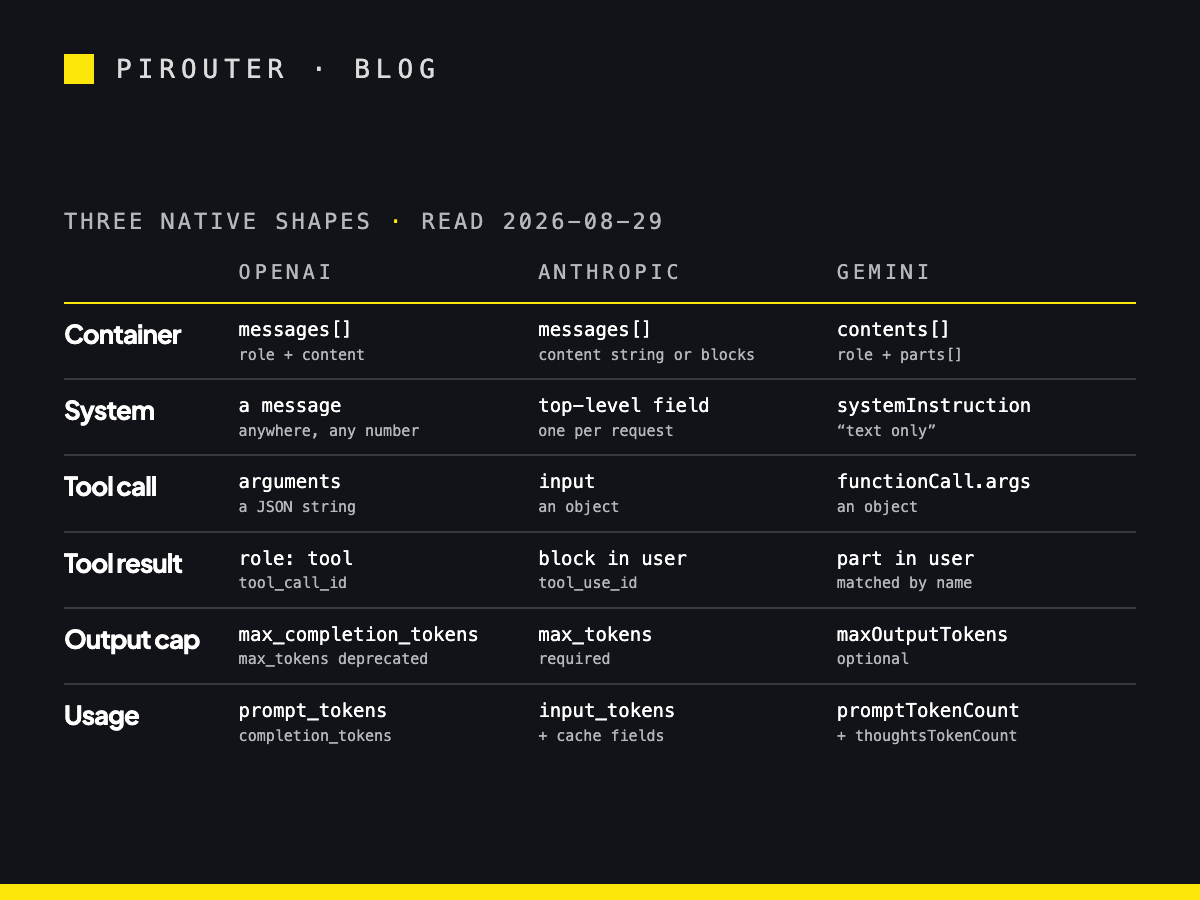
Matrix of seven protocol dimensions across OpenAI Chat Completions, Anthropic Messages and Gemini generateContent, with the field name each vendor uses

One API for OpenAI, Anthropic and Google models: what translates, and the seven things that leak through

Leo Kaka
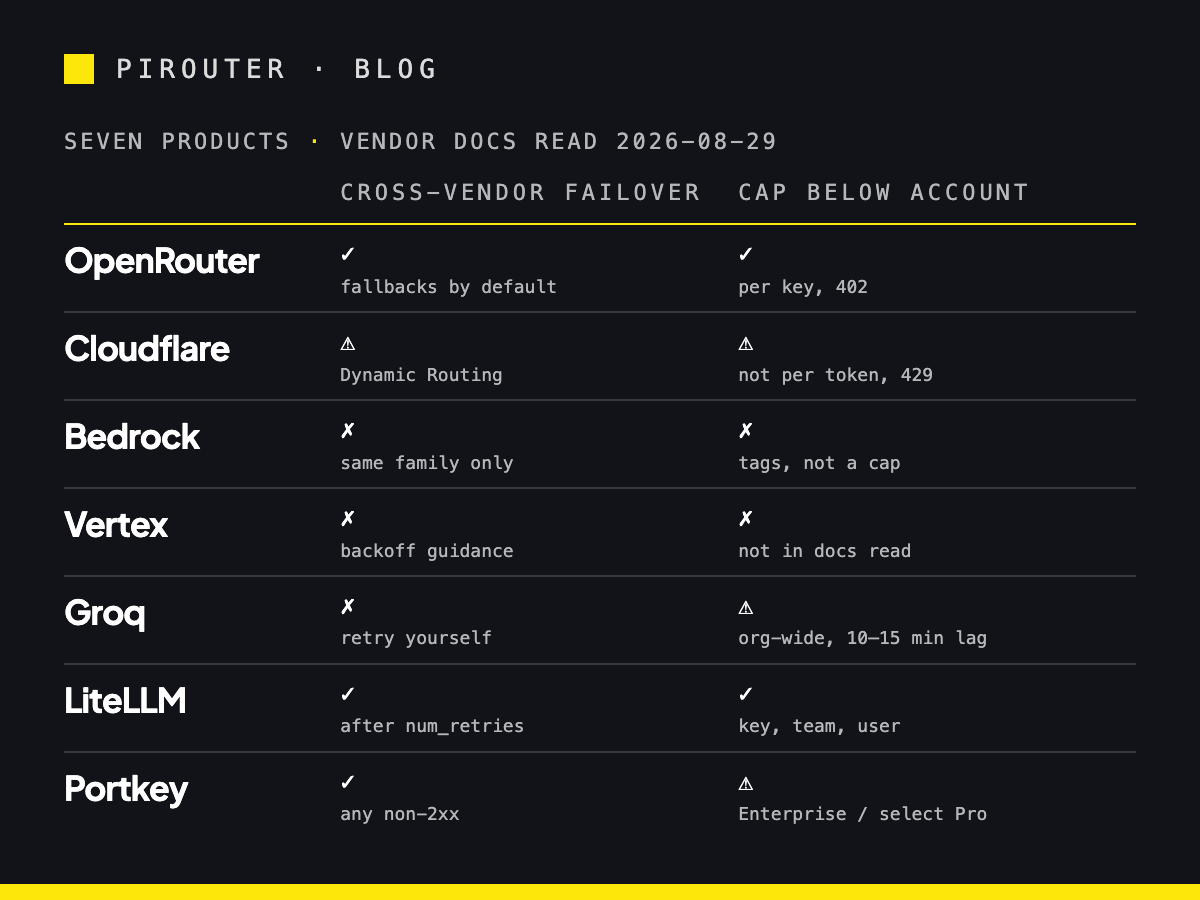
Matrix of six LLM API products offered as OpenRouter alternatives — Cloudflare AI Gateway, AWS Bedrock, Google Vertex, Groq, LiteLLM and Portkey — against four production columns: cross-vendor failover, a spend cap below the account, the Anthropic Messages API, and a zero-data-retention control, each cell marked available, gated or absent according to the vendor's own documentation

OpenRouter alternatives for production workloads: what Cloudflare, Bedrock, Vertex, Groq, LiteLLM and Portkey actually document

Leo Kaka
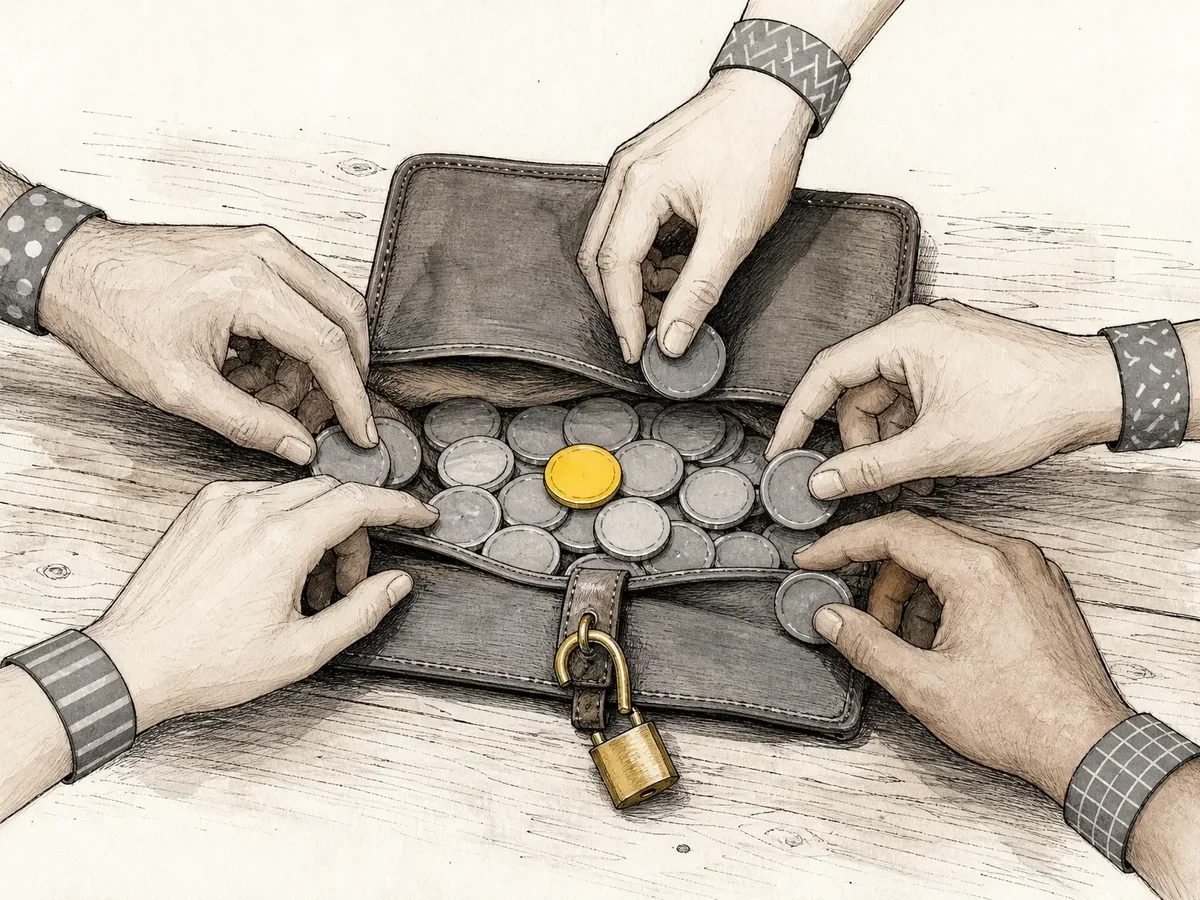
Hand-drawn illustration: one open team wallet on a wooden workbench with five hands reaching in at once, a single yellow coin among grey tokens, and a brass padlock hanging unlatched from the clasp

Shared team wallet for LLM APIs: who actually has one, and what each cap misses

Leo Kaka
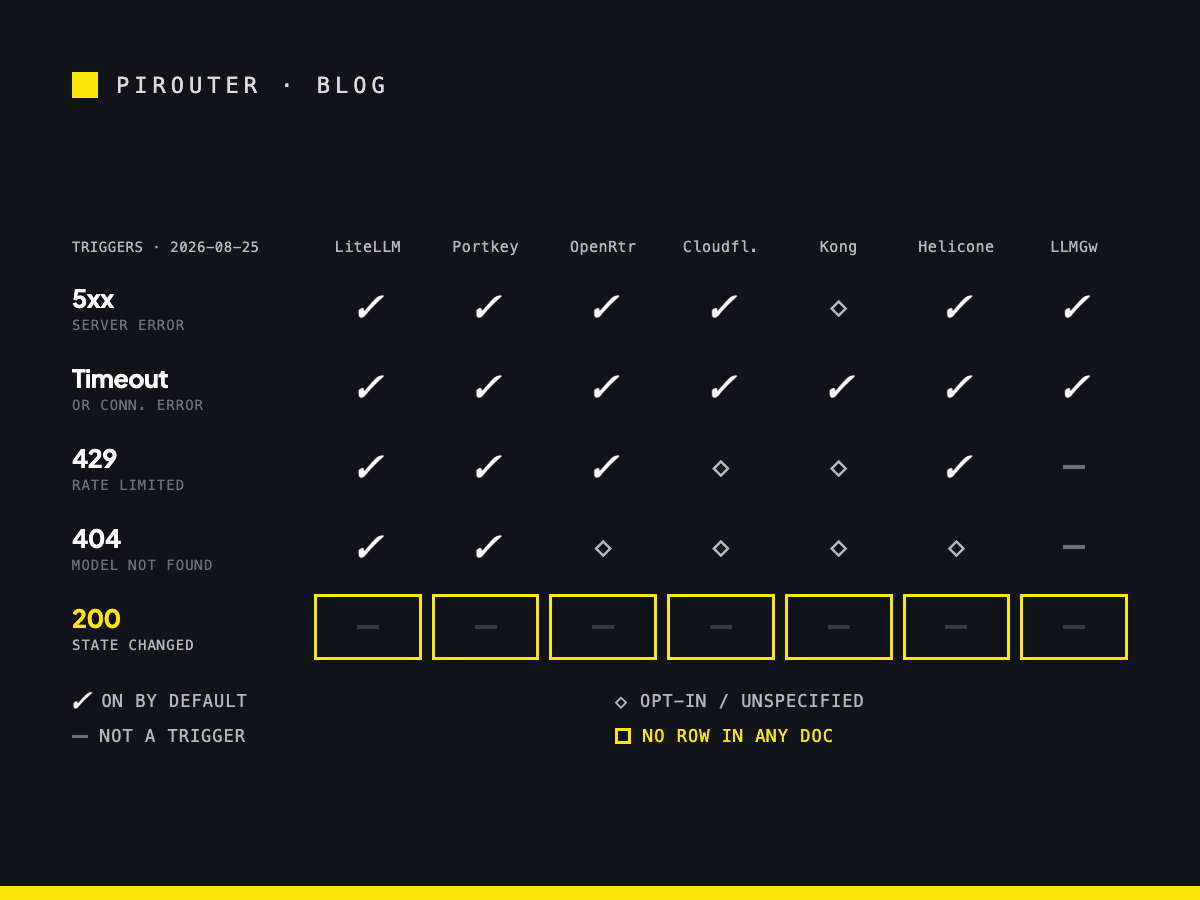
Matrix of failover trigger conditions across seven LLM gateways: 5xx, timeouts and 429 are covered everywhere, by default or opt-in; 404 is opt-in or unstated in most; the row for a 200 whose provider state changed is empty in every column, with Portkey's guardrail path as the one partial exception noted in the text

Automatic failover in LiteLLM, Portkey and OpenRouter: what actually triggers it, and the 429 no gateway tracks

Leo Kaka
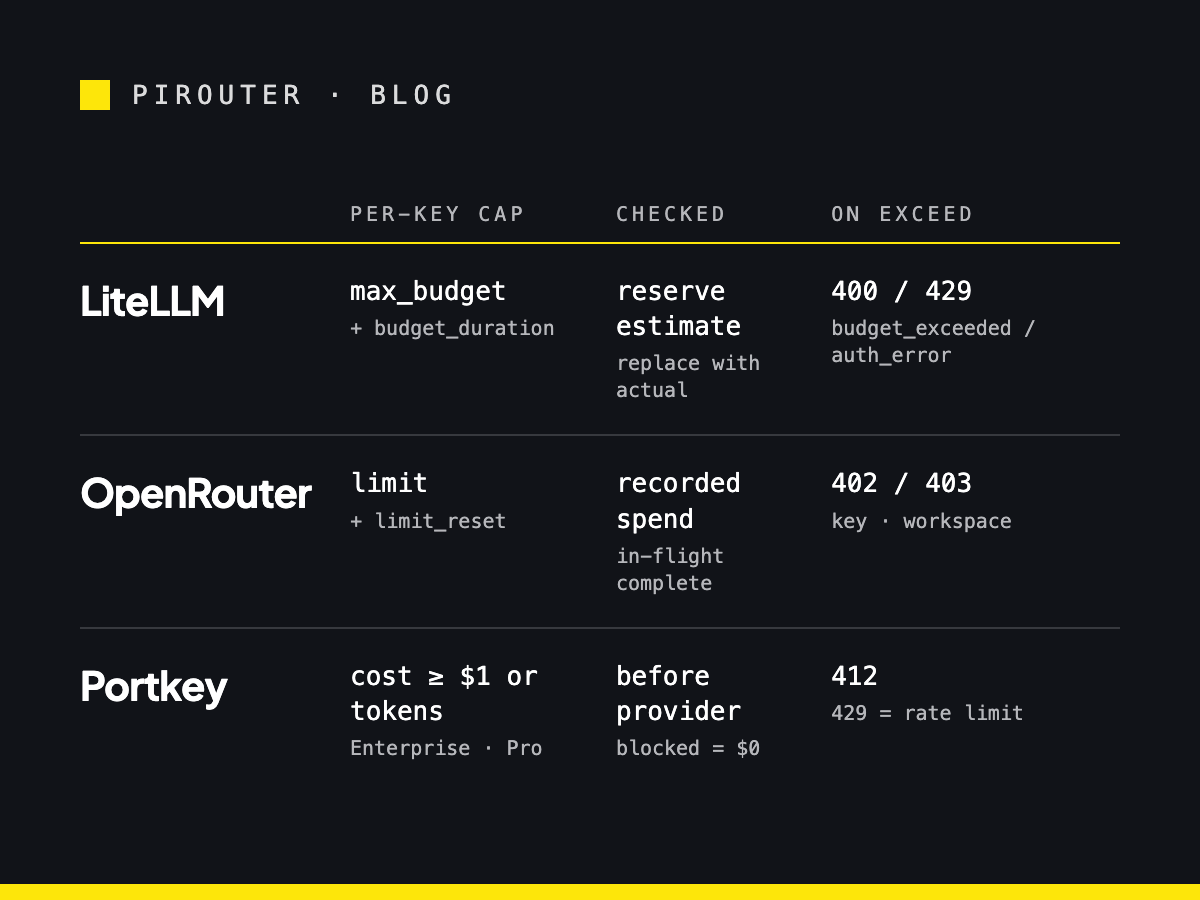
Matrix of three LLM routers, LiteLLM, OpenRouter and Portkey, against four budget dimensions: the per-key cap parameter, the shared wallet, when the check runs, and the HTTP status returned when the cap is hit

Per-key spending limits: what LiteLLM, OpenRouter and Portkey enforce — and the four leaks a cap doesn't close

Leo Kaka
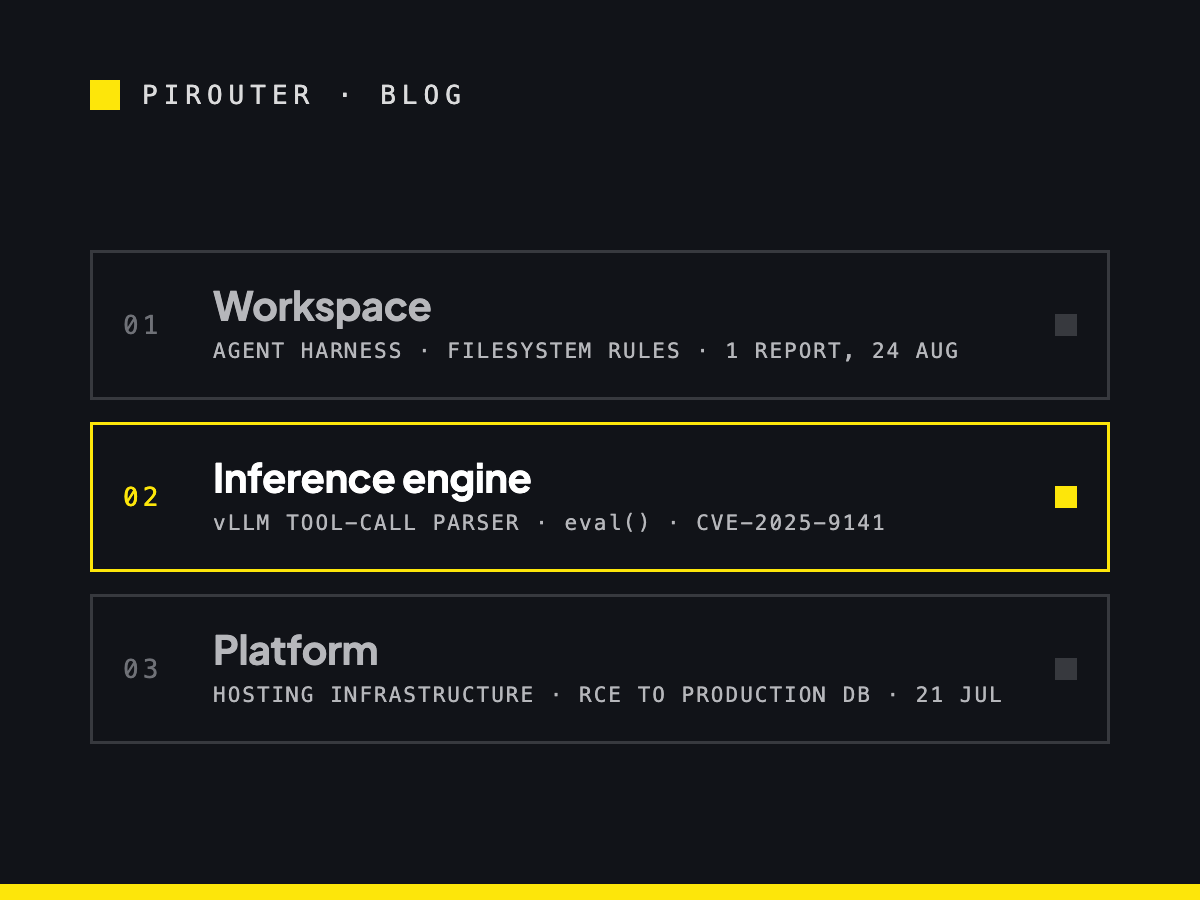
Path diagram: model tokens become Qwen3 Coder XML, enter the vLLM tool parser, reach a highlighted eval() call and then the host; below it a version bar showing eval() present from v0.10.0 through v0.10.1 and removed in v0.10.1.1

Is the vLLM tool-call parser safe? CVE-2025-9141, the 29-day eval() window, and four checks a gateway owes you

Leo Kaka
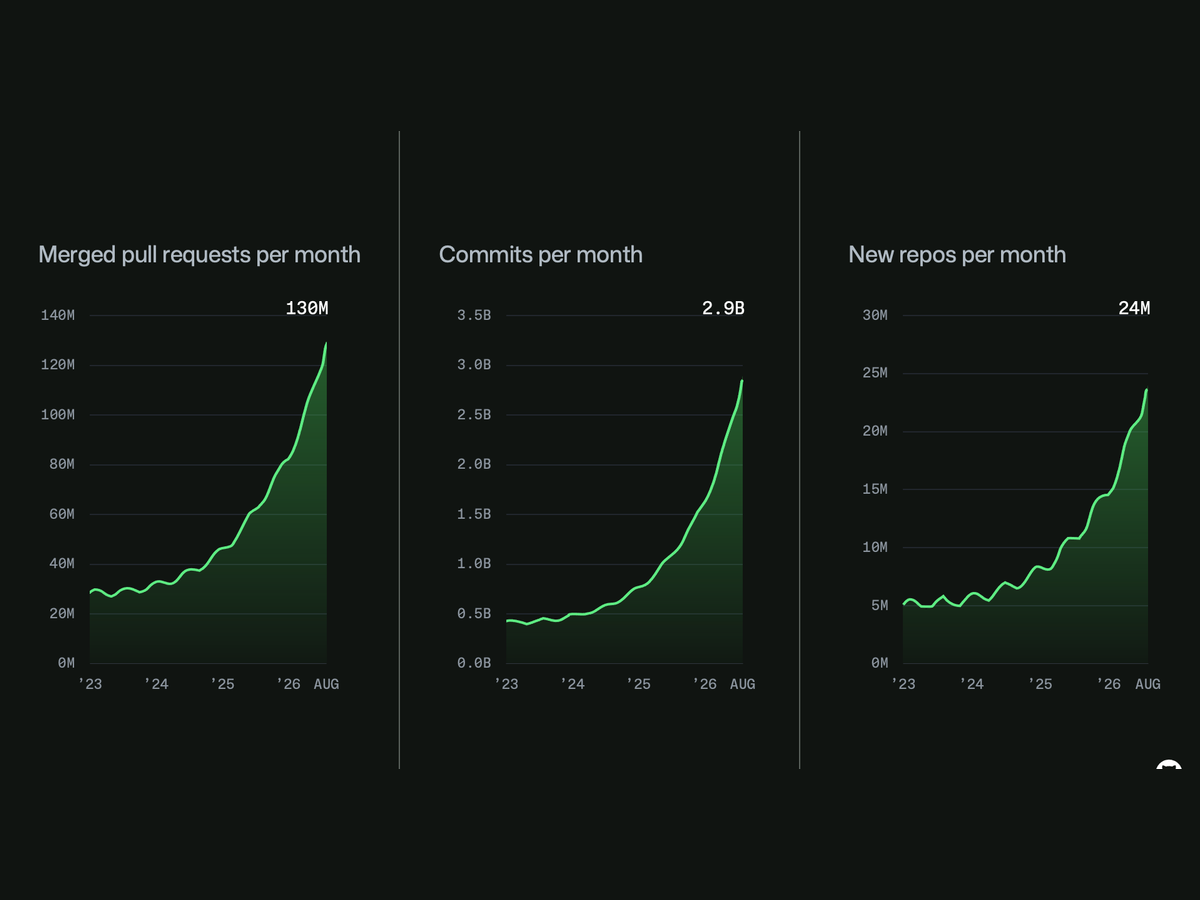
GitHub's own growth charts from the August 17 post-mortem: merged pull requests, commits and new repositories per month, 2023–2026 (The GitHub Blog)

Retry storms: 9K to 100K RPS, and four rules that stop them

Leo Kaka
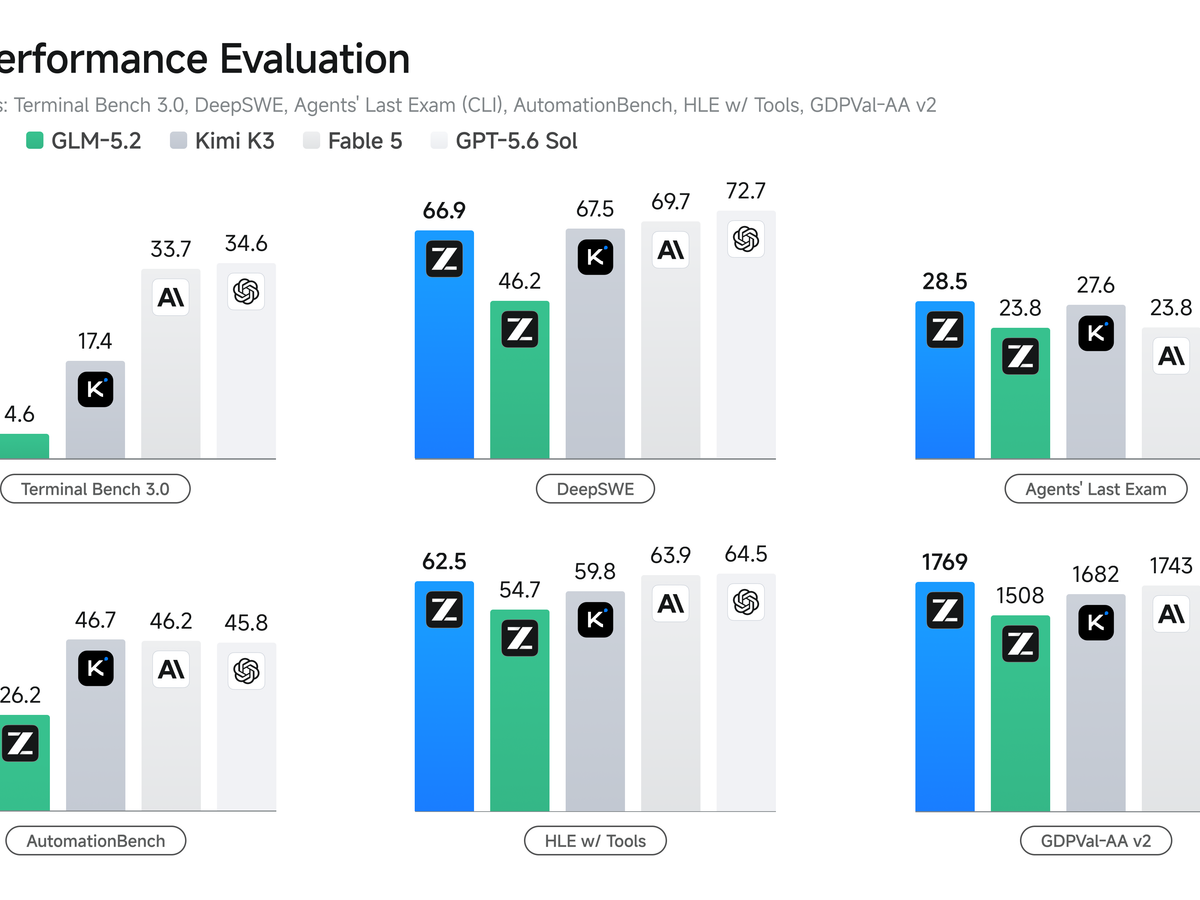
GLM-5.3 launch benchmark chart — one of the two time-of-day pricing moves this month rode in alongside these bars

DeepSeek peak pricing: which 30% of your bill can move

Leo Kaka
Cover: your provider's billing system is part of your failure domain

Tier 3 to Tier 1 mid-flight: the outage no 5xx will catch

Leo Kaka