
Blog

Topic

#models

18 articles
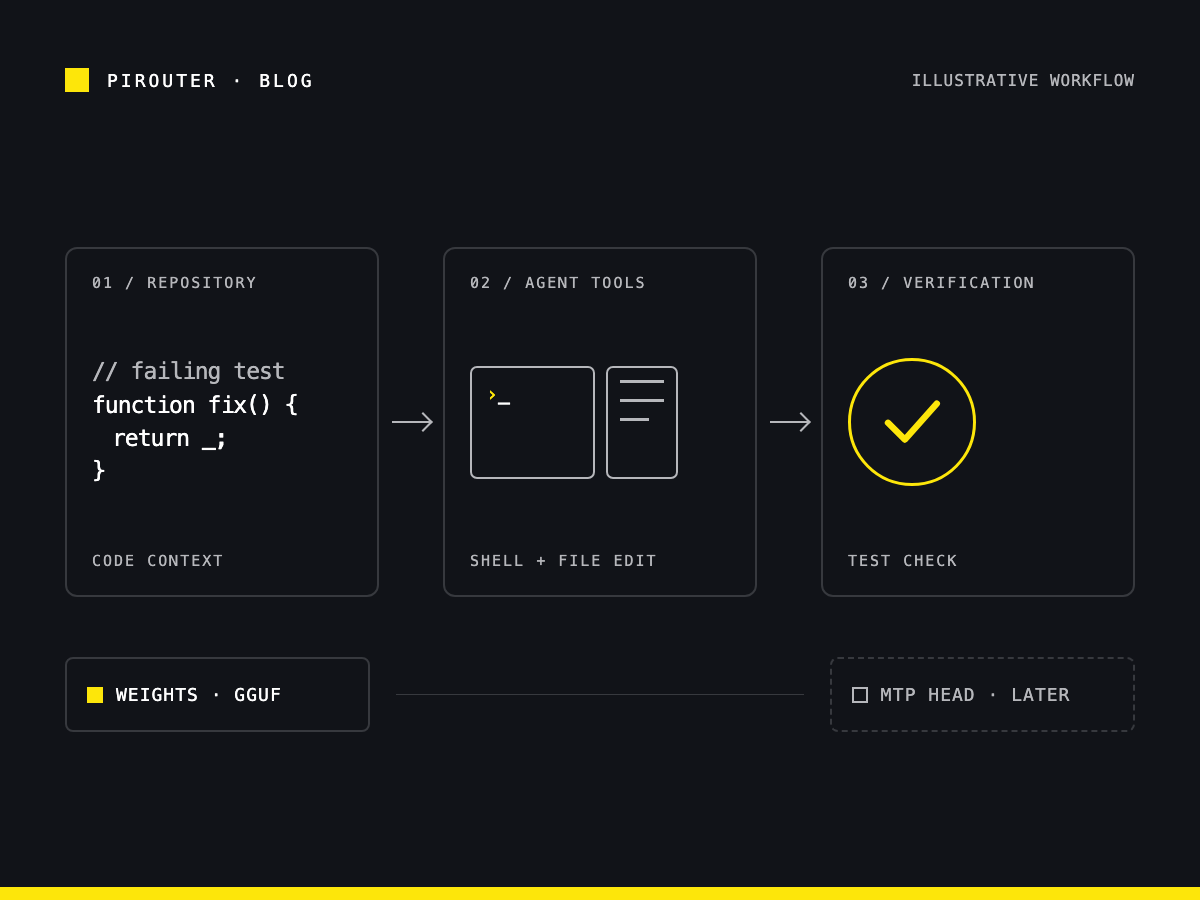
Editorial diagram of code moving through tools and verification, with a separate unfinished acceleration component

JetBrains Mellum2.1 turns a fast coding model into an agent worker

PiRouter Team
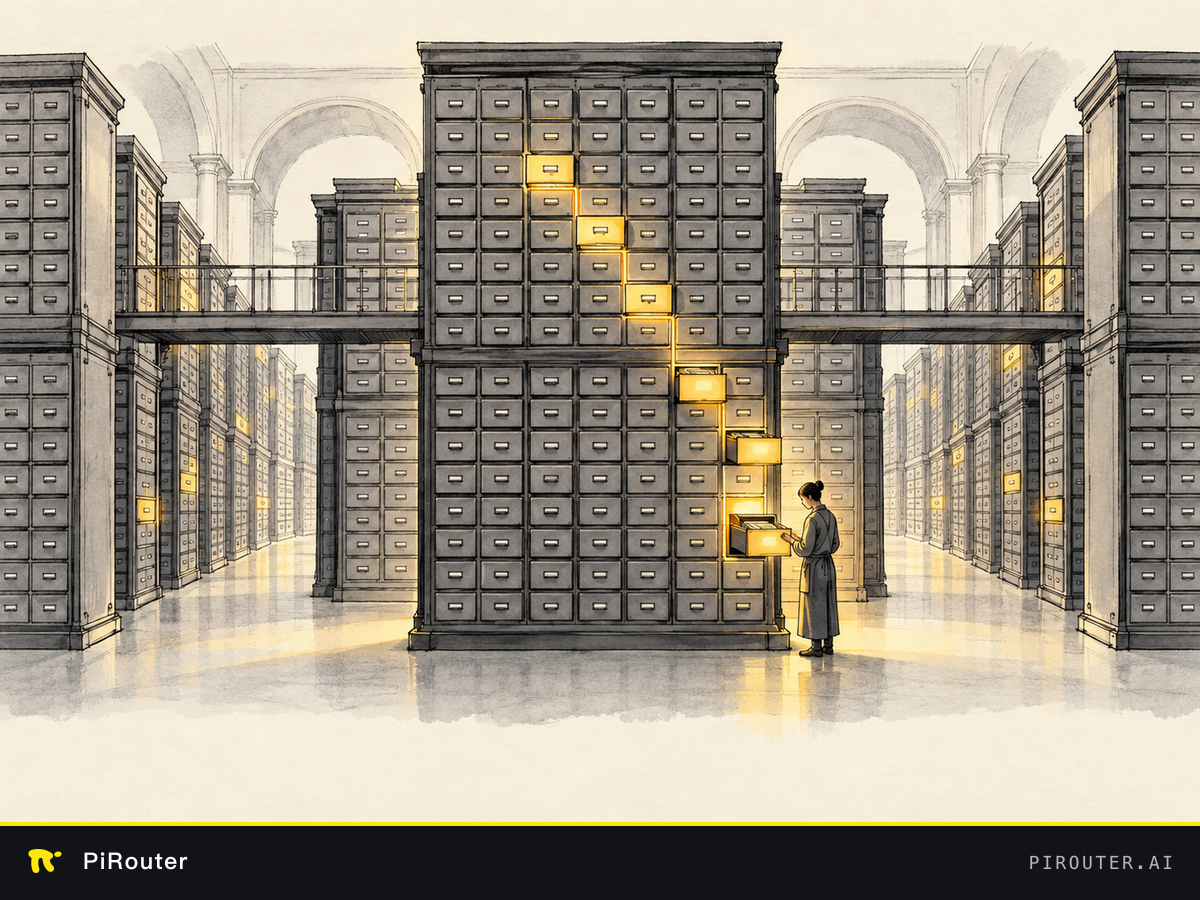
Editorial illustration of a large archive whose drawers all remain present while only a small subset is illuminated, symbolizing total model weights versus active parameters

Kolibri 1 is a 78B model—not a 3B download

PiRouter Team
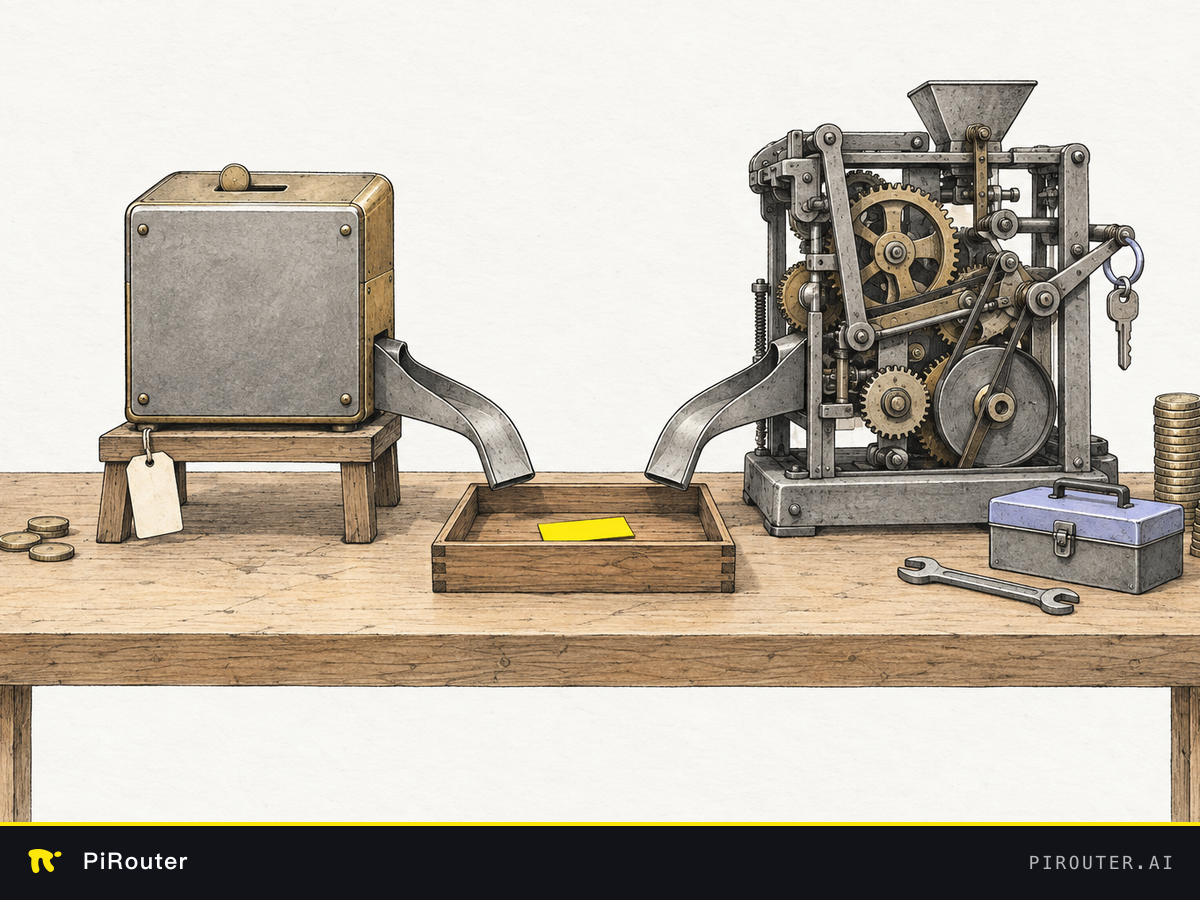
Two different sorting machines deliver the same choice, with different costs and ownership

Jev vs GLM-5.3-Flash: similar accuracy, very different reasons to choose either

Linden Kern
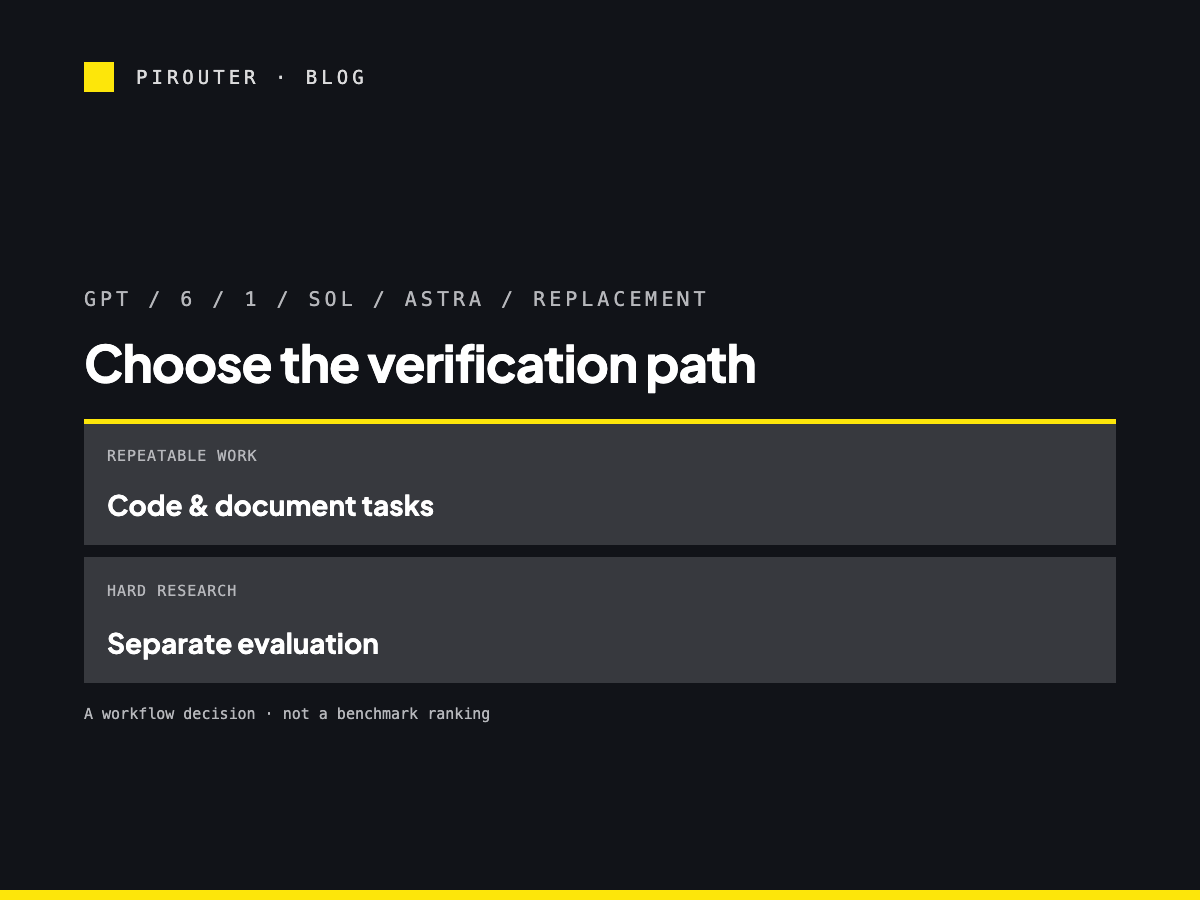
Two labeled panels separate repeatable coding and document work from difficult research tasks that need a separate evaluation; this is not a benchmark chart.

GPT-6.1 Sol vs Astra: move the testable work, keep the hard calls

Linden Kern
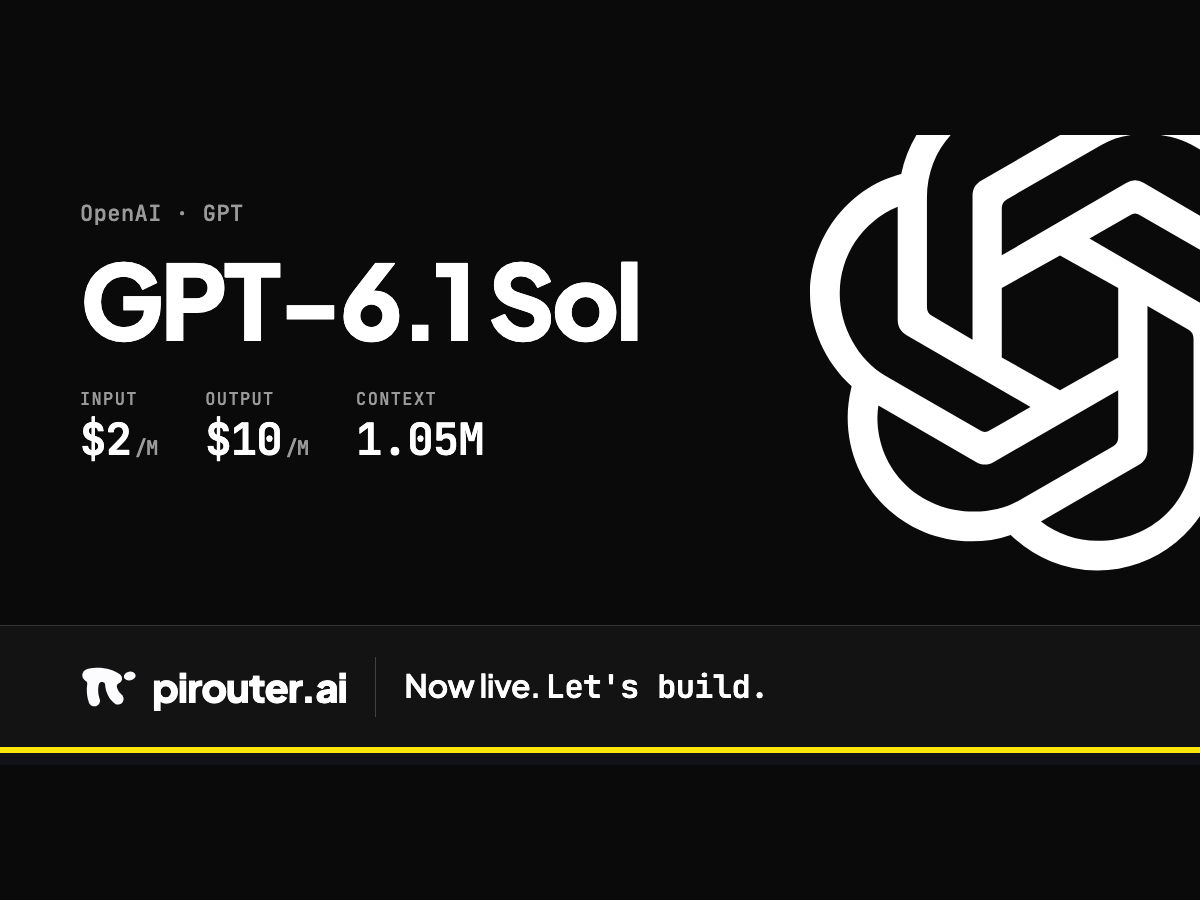
Unmodified GPT-6.1 Sol pirouter model card centered on a black background, showing standard input and output rates, 1.05M context, and the complete footer.

GPT-6.1 Sol on pirouter: $2/M input and a listed long-context tier

PiRouter Team
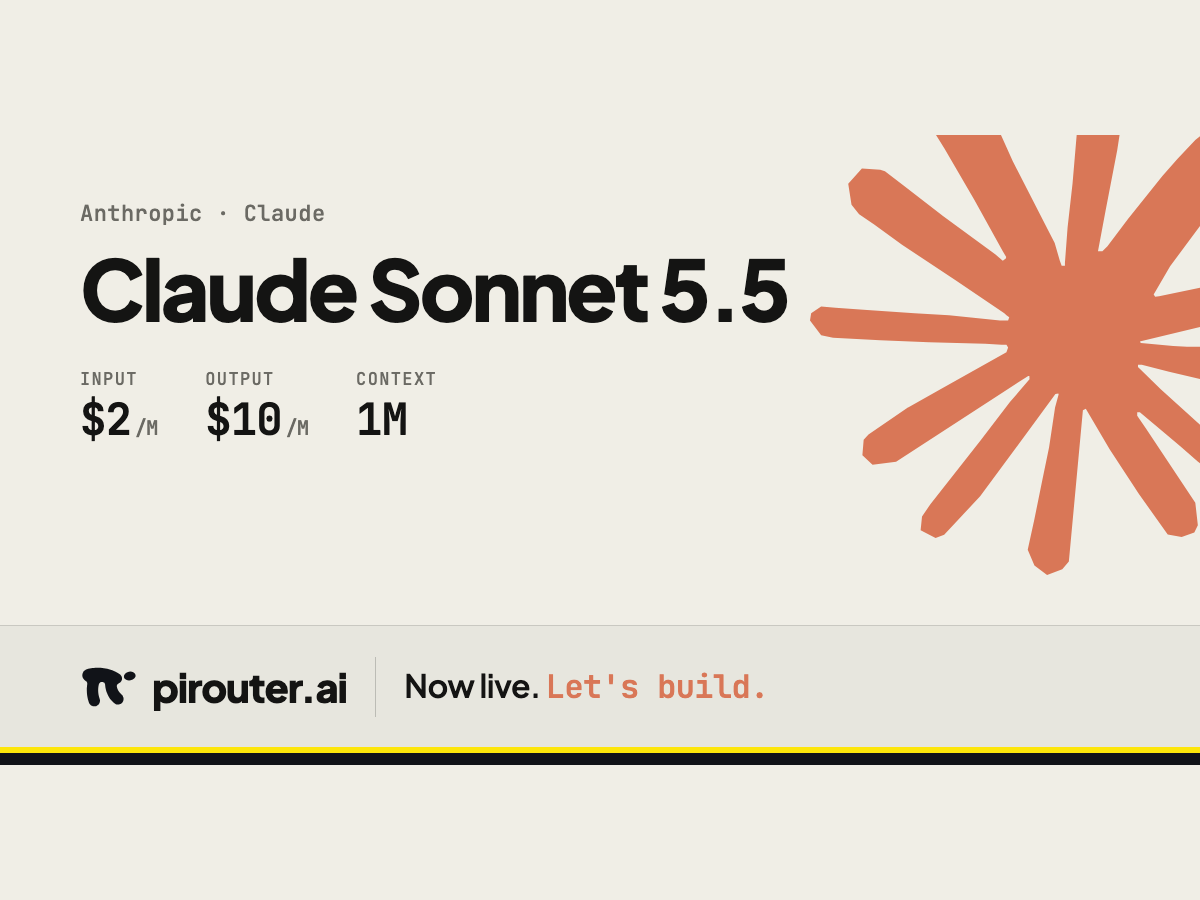
Unmodified Claude Sonnet 5.5 pirouter model card centered on a warm cream background, showing standard input and output rates, 1M context, and the complete footer.

Claude Sonnet 5.5 on pirouter: exact model ID and $2/M standard input

PiRouter Team
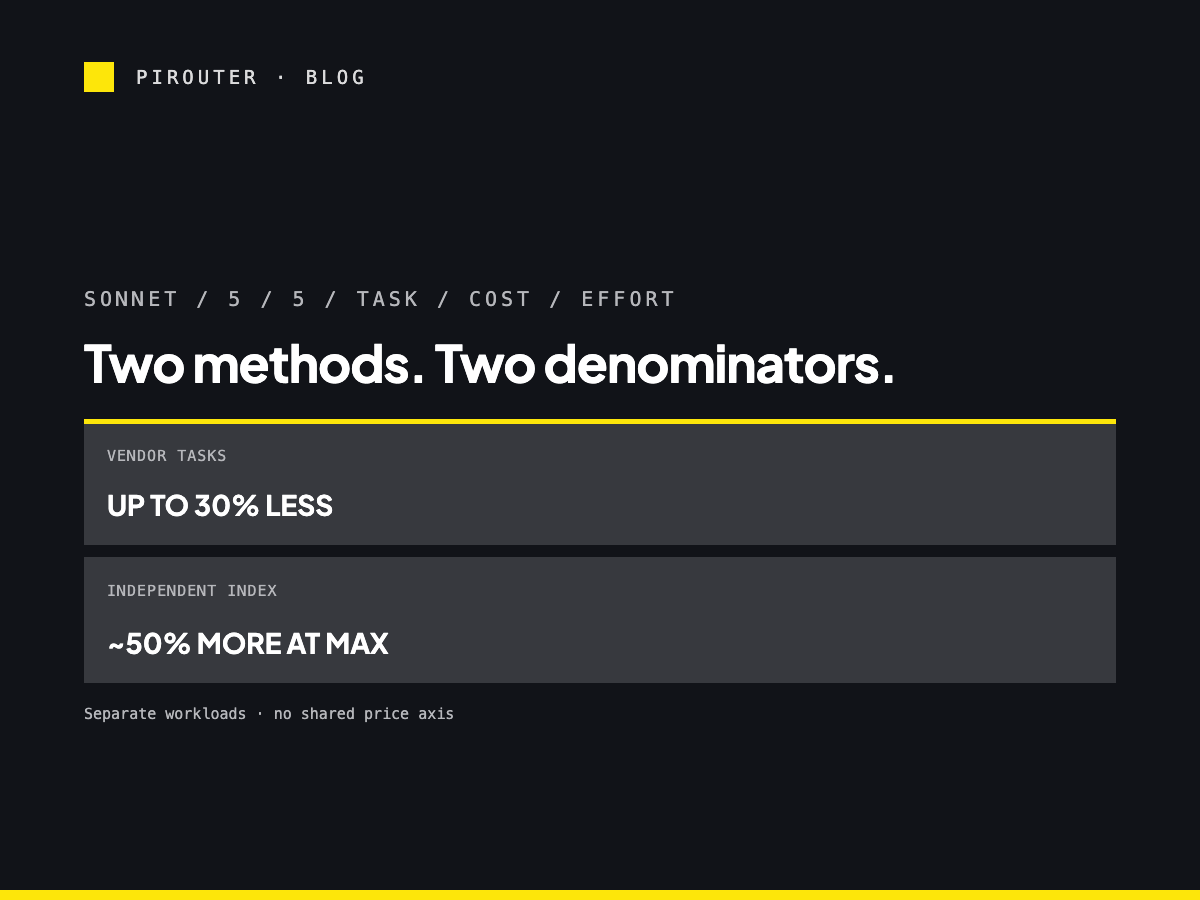
Separate vendor task savings and independent max-effort Index cost measurements appear in two independent panels, not on one axis.

Claude Sonnet 5.5 task cost: why 30% less and 50% more describe different tests

Linden Kern
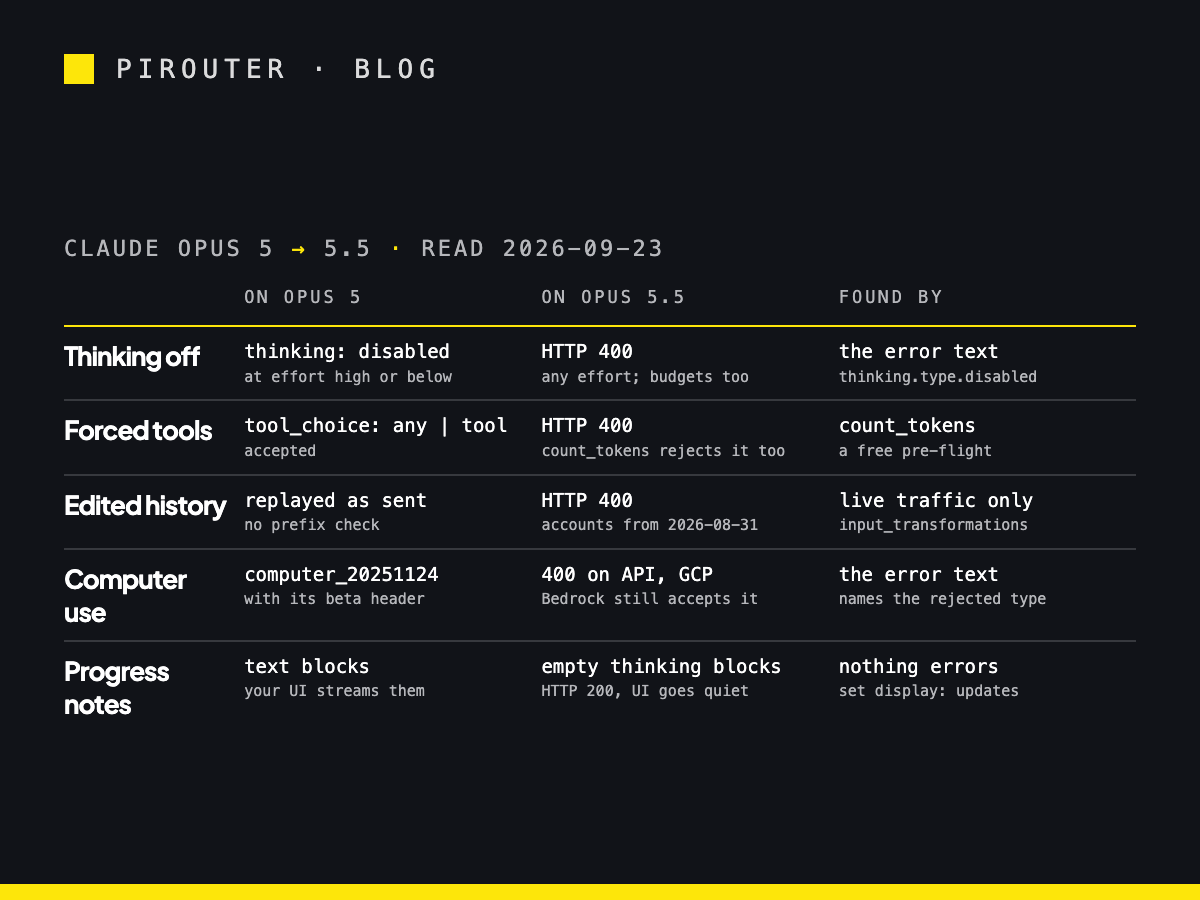
Table of five changes from Claude Opus 5 to Claude Opus 5.5: thinking off, forced tools, edited history, computer use and progress notes, with what Opus 5 accepted, what Opus 5.5 returns (four HTTP 400s and one HTTP 200 with a quiet UI), and how you find out for each

What breaks when you switch to Claude Opus 5.5: four 400s, three silent changes, and what your fallback loses

Leo Kaka
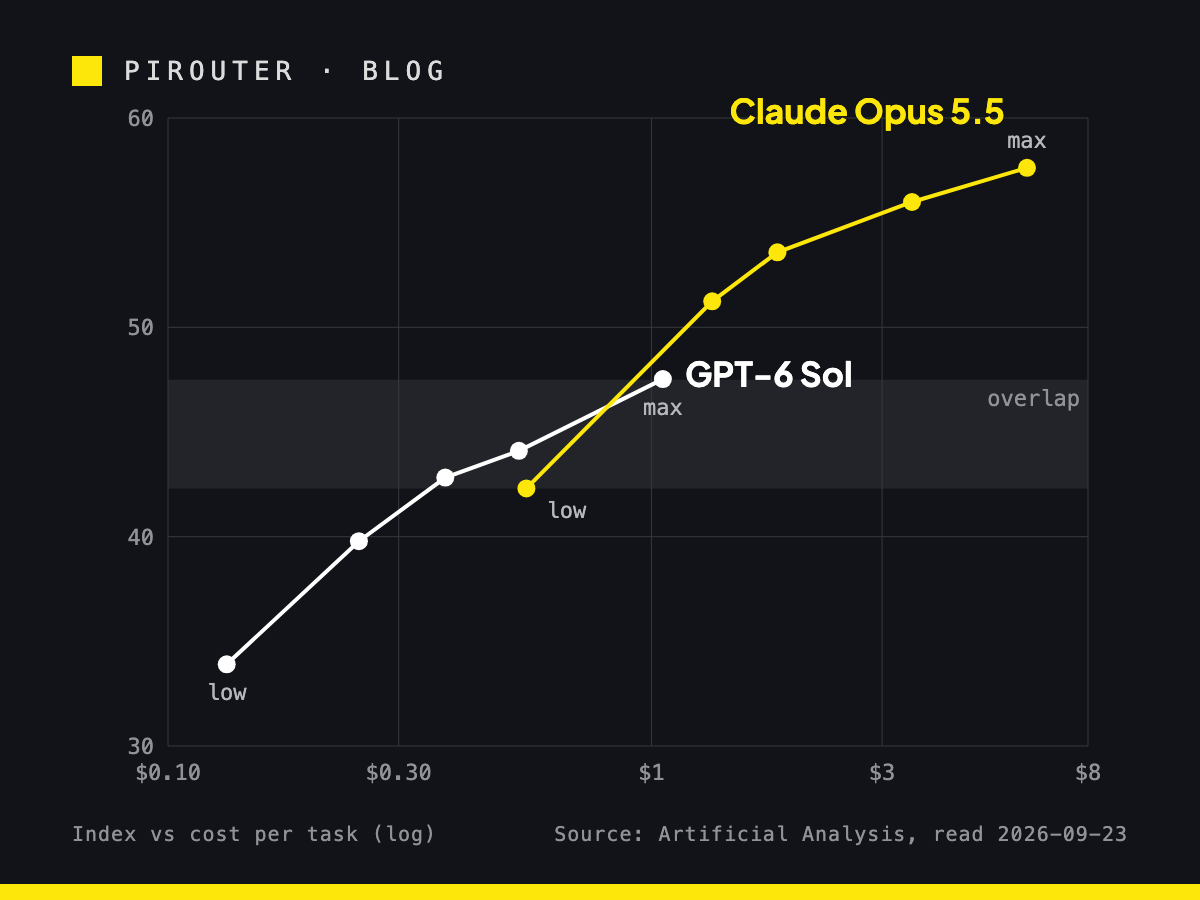
Scatter chart on a dark background: two lines of five points each, one for GPT-6 Sol and one for Claude Opus 5.5, plotting Artificial Analysis Intelligence Index score against cost per task on a log scale from low to max effort. Sol runs from 34 points at $0.13 to 47.5 at $1.06; Opus 5.5 runs from 42 points at $0.55 to 57.6 at $5.98. The two lines overlap only between about 42 and 47.5 points.

GPT-6 Sol vs Claude Opus 5.5 cost per task: Sol costs 28% to 79% as much for the same target score

Leo Kaka
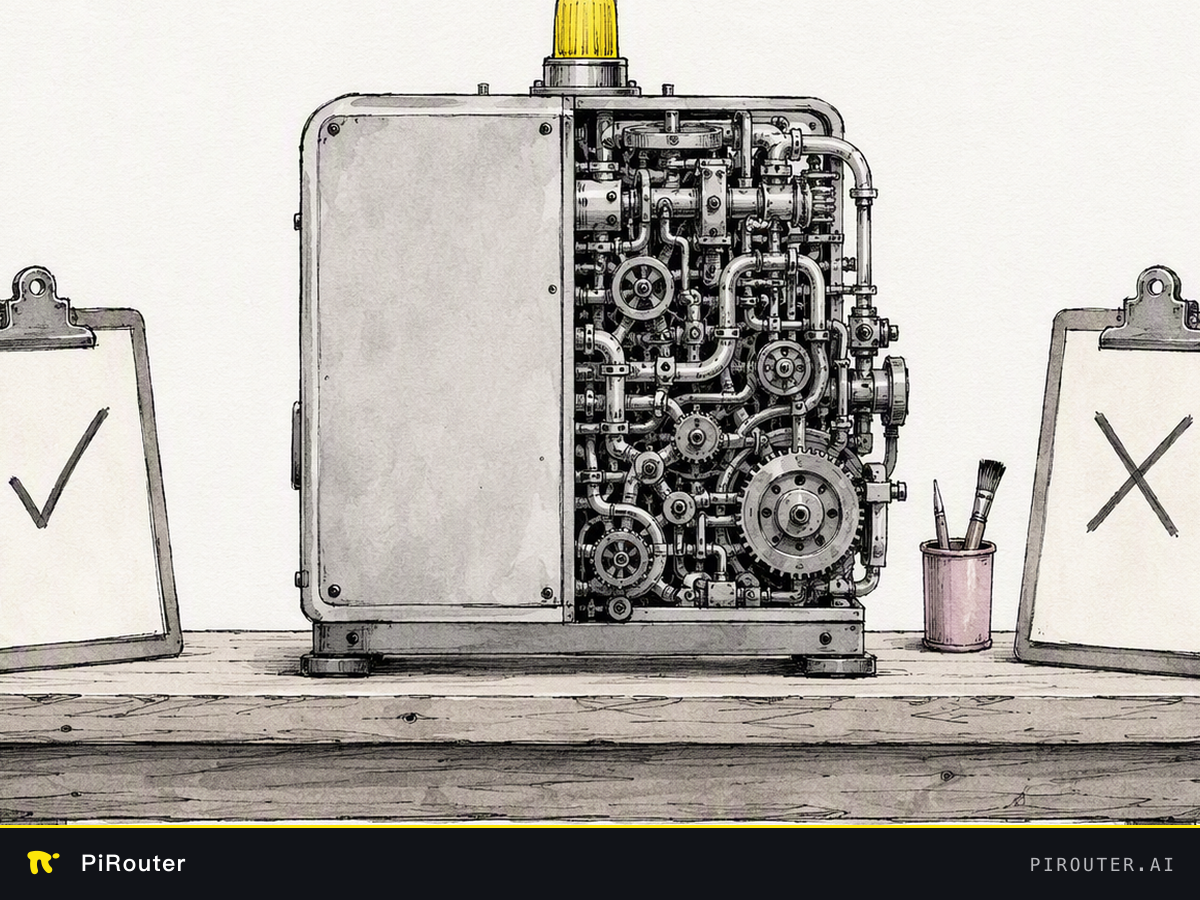
One machine whose left half is a plain casing and right half a dense tangle of gears; a clipboard on each side, one marked with a check and one with a cross.

Is GPT-6 Astra worth $10/$50? Two evals disagree, and both are right

Linden Kern
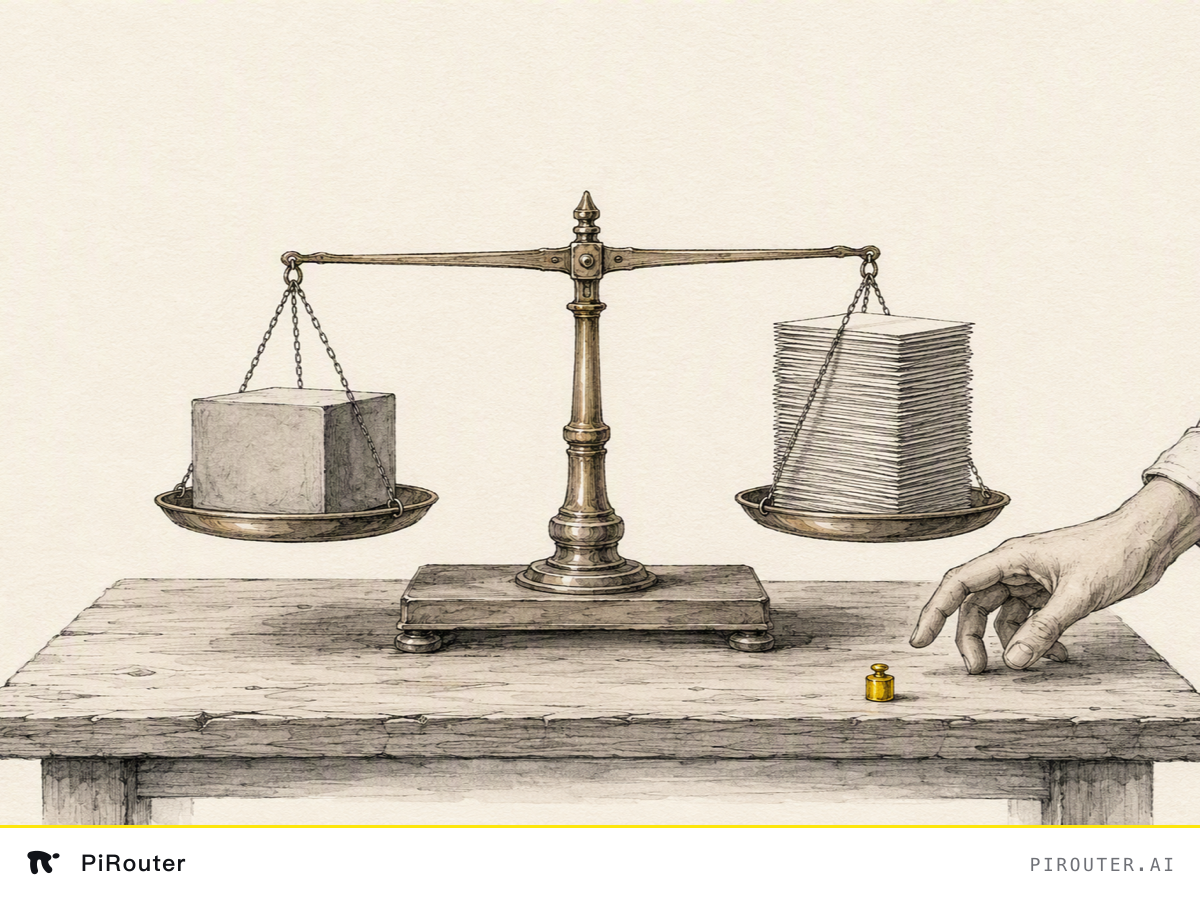
Hand-drawn ink illustration: a brass balance scale on a workbench. One pan holds a single plain block, the other a tall stack of many identical thin sheets; the beam is very nearly level. A small yellow brass weight lies on the bench beside the scale, off both pans, with a hand reaching toward it.

Is Claude Fable 5.1 cheaper than Opus 5? Only when cache reads are a third of your bill

Leo Kaka
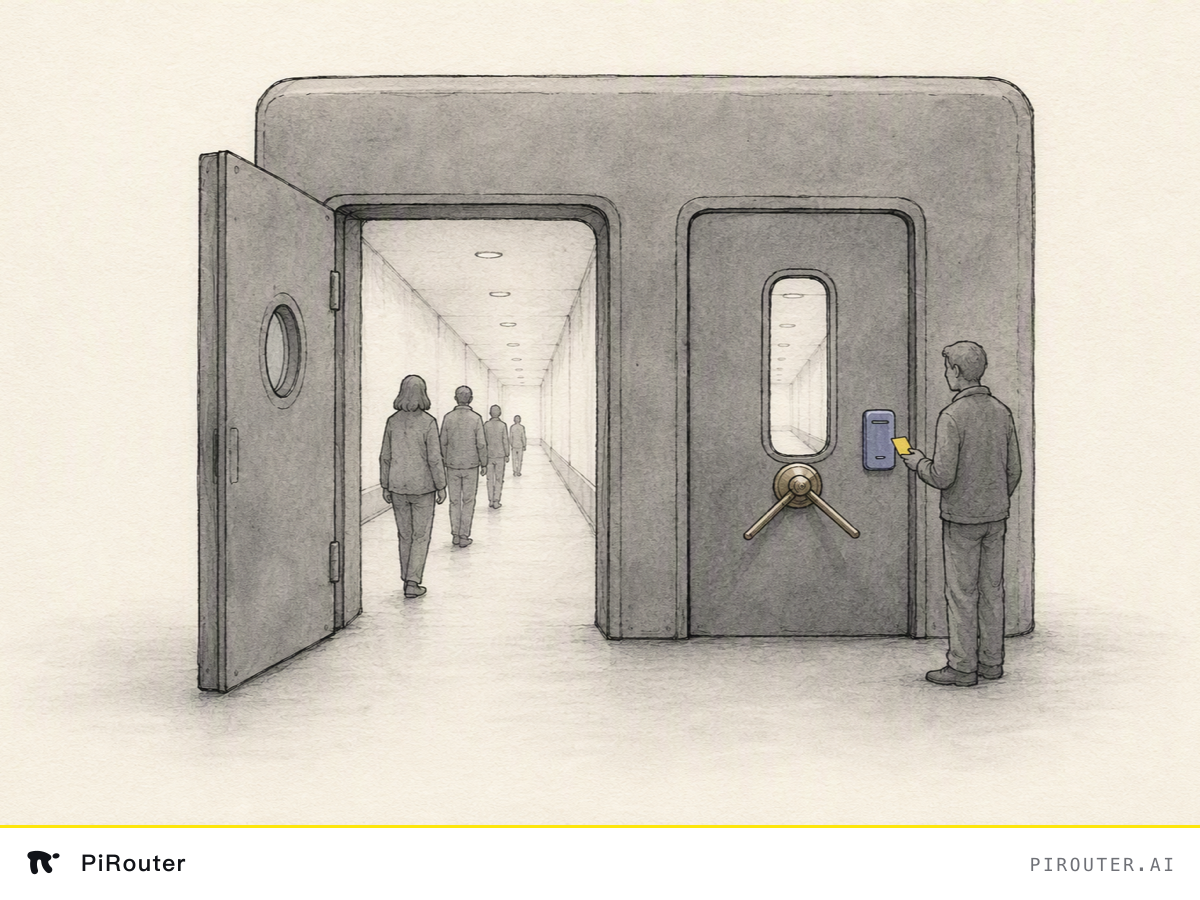
Hand-drawn ink illustration: one grey machine with two doors cut into the same body. The left door stands open and a few figures walk through it into a lit corridor; the right door is closed, fitted with a brass turnstile and a card reader, and through its window the same corridor is visible. One figure waits at the right door holding a yellow card.

Astra's "Critical" cyber threshold, Mythos 5.1 and Gemini 3.8 Flash Cyber: one model, two safety tiers, and API access is now a spec-sheet line

Linden Kern
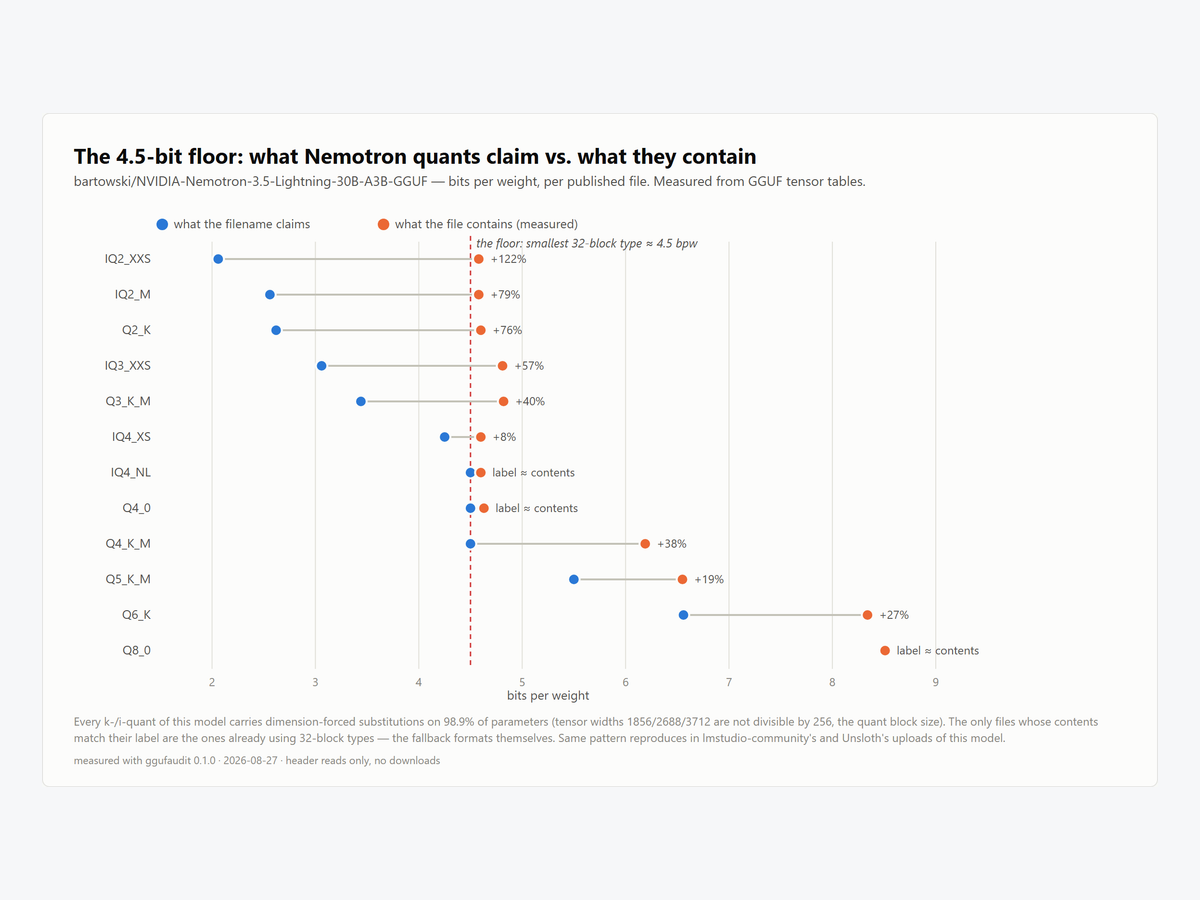
Dumbbell chart of bartowski's Nemotron-3.5-Lightning GGUF files: bits per weight the filename claims against bits per weight measured from the tensor table, every k- and i-quant rung landing at or above a 4.5 bpw floor

Why your IQ2 GGUF is the same size as IQ4: the 256-block fallback in llama-quantize

Linden Kern
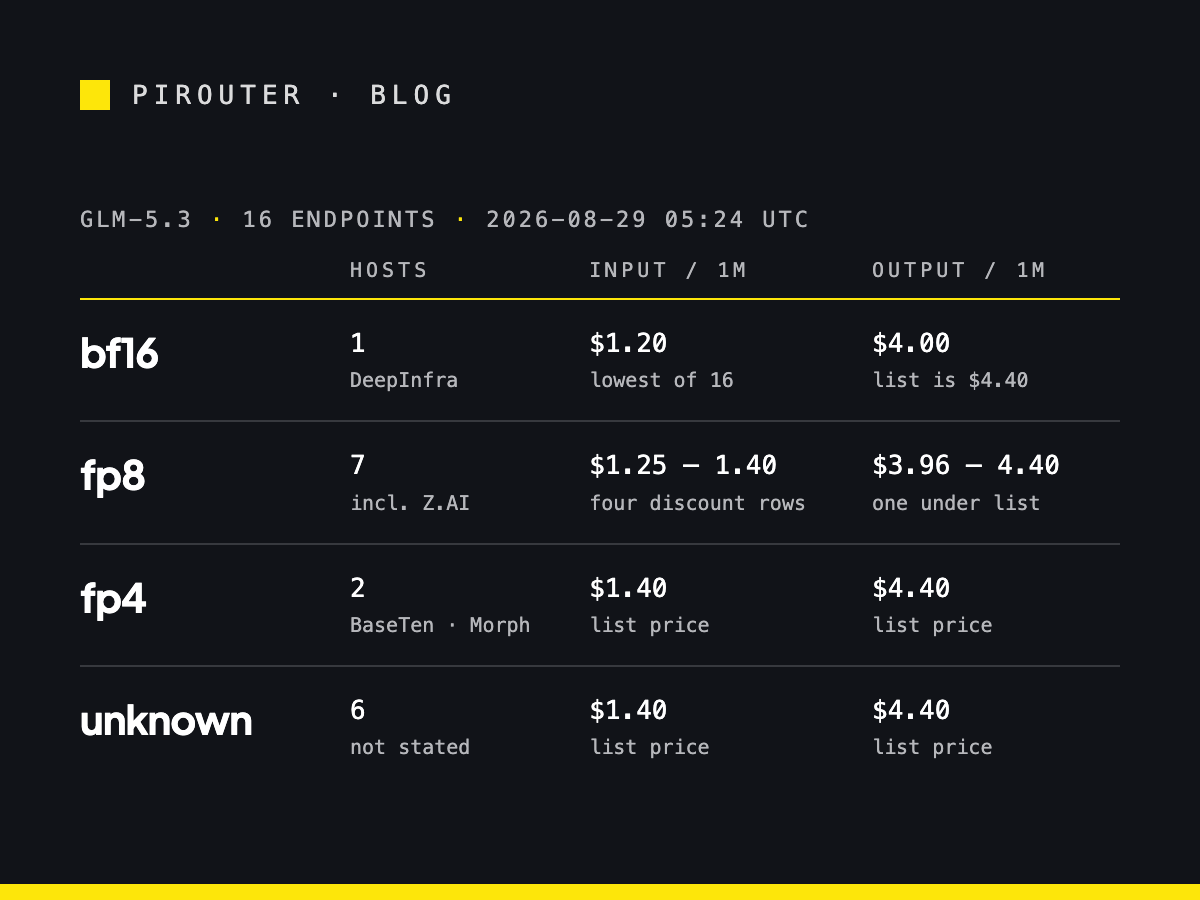
Matrix of GLM-5.3's sixteen OpenRouter endpoints on 2026-08-29 05:24 UTC, grouped by self-declared quantization: bf16 one host at $1.20/$4.00, fp8 seven hosts at $1.25–1.40 in, fp4 two hosts at $1.40/$4.40, unknown six hosts at $1.40/$4.40

GLM-5.3 open weights, day one: 16 providers, five prices, four quantizations — and BF16 is the cheapest

Linden Kern
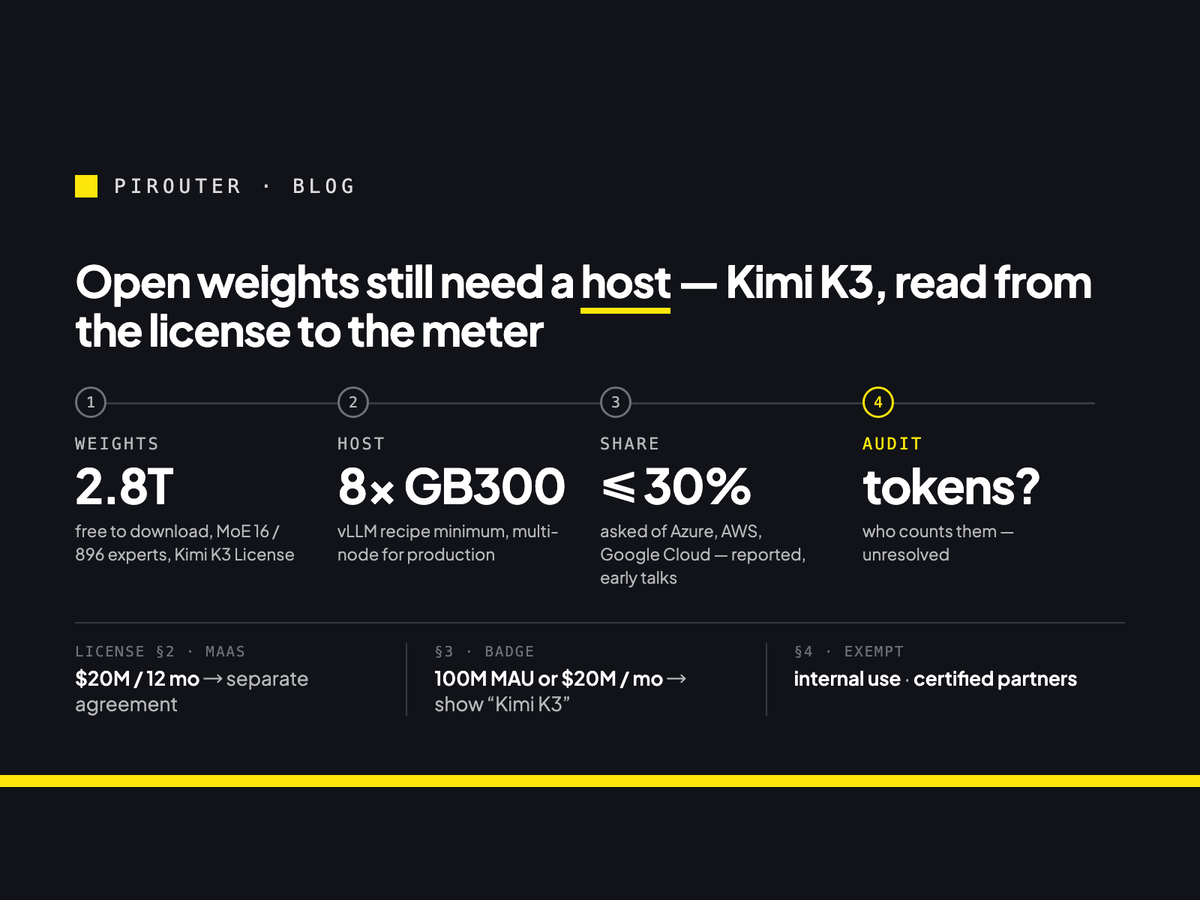
Four-stage diagram for Kimi K3: 2.8T weights free to download → host needs 8× GB300 or more → reported revenue share of up to 30% → token auditing unresolved. Below it, the three license thresholds: $20M over 12 months, 100M MAU or $20M a month, internal use and certified partners exempt

Kimi K3 license, commercial use: the $20M MaaS clause, the 100M-MAU badge, and the 30% Moonshot wants from Azure, AWS and Google

Linden Kern
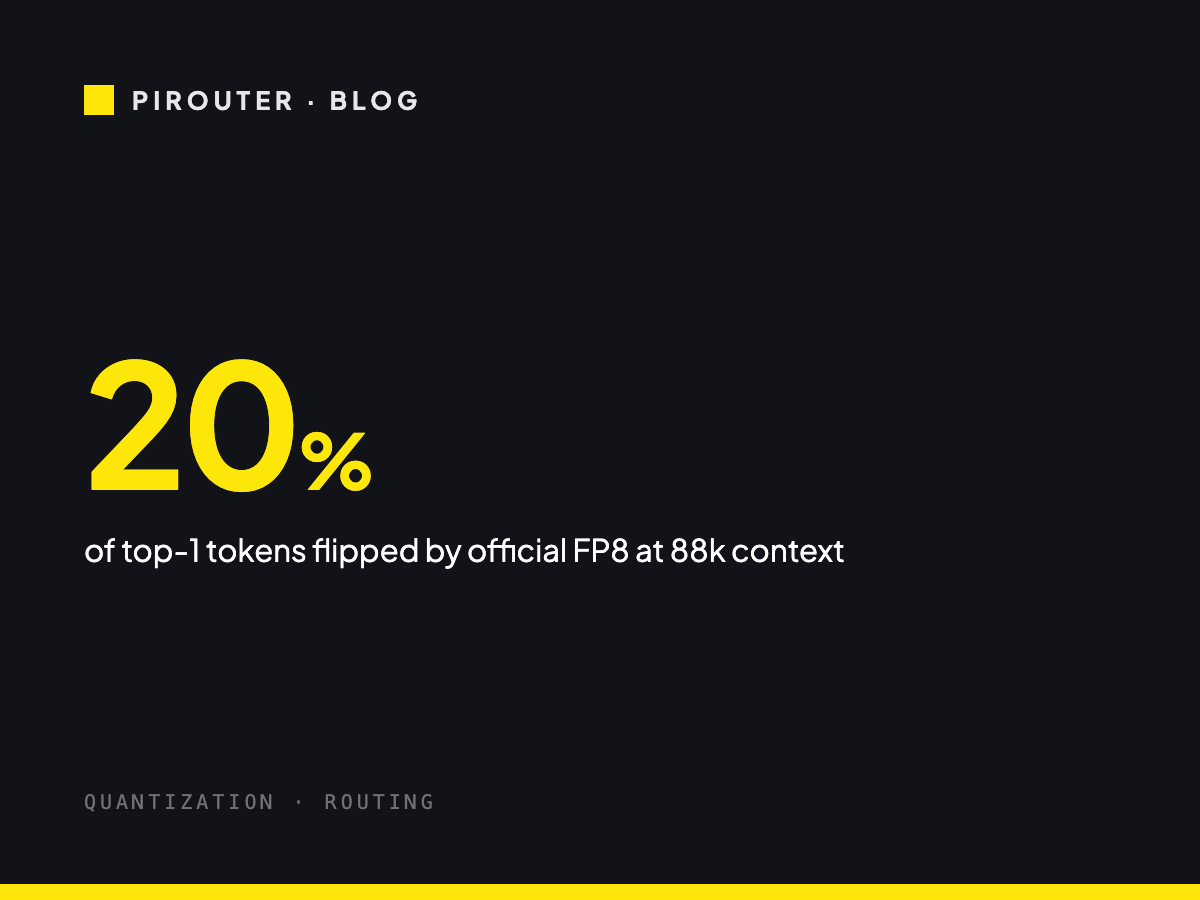
Bar chart of top-1 token flips against the BF16 reference at 88k context: INT8 about 15 percent, official FP8 about 20 percent highlighted, AWQ W4A16 about 30 percent, NVFP4 about 50 percent

FP8 flips 20% of top-1 tokens, and tool calls break first

Linden Kern
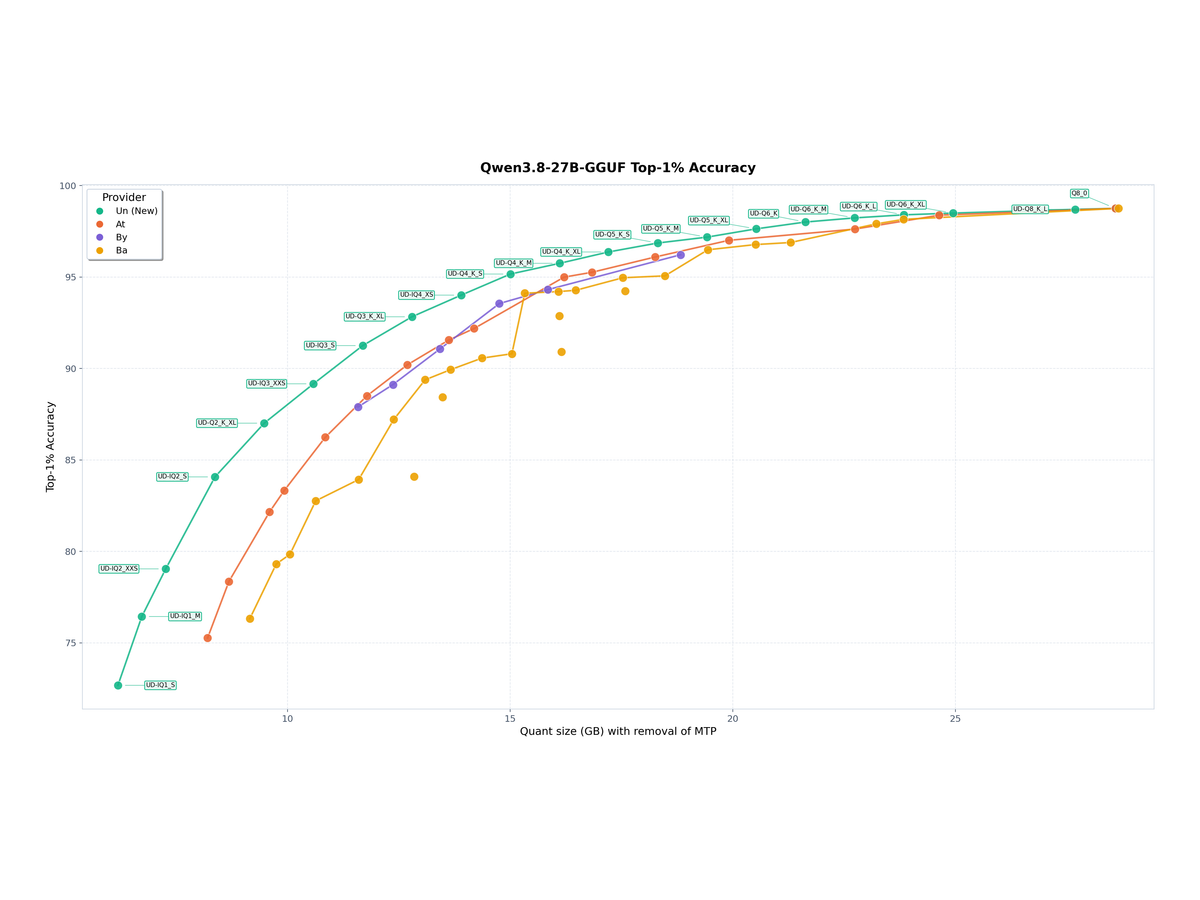
Unsloth's Qwen3.8-27B GGUF chart: top-1% accuracy against file size for four quantization providers

Qwen3.8-27B: seven endpoints, one name, two prices

Linden Kern
Cover card: A price sheet, and a model with no name

ox-alpha vs deepseek-v4-flash: what a stealth model hides

Linden Kern